


26/09/2026

Share:
26/09/2026
Share:

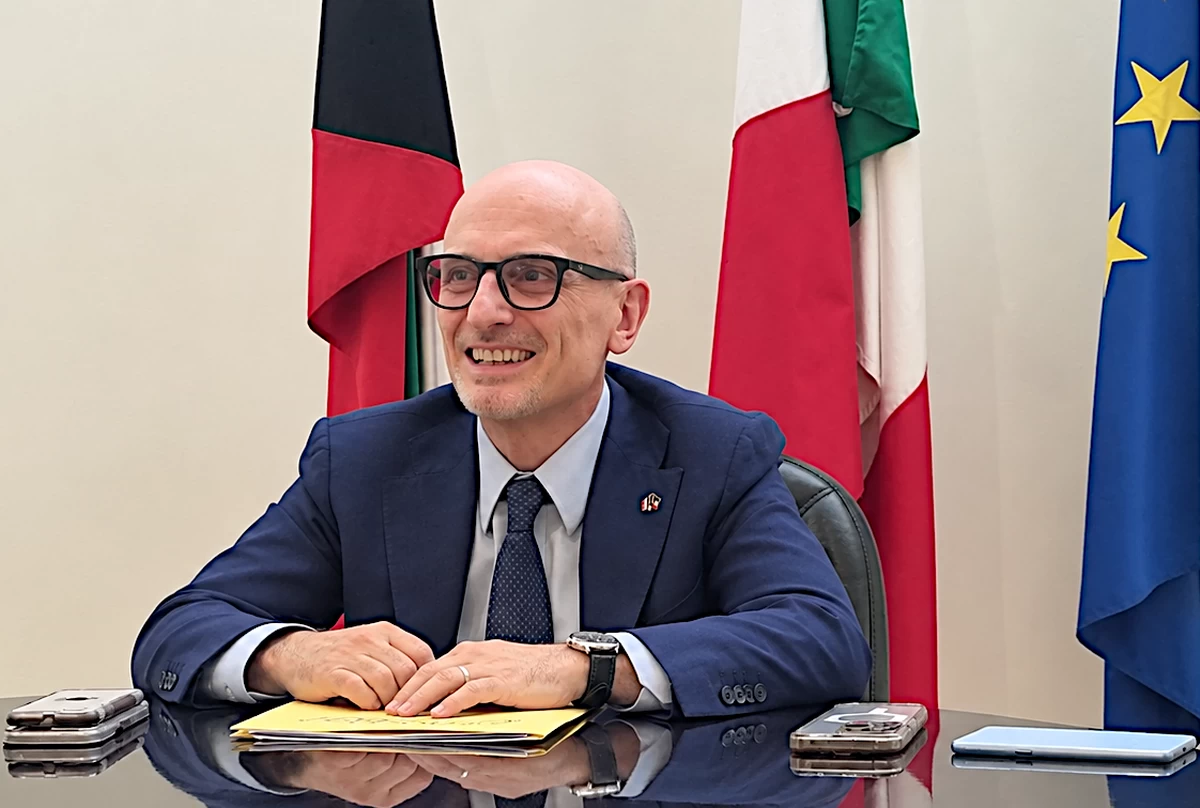
KUWAIT CITY, Sept 26: In a press conference organized at the Italian Embassy in Kuwait, H.E. Lorenzo Morini, Italian Ambassador to Kuwait, reiterated Italy’s commitment to strengthening its strategic partnership with Kuwait across defense, security, trade, investment and other sectors, while supporting efforts to restore regional stability and ensure freedom of navigation through the Strait of Hormuz. He said the recent regional crisis had significantly affected both countries but also demonstrated the strength of their bilateral cooperation and Kuwait’s resilience.
The ambassador said Italy had around 400 military personnel in Kuwait when the crisis began, mainly operating from Ali Al-Salem Air Base as part of the anti DAESH international coalition. The personnel were forced to remain in shelters for weeks because of the attacks, while Kuwaiti authorities provided logistical support, including food and water. He said there were no serious injuries among the Italian personnel, although there were some minor injuries. Most of the Italian military personnel were subsequently moved out of Kuwait because of security concerns, while around 50 Italian personnel currently remain in the country in support of Kuwaiti authorities.
The ambassador stressed that Italy believes the regional crisis can only be resolved through dialogue, a peaceful settlement and respect for international law, particularly the right to free navigation through the Strait of Hormuz. He said the issue affects not only Kuwait but also all GCC countries, Europe, Asia and other parts of the world because major energy and supply chains depend on maritime passage through the strategic waterway.
He noted that Kuwait among other is an important supplier of jet fuel to Europe, while Qatar is a major supplier of natural gas to Italy, with such shipments depending on maritime passage through Hormuz. He warned that disruptions to the waterway affect the prices of gas, oil, food and other commodities globally because international prices are determined by supply and demand. He said the effects would be felt not only in Europe but also in China, Indonesia, Latin America and other regions.
Defense agreement nearing entry into force
The ambassador said Italy has completed the parliamentary ratification of a new defense cooperation agreement with Kuwait, with only a formal presidential signature remaining before Italy transmits its ratification to Kuwait. Kuwait had already ratified the agreement in June, and the ambassador said he hoped it would enter into force before the end of September.
He explained that the agreement provides a framework for cooperation in areas including training, joint exercises, exchange of expertise, materials and information. Specific areas of cooperation can subsequently be covered by separate agreements under the broader framework. He stressed that the agreement is not a government-to-government contract for a particular weapons system or piece of equipment.
Regarding Kuwait's Eurofighter programme, he said Italian company Leonardo was still in the process of delivering the final three aircraft but that deliveries had been delayed because of the security situation. He said the aircraft were ready in Italy but it was necessary to wait for conditions to stabilize before completing the deliveries.
Economic and investment ties
The ambassador said economic and commercial cooperation was among the issues discussed during the recent political consultations between Kuwait and Italy. Italy wants to encourage partnerships between the two countries' private sectors and increase both Kuwaiti investment in Italy and Italian investment in Kuwait.
He said Italian companies are already operating in Kuwait, both as service providers and through locally established companies, but Italy wants to expand their presence. At the same time, he highlighted opportunities for Kuwaiti investments in Italy, particularly in the food production and distribution sector.
The ambassador said Italy is discussing opportunities for Kuwaiti investment in Italian small and medium-sized enterprises involved in food production. Such companies could also establish partnerships with Kuwaiti private-sector companies and potentially contribute to food production in Kuwait.
He said southern Italian regions such as Sicily, Calabria and Sardinia have climatic conditions that in some respects are comparable with Kuwait, giving Italy relevant expertise in food production in challenging environments. The ambassador linked the issue to food security, saying the regional crisis had demonstrated the importance of maintaining reliable supply chains.
The ambassador also clarified that Italy cannot take independent decisions on trade measures involving Kuwait, as trade policy falls under the European Union. “When we negotiate a trade agreement, it's not Italy with Kuwait. It's always European Union with GCC or European Union with Kuwait,” he said. He noted that the EU is currently discussing with Kuwait a Strategic Partnership Agreement (SPA), which he described as a first step toward a common free-trade agreement between the GCC and the European Union. Any trade restrictions involving individual countries are decided at the EU level in Brussels, rather than by individual member states. He added that consumer boycotts are a separate matter and are not something governments should seek either to promote or prevent.
Health cooperation
Health is another area in which the ambassador sees opportunities for expanded cooperation. He said Italy has expertise in areas including diabetes treatment, osteoporosis, rehabilitation, telemedicine and home care, while both countries face challenges associated with ageing populations.
He proposed stronger partnerships between Kuwaiti and Italian medical sectors, including cooperation between universities. He said Kuwait has strong healthcare infrastructure while Italy has expertise and personnel that could complement Kuwaiti capabilities.
Civil protection and emergency response
The ambassador also highlighted cooperation in civil protection following a recent visit by Kuwaiti civil protection and emergency-response officials to Italy.
He said Kuwait is developing a new national civil protection system to respond to emergencies, natural disasters and the consequences of climate change. Italy, he said, could share its experience in developing an integrated emergency-response system, including cooperation with neighboring GCC countries.
He explained that Italy's own civil protection system is integrated with the wider European system, allowing countries to provide mutual assistance during emergencies.
Italy praises Kuwait's response to the crisis
Asked about Italy's assessment of Kuwait's role during the crisis, the ambassador praised what he described as Kuwait's resilience and response.
He said essential services including food, energy and water continued without major disruption, despite the crisis, while the Kuwaiti authorities responded effectively to the security situation. He also referred to Kuwait's air-defense response and the number of attacks and interceptions.
On the diplomatic front, he said Kuwait has traditionally played a role in promoting dialogue, diplomacy, respect for international law and the United Nations. He described Kuwait as an important interlocutor for Italy because of its relations with GCC countries and other regional partners.
The ambassador said the upcoming GCC - European Union summit, scheduled for the end of October, could provide an important opportunity for the two sides to coordinate their positions and resources in support of a settlement based on international law.
Italian business delegation to visit Kuwait
On economic cooperation, the ambassador announced plans for a visit to Kuwait by the president of Assolombarda, the business association representing companies in Lombardy, including Milan.
He said the visit is planned for early October and would provide a direct channel between Italian and Kuwaiti private-sector companies. Assolombarda has more than 7,000 companies under its umbrella, according to the ambassador, and represents a significant part of Italy's industrial and commercial sector.
Visa numbers affected by regional crisis
The ambassador said the number of Italian visas issued in 2026 was around half the level recorded during the same period in 2025, largely because very few visas were issued during March, April, May and the first half of June amid the regional crisis.
He clarified that the decline was concentrated in tourism visas. Business and family visas remained at similar levels, while student visas increased compared with the previous year.
On reports about possible changes to Italy's visa system, he said Italy could not independently introduce changes to the Schengen visa system because such decisions require agreement among the member states and relevant European institutions.
Italian radar replaces damaged Kuwait airport system
The ambassador revealed that an Italian company had supplied the radar system at Kuwait International Airport and that the system was damaged during the recent conflict. Italy subsequently found a replacement parts even though those equipment’s needs extended time to be produced He identified Leonardo as the Italian group involved.
He also said Italy supplies Kuwait with defense equipment and that an Italian air-defense system known as Skyguard is in service in Kuwait. The system has been repeatedly upgraded and is now undergoing another update to address evolving threats, including newer types of drones. He described it as complementary to the Patriot system and said it combines missiles and guns depending on the type of threat.
Cooperation with Kuwait National Guard
The ambassador said Italy is negotiating a cooperation agreement with the Kuwait National Guard, including areas where Italy's Carabinieri have specialized expertise.
Potential areas include the protection of archaeological sites, combating the smuggling of illicit materials and of archaeological artifacts and works of art, protection of strategic infrastructure and VIP protection. The agreement could also facilitate exchanges of information and personnel.
Naval and military training cooperation
On maritime security, the ambassador said Italy is working to expand cooperation with Kuwait. Two Kuwaiti naval officers are currently attending a three-month course at an Italian academy.
He said Italy is also pushing within the European Union to consider expanding the mandate of an existing naval security mission around the Bab el-Mandeb area to cover the Gulf region but stressed that such cooperation would require agreement among the countries concerned, including GCC states.
The ambassador said almost 30 Kuwait Air Force personnel, two naval officers and personnel from the Kuwait National Guard are currently undergoing training or participating in training programmes in Italy. He explained that the cooperation includes both long-term academic programmes and shorter specialized courses.
He said Italy remains ready to contribute to international initiatives aimed at regional stabilization and the protection of freedom of navigation through the Strait of Hormuz.
Regarding the remaining Italian military personnel in Kuwait, the ambassador said their presence is not limited to the Eurofighter programme. He explained that the Eurofighter programme is a contractual relationship between the Kuwait Air Force and Leonardo, an Italian company in which the Italian government controls 51 percent of the shares. According to the ambassador, Italy's role is comparable to that of a “director of works,” overseeing the quality of services provided under the contract and ensuring they comply with the agreement and applicable laws. The Italian personnel provide maintenance and technical support, training and facility management, and assist with aircraft movements when required. He added that the pilots were trained by the company under the control and supervision of the Italian government or Italian government-controlled Italian facilities.
by John C Fernandes
Online Media Manager
Arab Times