



15/08/2026

Share:
15/08/2026
Share:


Kamel Al-Harami
How can Europe cope with the loss of more than 18 refining capacities? Will U.S. supplies and exports of refined products to Europe be sufficient, while the United States itself is importing crude oil from Venezuela? Are we witnessing a kind of restructuring, with a change in the location and points of supply, forcing Europe to alter its traditional sources of supply? With regular Ukrainian attacks targeting Russian oil installations, Russia is losing its grip on supplying products to Europe, or at least losing its importance as a reliable supplier. This is forcing Europe to look for alternative suppliers, mainly from the Arabian Gulf, only to face the disruptions in the Gulf. These disruptions will be overcome in any event; otherwise, the world could face critical supply shortages.
The Arabian Gulf is the safe passage for more than 20 million barrels of oil per day to the world, roughly comparable to U.S. crude oil production. With U.S. daily consumption at around 21 million barrels, the country continues to look for additional sources of oil supply. This leaves the Arabian Gulf as a very important and essential source of supply for the future, and perhaps forever. The question of replacing oil remains largely theoretical. BP was the last major oil company to move away from the idea of replacing oil, joining other international oil companies in confronting the reality of global oil markets. This is why we are witnessing the USA openly taking over Venezuela’s oil fields and inviting international oil companies to return in search of new agreements. They would operate under the full protection of the U.S. government, drilling and exploring with confidence while fully benefiting from such protection. At the same time, the USA continues to rely on imported oil by all means. Such a stable oil situation will certainly require stronger demand and economic growth, with oil prices settling at more comfortable levels and potentially returning to their traditional range of $75-$80 a barrel. The real challenge is to see how global markets will react to any future crisis or disruption in oil supplies.
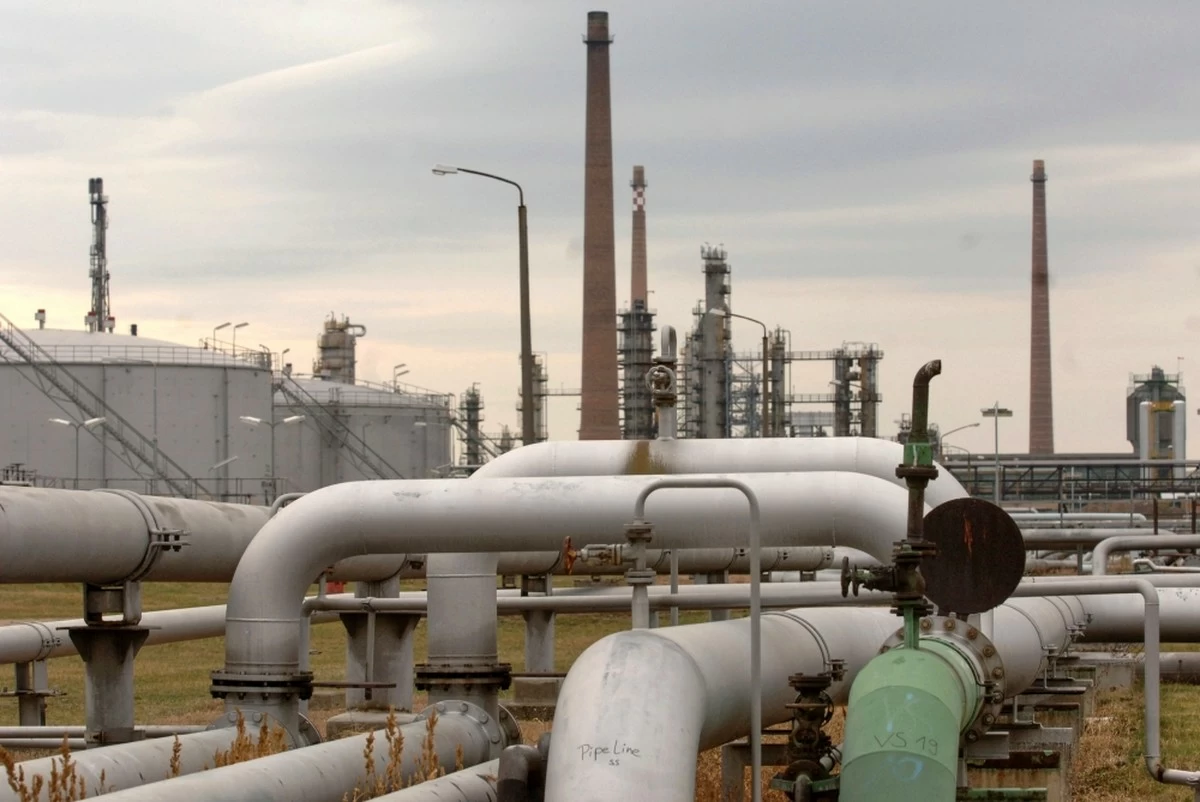
File Photo: A general view of a pumping station at the end of the Druzhba oil pipeline in the east German refinery PCK in Schwedt, Jan 10, 2007. (AP)
Oil is likely to remain in good health, allowing leading oil suppliers to recover from the damage caused by any closures in the Arabian Gulf. Leading importers will also seek to replenish their partially depleted stocks and strengthen their strategic oil reserves. Oil prices may recover slightly, but certainly not to the current range of $85 to above $103 for Russian oil, which will most likely come down soon. At the same time, oil markets will have to contend with the loss of Russian refining capacity and petroleum products, while the Arabian Gulf remains closed, or until it is reopened soon. Otherwise, oil prices could rise again as the winter months approach and the need to build stocks increases, putting renewed upward pressure on prices. Alas, this is the reality of oil markets, which are extremely difficult to predict.
By Kamel Al-Harami
Independent Oil Analyst
Email: [email protected]