

24/10/2026

Share:
24/10/2026
Share:
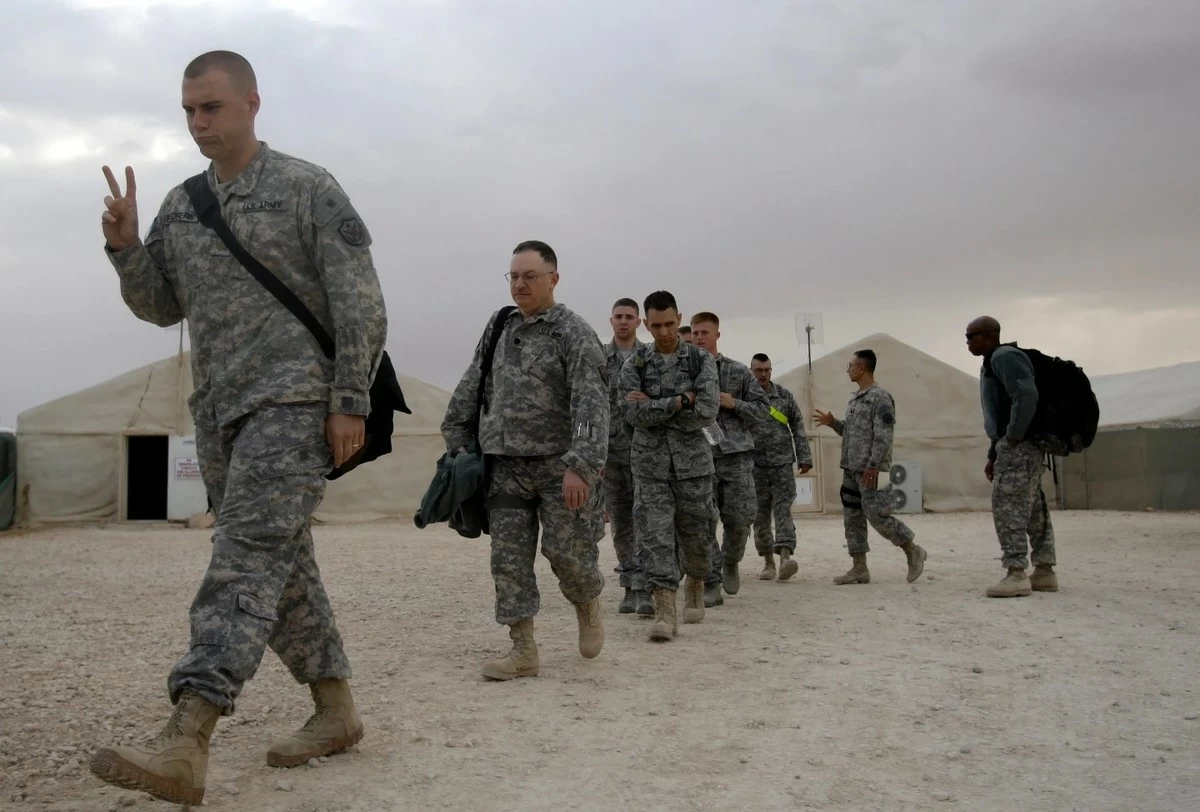
A US Army soldier flashes a V for victory sign as he begins his journey home, at the al-Asad Air Base west of Baghdad, Iraq on November 1, 2011. (AP)

BAGHDAD, Oct 24: Iraqi Prime Minister Ali Faleh Al-Zaidi said Friday that no US troops remain in Iraq, including military advisers, as his government moves to bring all weapons under state control by June 30, 2027.
Speaking to the Iraqi News Agency (INA), Al-Zaidi said the absence of foreign forces had removed the justification previously cited by armed factions for retaining their weapons. He stressed that the government's decision to place all weapons under state authority was final and irreversible.
“By June 30, 2027, there will be no weapons outside the framework of the state,” he said.
Al-Zaidi said the government had reached agreements with three armed factions concerning their weapons and was negotiating with four others to complete the process.
“Iraq is a state that has factions, not factions that own a state,” he added.
The prime minister said Iraq had previously come close to international isolation, with the possible withdrawal of foreign embassies and the imposition of restrictions. He said Western countries had believed that certain armed groups had effectively taken control of the Iraqi state, but his government had managed to overcome the threat.
Strategic partnership with US
Despite the withdrawal of US troops, Al-Zaidi said Baghdad remained committed to strengthening its strategic partnership with Washington.
He said Iraq had chosen the United States as a strategic partner because of its technological and economic capabilities. US companies have already begun operating in Iraq and implementing projects under bilateral cooperation agreements, he added.
Al-Zaidi said the partnership with Washington, together with the development of Iraq's energy sector, would strengthen the country's regional and international standing compared with previous years.
US-led coalition mission ends
Baghdad and Washington agreed in September 2024 on a phased withdrawal of US-led coalition forces from Iraq, with the military mission scheduled to conclude by September 2026.
On September 30, Iraq announced the end of the coalition's military mission in the country, while the Pentagon confirmed the departure of coalition forces and equipment from Erbil Air Base.
The withdrawal marked a transition from the coalition's military mission against the Islamic State group, also known as ISIS or Daesh, to security cooperation involving training and intelligence sharing, according to Anadolu reports.
Iraq rules out involvement in regional war
Addressing regional tensions, Al-Zaidi said Iraq would not participate in any war and would remain a meeting point for opposing parties.
He said the regional crisis would ultimately have to end through an agreement, regardless of how events unfolded.
The prime minister also rejected the possibility of closing Iraq's border with Iran, warning that such a move would damage both countries economically.
“Closing the border with Iran means economically besieging ourselves,” he said.
Iraq seeks alternative oil export routes
Al-Zaidi said Iraq was working to establish a network of oil export pipelines to reduce its dependence on the Strait of Hormuz amid disruptions to maritime navigation through the strategic waterway.
The government is seeking to reactivate the oil export route through Türkiye's Ceyhan port and diversify its export outlets, he said.
“The Hormuz crisis has deprived Iraq of benefiting from rising oil prices,” Al-Zaidi said, adding that Iraqi oil exports had fluctuated between suspension and resumption because of regional conditions.
He also announced plans to increase Iraq's oil production capacity to 10 million barrels per day by 2032.