


12/05/2026

Share:
12/05/2026
Share:
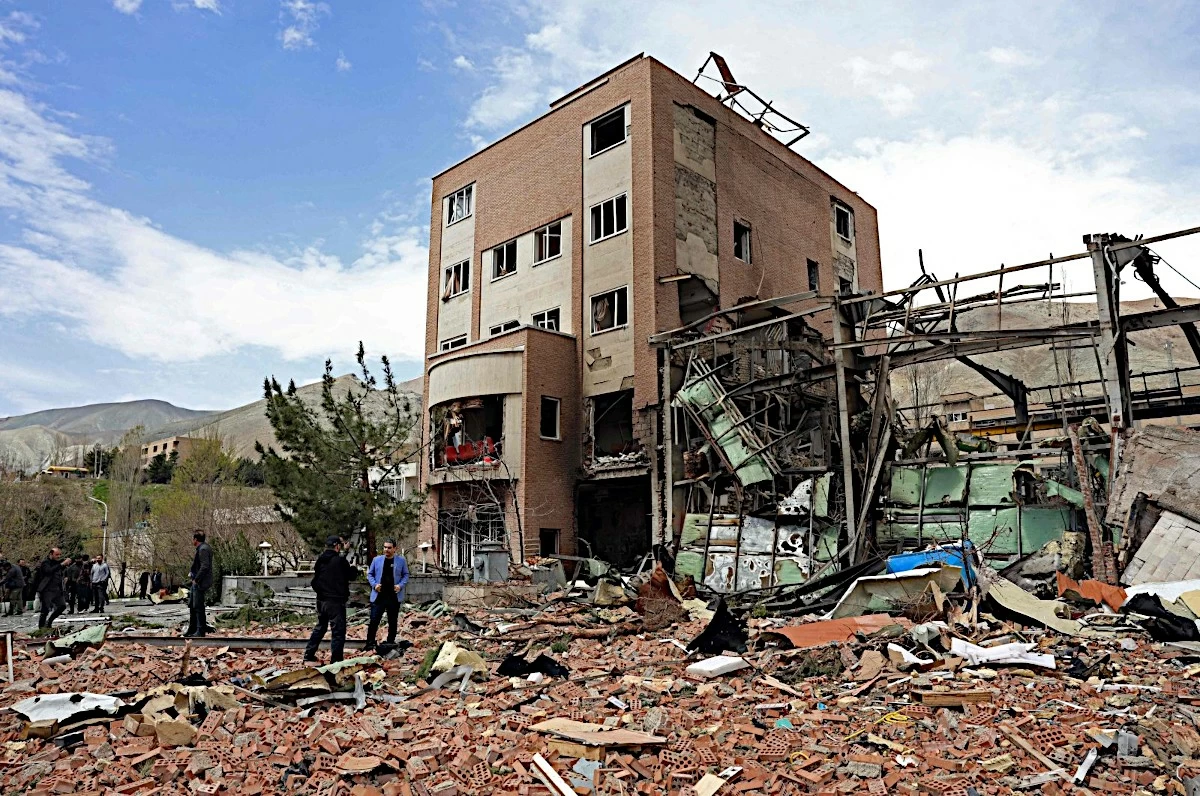
Officials and media gather around the Shahid Beheshti University after it was damaged in U.S.-Israeli airstrikes, in Tehran, Iran, April 4, 2026. (AP Photo)

TEHRAN, May 12: A leading international academic body specializing in Iranian studies has called on the United Nations and the European Union to condemn alleged US-Israeli strikes on universities and educational institutions in Iran during the March–April conflict.
In a letter dated May 11, the Committee on Academic Freedom of the Association for Iranian Studies (AIS) warned that Iran’s education sector had effectively become “a frontline in the expanding US-Israel war.”
The letter was addressed to several senior international officials, including UN High Commissioner for Human Rights Volker Türk, UNESCO Director-General Audrey Azoulay, EU foreign policy chief Kaja Kallas, and US Secretary of State Marco Rubio.
The committee accused the United States and Israel of systematically targeting universities, schools, research centers, and medical institutions in violation of international humanitarian law. It cited reported damage to prominent institutions such as Sharif University of Technology, Shahid Beheshti University, Amir Kabir University, and the Iran University of Science and Technology.
Founded in 1967, AIS is a prominent global scholarly organization focused on Iranian and Persianate studies. Its Committee on Academic Freedom has previously criticized Iranian authorities over restrictions on student activism, arrests of academics, and campus crackdowns following protests.
In its latest statement, however, the organization said the ongoing conflict has compounded the pressures already faced by Iran’s academic community.
“The 2026 war and the resulting disruption of education, following earlier repression, have inflicted both physical and psychological trauma on students at all levels—effects many young Iranians are likely to carry throughout their lives,” the letter stated.
The committee also pointed to reported strikes on medical research facilities, including the Pasteur Institute of Iran and the Tofigh Daru pharmaceutical research center, as well as damage to schools.
It rejected US-Israeli assertions that certain institutions were legitimate “dual-use” targets due to alleged ties to Iran’s military sector, arguing that such claims fail to account for proportionality and the broader impact on civilians and educational infrastructure.
The organization urged international actors to condemn attacks on educational institutions, push for an end to the conflict, and support efforts to rebuild damaged academic facilities.