


20/05/2026

Share:
20/05/2026
Share:

TEHRAN, May 20: Iranian state television has broadcast weapons training programmes showing simulated firing at figures including US President Donald Trump and Israeli Prime Minister Benjamin Netanyahu, alongside footage in which a presenter fired at the flag of the United Arab Emirates.
The broadcasts, aired across multiple channels operated by Islamic Republic of Iran Broadcasting, included live studio demonstrations on the use and dismantling of weapons such as Kalashnikov rifles, PK machine guns, Dragunov sniper rifles, and RPG-7 rocket launchers.
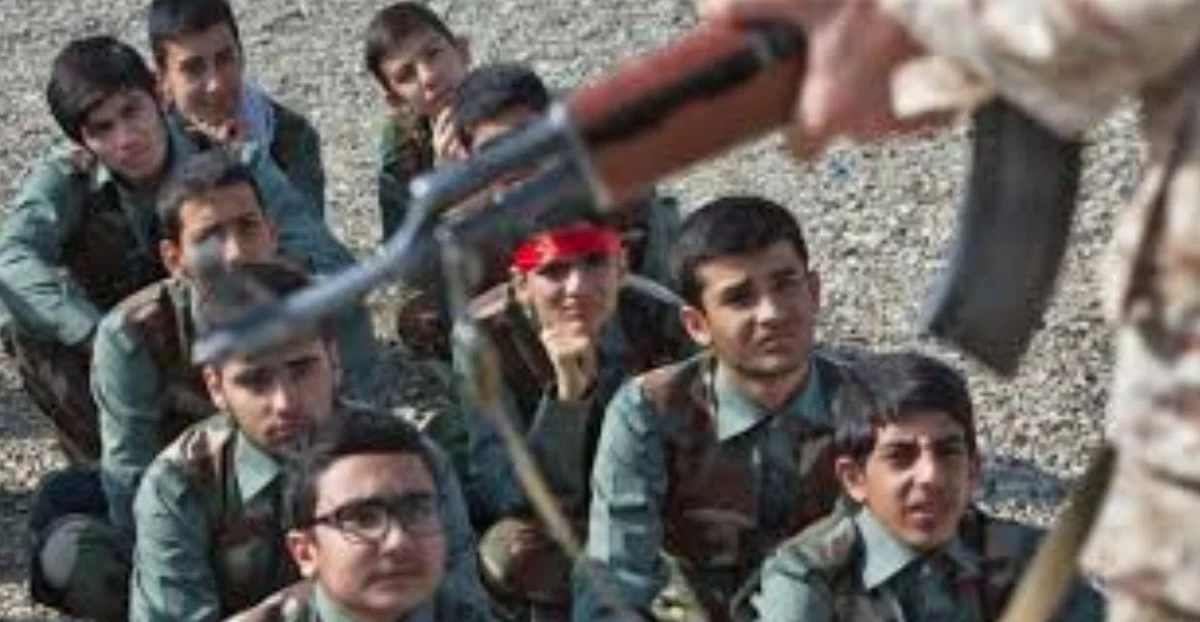
Footage also showed weapons training sessions conducted inside mosques in cities including Ahvaz, Kerman, Shiraz, and Zahedan, with participants—described by state media as volunteers—shown learning combat skills in preparation for potential confrontation with the United States and Israel.
According to Iranian state media commentary, the programmes are part of a broader wartime media posture. Mohsen Barmahani, deputy head of IRIB, defended the broadcasts, saying that in a “war situation” involving multiple global powers, national media adopting a combat-oriented approach was “natural.” He added that presenters appearing with weapons were intended to reinforce ideological messaging.
The broadcasts come amid broader controversy over Iran’s security mobilisation policies, including reports from human rights groups alleging the recruitment of minors into security-related roles.
Human rights organisations have reported that Iran’s Islamic Revolutionary Guard Corps (IRGC) has expanded recruitment campaigns that include individuals as young as 12 for non-combat and support roles such as checkpoint staffing and patrol assistance. The claims have not been independently verified.
Reports also cite the death of an 11-year-old boy, identified by advocacy groups as Alireza Jafari, who was allegedly killed during a strike on an IRGC-linked checkpoint in Tehran. Iranian authorities have not issued an official public confirmation of the circumstances described in those reports.
The IRGC formally announced a civilian recruitment drive in March, reportedly setting a minimum participation age of 12 for certain auxiliary duties. Officials cited in Iranian media have previously said minors have expressed interest in assisting with intelligence patrols and checkpoint operations.
Human rights organisations, including Human Rights Watch, have criticised such practices, warning that the recruitment or use of children in security roles could violate international law, including provisions of the Rome Statute of the International Criminal Court.
Iran has a long and controversial history of youth mobilisation during the Iran-Iraq war in the 1980s, when the Basij militia recruited large numbers of teenagers for frontline and support roles, a practice widely documented by international observers.
The latest reports have renewed scrutiny of Iran’s use of civilian mobilisation structures and the role of state media in promoting militarised messaging amid heightened regional tensions.