


04/10/2026

Share:
04/10/2026
Share:
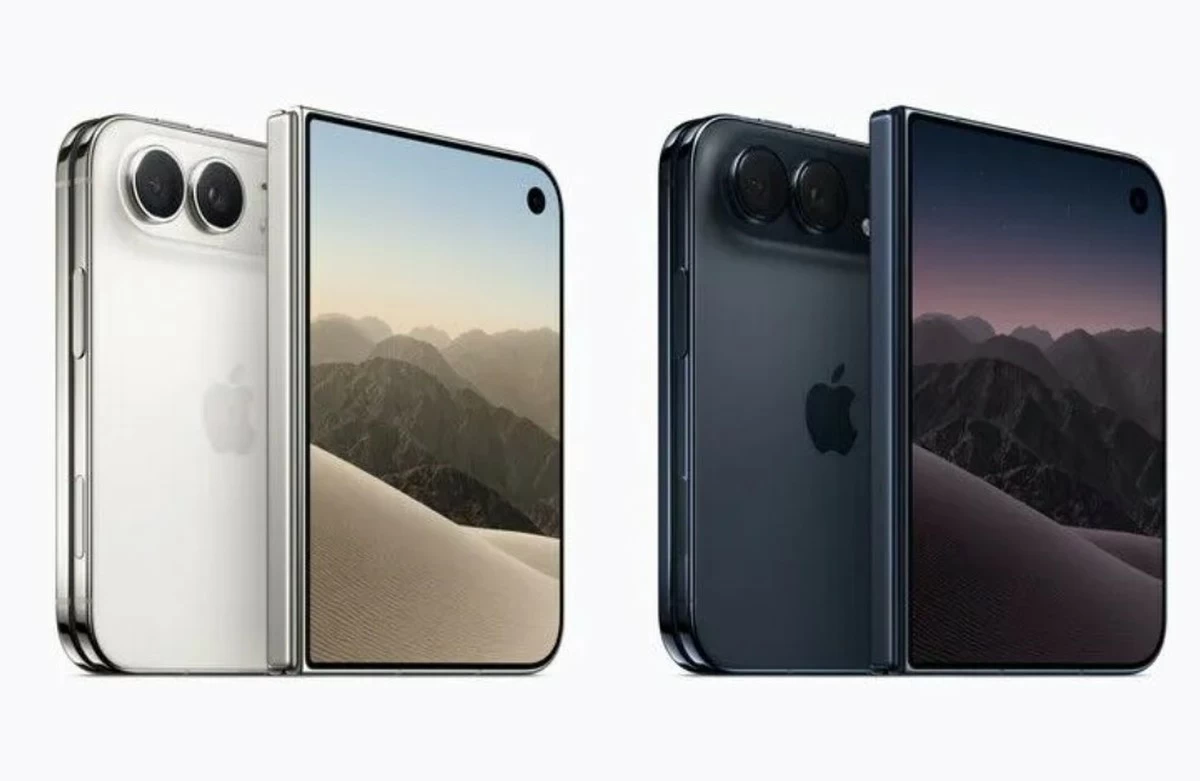

KUWAIT CITY, Oct 4 : Apple's arrival in the foldable-phone market was expected to bring a new approach to technology. But perhaps the most interesting difference between the iPhone Duo and Samsung's Galaxy Z Fold8 is not the hinge, processor or cameras. It is the screen itself.
Apple has chosen a matte nano-texture finish for the 7.6-inch inner display of the iPhone Duo, while Samsung has retained a glossy OLED display with an anti-reflective treatment on the Galaxy Z Fold8.
At first glance, Apple's approach may appear more sophisticated because the matte surface makes reflections and particularly the foldable crease much harder to see.
But there is a question worth asking: does hiding the crease come at the expense of the display itself?
The answer may be YES.
Samsung's approach keeps the OLED experience intact
Samsung's Galaxy Z Fold8 does something fundamentally different. Rather than covering the inner display with a matte surface, Samsung has worked to reduce reflections while preserving the characteristics users expect from a premium OLED screen.
The Fold8's inner display uses an anti-reflective coating that Samsung says can reduce glare and reflections by up to 50 percent. Independent testing has found the treatment highly effective, while Samsung has simultaneously improved the physical construction of the folding display to make the crease considerably less noticeable than earlier generations.
That is important.
Samsung is not simply accepting the weaknesses of a glossy foldable display. It is attacking the reflection problem while retaining the glossy OLED viewing experience.
And that experience matters.
Glossy OLED screens are known for their deep blacks, strong contrast, vibrant colors and crisp presentation. These qualities are particularly important when watching movies, viewing photographs, playing games or reading graphics-heavy content.
Apple's matte screen
The iPhone Duo's nano-texture surface scatters reflected light rather than allowing it to appear as a sharp reflection. This helps make the physical crease far less obvious.
But early observations have also raised questions about the visual trade-off.
Duo's inner screen appeared darker and duller because of its matte finish, while Samsung's Fold8 retains a glossy inner display with anti-reflective treatment.
Samsung has years of experience behind this technology
There is another factor that should not be overlooked.
Samsung is not entering the foldable market for the first time.
The company launched the original Galaxy Fold in 2019 and has spent years refining the technology. The Galaxy Z Fold8 represents the eighth generation of Samsung's Fold family.
Apple's iPhone Duo is its first foldable iPhone, and the experience is visible in Samsung's approach.
The company has already gone through several generations of hinge designs, flexible displays, protective layers, crease reduction and anti-reflective technology. The Fold8 is the product of that accumulated experience.
Even Tom's Guide, while comparing the two phones, describes Samsung as having almost a decade of experience making foldables and calls the Z Fold8 one of its strongest foldables yet.
Apple may have arrived with impressive engineering, but Samsung has been refining this category while Apple was still selling conventional slab phones.
Samsung may have chosen the more practical compromise
The Galaxy Z Fold8's approach could therefore be viewed as the more balanced solution.
- Samsung has reduced reflections.
- It has reduced the crease.
- It has strengthened the folding display.
- It has retained the glossy OLED character.
- And it has done so without requiring users to accept completely matte inner screen.
Apple has taken a more radical route with the Duo.
The result is undeniably clever, but clever does not automatically mean better.
The iPhone Duo may have the advantage when it comes to making the crease disappear, but Samsung's Fold8 may have the more convincing philosophy when it comes to preserving the quality of what is being displayed.
Tech Review
by John C Fernandes
Online Media & IT Manager - Arab Times