



15/08/2026

Share:
15/08/2026
Share:
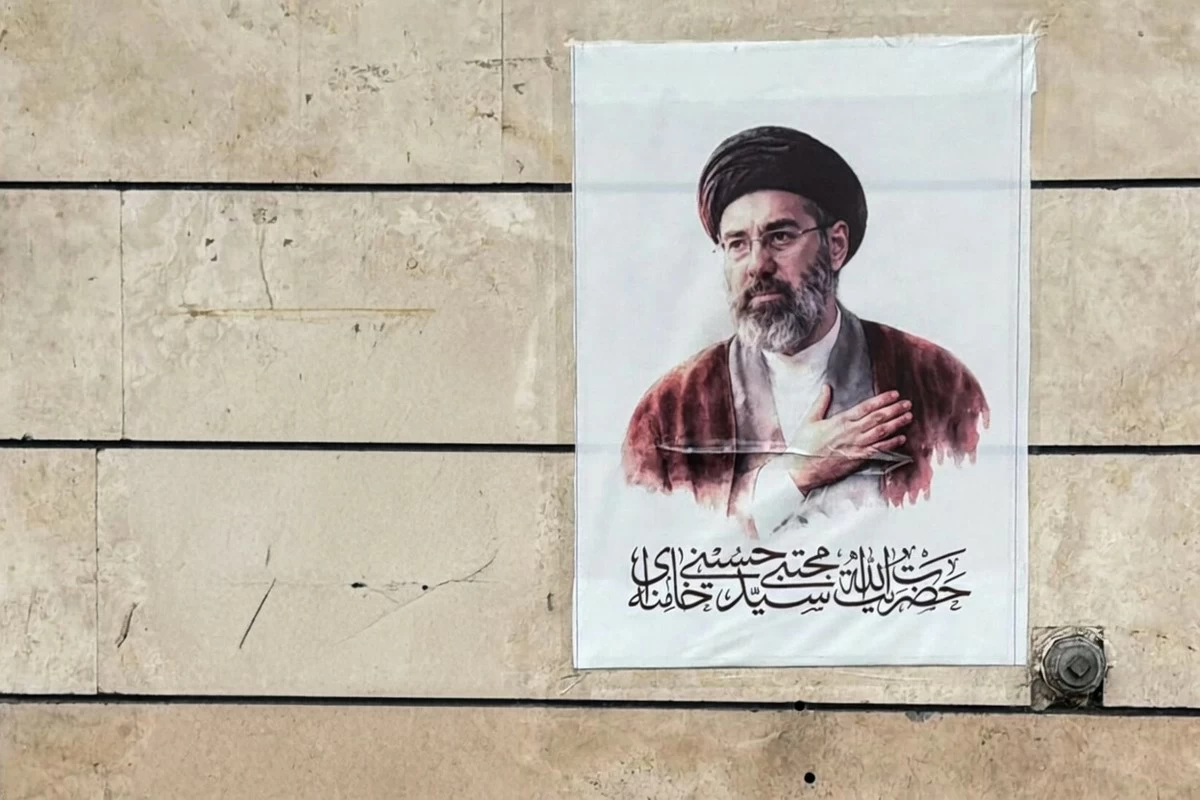

TEHRAN, Aug 15: Iran’s Supreme Leader Mojtaba Khamenei has instructed newly appointed Basij commander Hossein Taeb to broaden the paramilitary force’s reach across Iranian society, an Iranian lawmaker said Saturday, as continued uncertainty surrounds the supreme leader’s health and whereabouts.
Mojtaba Zarei, a member of parliament’s National Security and Foreign Policy Committee, said in a post on X that Khamenei had directed Taeb to move the Basij away from a narrow focus on membership figures and “specific preferences” and instead expand its engagement across different sections of society.
The new approach, Zarei said, should shift the question from “how many members do we have?” to “how many people have we brought into the field to create hope?”
The comments came days after Khamenei appointed Taeb, a veteran intelligence official and former head of the Islamic Revolutionary Guard Corps’ Intelligence Organization, as commander of the Basij. The appointment is widely viewed as part of a broader effort to strengthen Iran’s internal security and grassroots networks amid the continuing conflict and domestic pressure.
Khamenei remains unseenThe announcement has also renewed attention on the extraordinary lack of a verified public appearance by Mojtaba Khamenei since he became Iran’s supreme leader.
Khamenei was appointed after his father, Ayatollah Ali Khamenei, was killed in a US-Israeli strike on February 28. Iranian officials have said the younger Khamenei was injured in the attack, while foreign reports have offered differing assessments of the severity of his injuries.
Despite his position as supreme leader, Mojtaba Khamenei has not appeared publicly at major national events, including the funeral ceremonies for his father. His messages have instead been issued in writing and read by state television presenters rather than delivered personally.
His father-in-law, senior Iranian politician Gholam-Ali Haddad-Adel, said in July that Mojtaba was “not communicating with any party or individual for specific reasons,” without explaining what those reasons were. Haddad-Adel expressed hope that Khamenei was in good health.
Old footage and AI images fuel scrutinyThe absence has been accompanied by a steady flow of photographs and videos purporting to show the supreme leader. However, several widely circulated images have subsequently been identified as old, digitally manipulated or AI-generated.
For example, an image presented as showing an injured Mojtaba Khamenei was found to have been generated using artificial intelligence. Other images circulated through accounts associated with the Iranian leadership were identified as manipulated versions of older photographs.
Iranian media has also released undated footage of Khamenei. One such video showed him teaching religious studies, but its date and circumstances were not independently established, meaning it does not demonstrate when or where the footage was recorded.
The distinction is important: the existence of fabricated or recycled material does not by itself prove that Khamenei is incapacitated, dead or unable to govern. It does, however, underscore the lack of independently verifiable recent visual evidence of the supreme leader.
International reporting has noted that Iranian state media has increasingly relied on archival imagery, AI-generated visuals and indirect statements while presenting Khamenei to the public.
The lack of a confirmed recent appearance has therefore become a significant information gap surrounding Iran’s leadership. While Tehran maintains that Khamenei remains in charge, the continued secrecy has left questions about his health, physical condition and the extent to which day-to-day authority is being exercised personally by him or through Iran’s powerful military and security institutions.
Against that backdrop, the decision to place Taeb — a figure associated with Iran’s intelligence and protest-control apparatus — at the head of the Basij could signal an effort to reinforce the regime’s grassroots security infrastructure and strengthen its ability to respond to internal unrest.
For now, however, there is no independently verified evidence establishing that Khamenei is incapacitated or has ceased exercising authority. The strongest verifiable fact remains his continued absence from public view, despite repeated official statements portraying him as active and in control.