



24/08/2026

Share:
24/08/2026
Share:

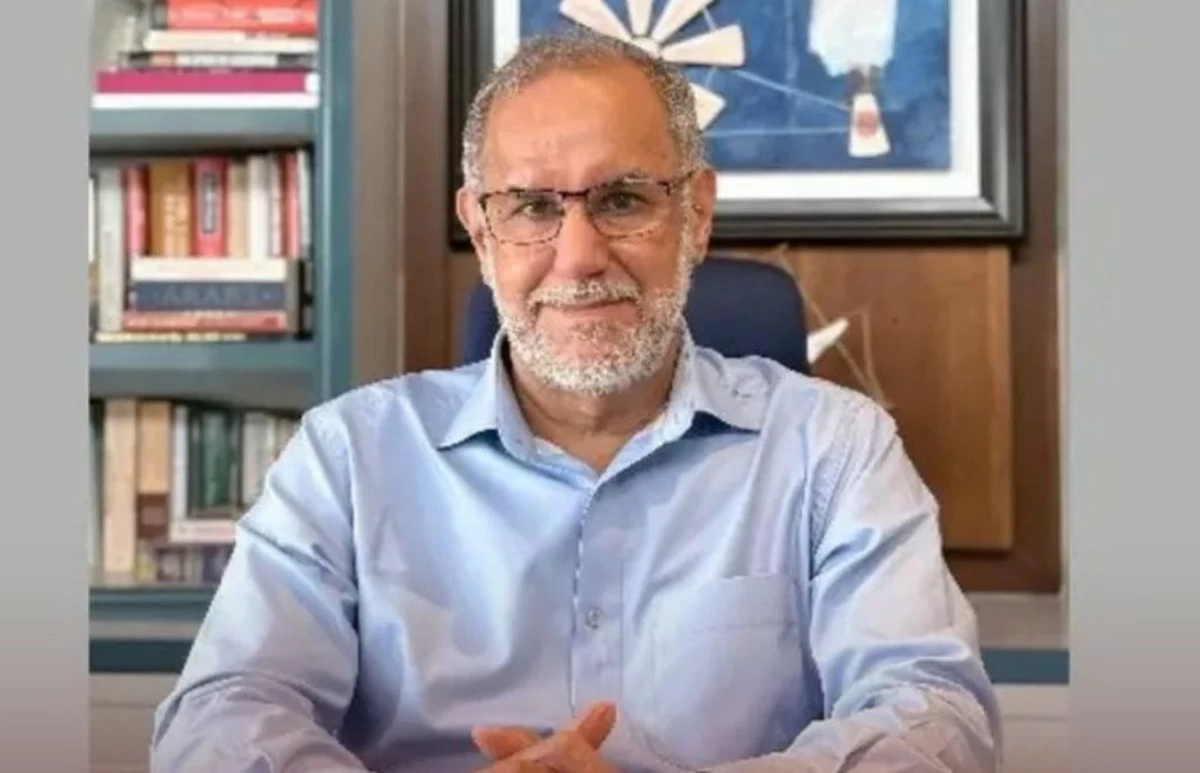
NEW DELHI, August 24: Former Indian diplomat Navdeep Suri has raised concerns over the verification process under the Election Commission of India’s (ECI) Special Intensive Revision (SIR) of electoral rolls, after he personally faced difficulties during the exercise in Punjab.
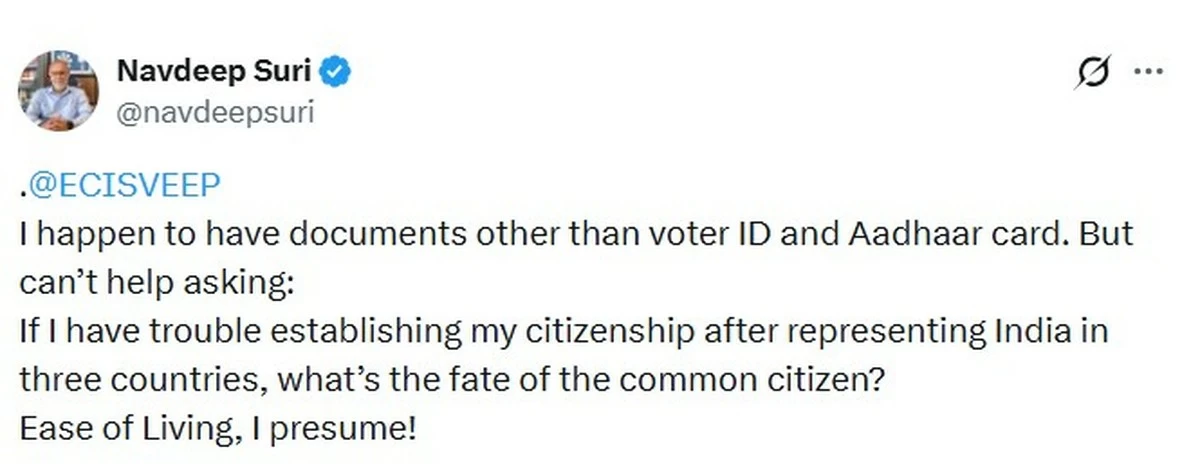
Suri, a retired Indian Foreign Service officer who has served as India’s High Commissioner to Australia and Ambassador to the United Arab Emirates and Egypt, said he was required to submit his voter ID and Aadhaar card to a Booth Level Officer (BLO) as part of the verification process.
In a social media post, Suri said he was initially assured that his documents were in order. However, he was later informed that some of his details did not match electoral records from 2003, which are being used as part of the verification process.
Suri said he was asked to collect a notice and subsequently return with documents proving his Indian citizenship.
“I was not in India in 2003, so they have asked for passport as proof,” he said, adding that he was able to provide additional identification documents along with his voter ID and Aadhaar card.
Questioning the difficulties faced by ordinary citizens, Suri said: “If I have trouble establishing my citizenship after representing India in three countries, what’s the fate of the common citizen?”
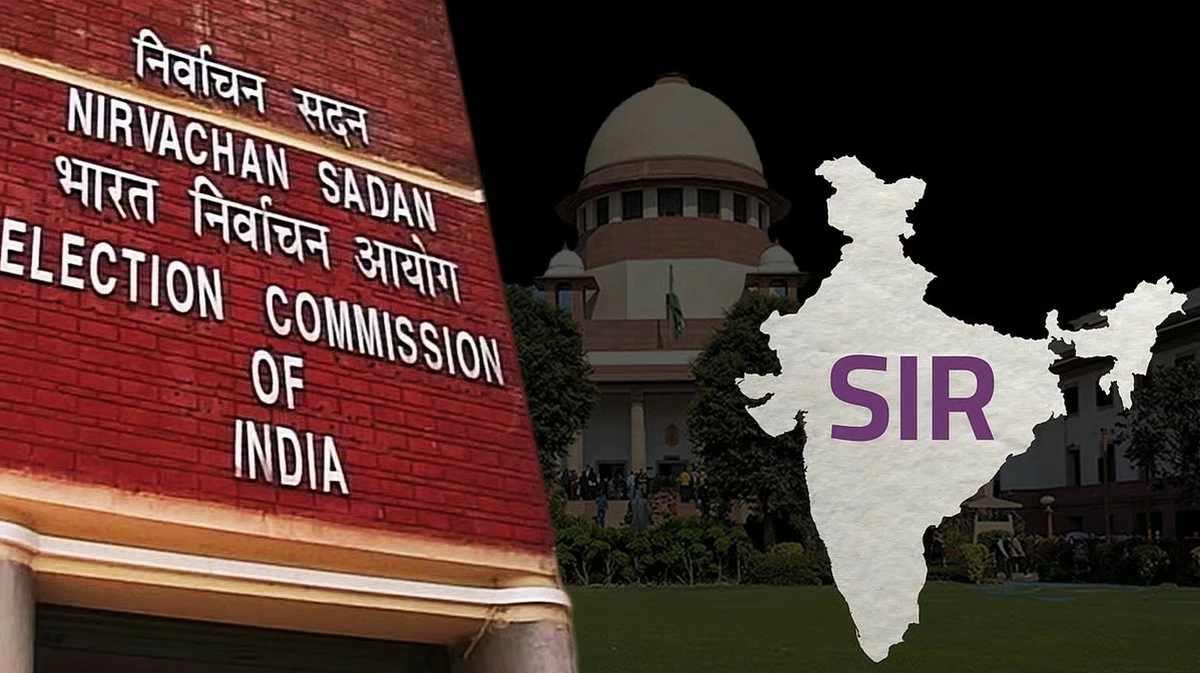
The Special Intensive Revision is an ECI exercise aimed at updating and verifying electoral rolls, identifying duplicate or ineligible entries and ensuring that eligible voters remain on the rolls.
The exercise was first conducted in Bihar in 2025 before being expanded to additional states and Union Territories in subsequent phases.
The process has faced criticism from opposition parties and civil society groups, which have raised concerns about genuine voters potentially being excluded from electoral rolls because of documentation or verification difficulties.
In May, India’s Supreme Court upheld the legality of the electoral roll revision but clarified that the ECI does not have the authority to determine whether an individual is an Indian citizen.
Major concerns and fallout of SIR
- Risk of genuine voters being excluded: Concerns have been raised that eligible voters could be left off electoral rolls if they fail to complete the verification process or provide the required documents.
- Public anxiety over documentation: Citizens without older records or those whose details do not match historical electoral rolls may face additional scrutiny and uncertainty.
- Bureaucratic burden: Voters are required to approach officials, submit documents and, in some cases, respond to notices, creating additional administrative hurdles.
- Political controversy: Opposition parties have accused the government and the ECI of using the revision process in a politically motivated manner, while supporters maintain that the exercise is necessary to clean up electoral rolls.
- Protests and legal challenges: The SIR process has triggered protests and legal challenges in different parts of India, with critics seeking greater safeguards to prevent the wrongful exclusion of voters.
- Financial hardship for some voters: People who need to travel to their hometowns or government offices to obtain documents or attend verification proceedings may face additional travel expenses and loss of daily wages.
- Concerns over public trust: Disputes over voter verification and the possibility of errors have raised concerns about public confidence in the electoral roll revision process and the neutrality of the institutions overseeing it.
The controversy comes as the ECI continues its efforts to update electoral rolls, with political parties and civil society groups calling for greater transparency and safeguards to ensure that no eligible voter is denied the right to vote.