



13/01/2026

Share:
13/01/2026
Share:
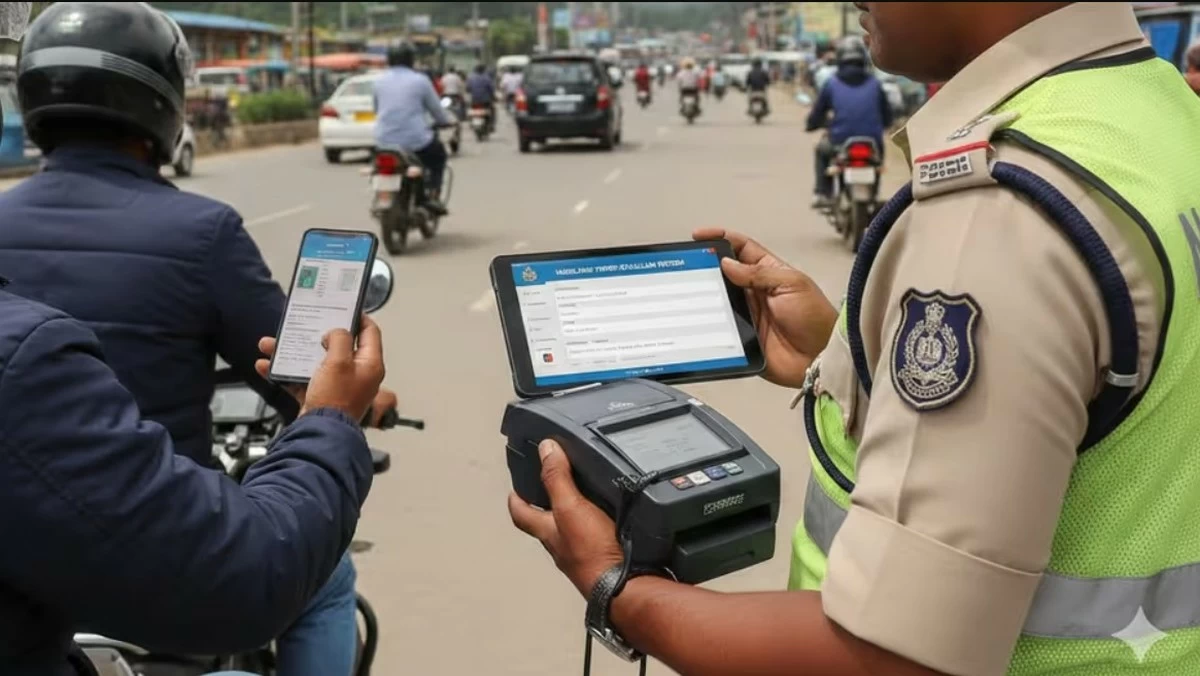

NEW DELHI, Jan 14: As cities grow busier and roads become more crowded, managing traffic violations has become a significant challenge for states across India. Long queues at police booths, paper-based challans, and delayed payments once made the process slow and frustrating.
However, today, technology is changing the way fines are issued and collected through an e challan. From automated cameras to digital apps, states are modernising traffic fine systems to make roads safer, faster, and more transparent for everyone.
6 Key Technological Changes in Traffic Fine Collection in Different StatesAccording to the Government of India, Tamil Nadu has the highest number of traffic challans at 5,57,62,916 due to violations of traffic rules. Apart from Tamil Nadu, Uttar Pradesh, Kerala, and Haryana also have high numbers of traffic violations.
Therefore, modernising traffic fine collection is becoming important, with many states implementing the following technologies:
1. Centralised e-Challan Portals (Detection → Digital Notice)Several states are issuing e-challans by interfacing their local Parivahan/eChallan setups with the central Parivahan/eChallan infrastructure or their respective state portals instead of issuing handwritten tickets. This shift has made it easier for citizens to view and pay fines online, including those related to Bangalore traffic fines.
A national back-end is available on the Ministry/NIC’s Parivahan e-Challan portal, which various states use to track notices. This centralisation enables the police in Delhi and Punjab to send digital notices to vehicle owners and link them to the records.
2. CCTV + ANPR (Automatic Detection at Scale)Automated Number Plate Recognition (ANPR) and CCTV networks are used to identify individuals who violate traffic rules. For example, Bengaluru (Karnataka) and Chennai (Tamil Nadu) are two such states, where large-scale ANPR/CCTV installations have been successful.
Likewise, Trichy and other municipal police forces have implemented ANPR to collect evidence in support of issuing e-challans. The goal of setting up these camera networks is to generate evidence for the traffic control room. Operators then validate offences and issue them digitally.
3. AI and Image Analytics (Reducing Manual Review)Artificial intelligence-powered analytics aid in accurately reading vehicle number plates and classifying violations (helmet and mobile use). Additionally, they reduce the number of false positives that result in a challan being issued.
Private vendors and system integrators that supply multiple state projects provide the AI modules. We utilise the modules to speed up verification and broaden coverage. Cities are increasingly involving these tools in launches to triage video streams before human intervention.
4. Mobile Apps and Citizen Portals (Access and Appeal)Citizen interfaces like mParivahan, state traffic apps, and local police portals enable drivers to check their notices, see evidence pictures, and raise disputes. This is supported by the fact that about 12.93 crore people have the mParivahan app as of 2025.
Delhi Traffic Police, Karnataka/Bengaluru portals, and state platforms are going digital with the national system integration to facilitate citizens in seeing and clearing their fines without the need to visit offices physically. These applications also facilitate OTP-based verification for ownership details retrieved from RTO databases.
5. Digital Payments — UPI, BBPS and Gateway Integration (Instant Settlement)States are equally moving towards integrating UPI and Bharat Bill Payment System as payment channels. This will enable drivers to make payments instantly from their phones, adding to the e-challan revenue of over ₹5,02,84,175 as of 2025. [4]
Gujarat has recently enabled UPI payments for traffic challans through popular payment apps. Similarly, West Bengal and Punjab have connected their state portals with payment gateways for the online settlement of dues and facilitation of reconciliation. Hence, instant payments reduce collection leakage and speed up revenue remittance to state treasuries.
6. Integration with VAHAN/SARATHI and Inter-Departmental Data Linking (Verification)The new generation of the system obtains vehicle and licence details directly from VAHAN/SARATHI. Therefore, they can issue notices automatically and also locate people who violate the law repeatedly. The connection enables enforcement agencies in states like Telangana to equip themselves with the data of the intended recipients.
Additionally, it provides an opportunity for cross-checking during vehicle-related transactions. The national e-challan platform is a good example that makes explicit use of these registries for verification purposes.
Final WordsIn the coming years, digital traffic enforcement is expected to continue expanding, supported by smarter cameras, integrated databases, and seamless online payment channels. As more states adopt these systems, the focus will shift to fairness, transparency, and dispute reduction. Modernising traffic fine collection is not only about convenience. It supports safer roads, responsible driving, and efficient governance. With consistent upgrades and greater public awareness, India can move toward a more disciplined, technology-driven traffic ecosystem.