



18/04/2026

Share:
18/04/2026
Share:

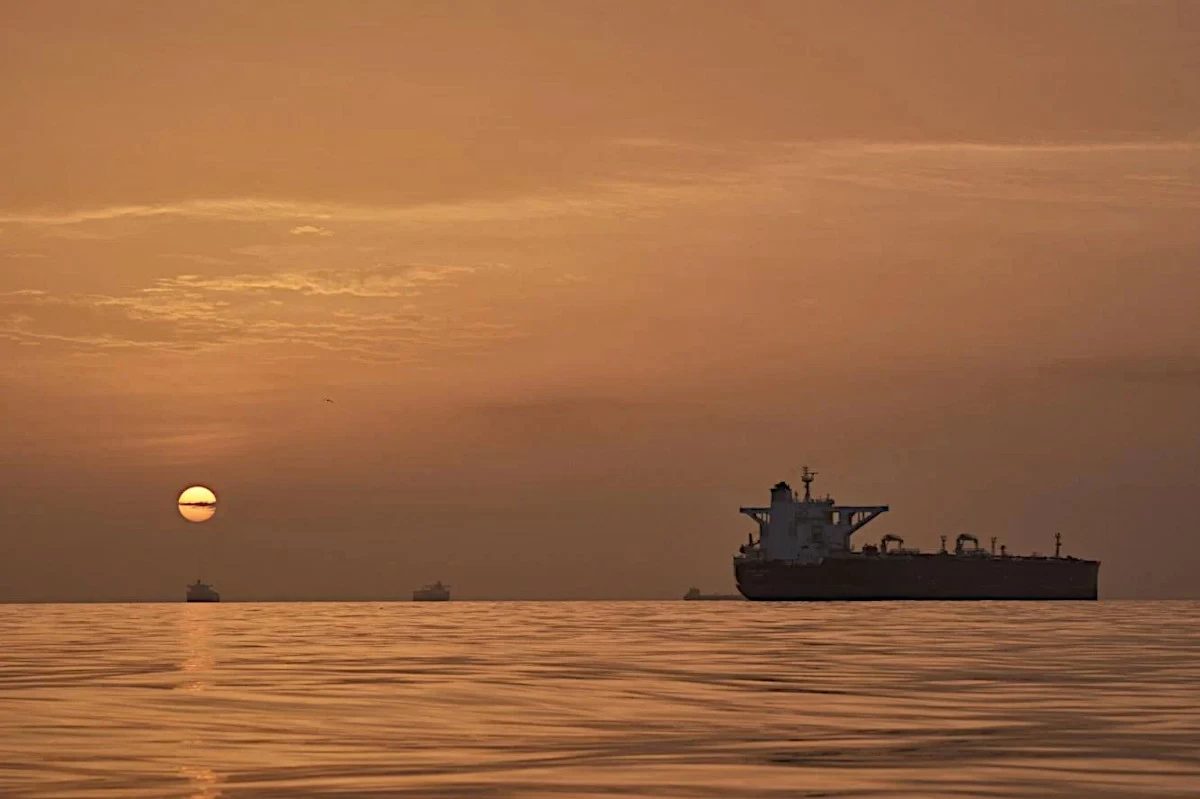
The sun rises behind tankers anchored in the Strait of Hormuz off the coast of Qeshm Island, Iran, Saturday, April 18, 2026. (AP)
KUWAIT CITY, April 18, (Agencies): The Kuwaiti Army and Ministry of Interior underlined Friday the significance of concerted efforts to cement integration between military and security organs in a bid to fortify national security, stability and preparedness. This came during a meeting held between Chief of the Army General Staff Lieut. Gen. Khaled Al- Shuraiaan and Undersecretary of the Ministry of Interior Maj. Gen. Abdulwahab Al-Wuhaib, said the ministry in a press release. During the meeting, they also emphasized that it is essential for military and security agencies to maintain coordination and cooperation to address current security challenges and enhance performance efficiency, it added. In related news, Major General Riyad Tawari, Assistant for Financial Affairs and Resource Management at the Kuwait National Guard, conducted an inspection visit to several sites under the responsibility of National Guard personnel, reports Al-Seyassah daily.
During the visit, Major General Tawari emphasized the importance of maintaining the highest levels of readiness and discipline, which enhances the ability of National Guard units to support various ministries and state institutions, and to contribute to strengthening the security and stability of the country under its wise leadership. He conveyed to the personnel the greetings and appreciation of the National Guard leadership, expressing its pride in the important national role played by National Guard personnel in securing vital sites in various locations and units. He also commended their high level of readiness and morale.
Meanwhile, Foreign Minister Sheikh Jarrah Jaber Al- Ahmad Al-Sabah reaffirmed Kuwait’s firm position on the Strait of Hormuz as a natural international waterway governed by international law, particularly the UN Convention on the Law of the Sea, which guarantees the right of transit passage. In a statement on Friday, the Ministry of Foreign Affairs said Sheikh Jarrah made the remarks while heading Kuwait’s delegation, representing His Highness the Amir Sheikh Meshal Al-Ahmad Al-Jaber Al-Sabah, at an international meeting on freedom of navigation in the Strait of Hormuz. The meeting was co-chaired by French President Emmanuel Macron and UK Prime Minister Keir Starmer, with high-level participation from several countries and held via videoconference to discuss developments in the Strait.
In his virtual address, the Kuwaiti top diplomat commended the efforts of France, the UK, and international partners in ensuring a safe environment for maritime navigation through the Strait, in line with shared global economic interests, including restoring supply chains and securing energy and food supplies. He reiterated Kuwait’s rejection of any unilateral measures or attempts to impose a new reality that contravenes international legal frameworks governing the Strait. Sheikh Jarrah stressed the need to pursue parallel tracks to intensify diplomatic efforts to ensure the freedom, security, and safety of maritime navigation, alongside ensuring Iran’s compliance with UN Security Council Resolution 2817 and full adherence to international law and the 1982 UNCLOS.
The standoff over the Strait of Hormuz quickly escalated again Saturday as Iran reversed its reopening of the crucial waterway and fired on ships attempting to pass, in retaliation after the United States pressed ahead with its blockade choking off Iranian ports. Confusion over the strait, through which roughly one-fifth of the world’s oil passes, threatened to deepen the energy crisis roiling the global economy and push the two countries toward renewed conflict. The ceasefire between them is due to run out by mid-next week, and Pakistani mediators were working to put together a new round of direct negotiations to keep the truce going.
Iran’s joint military command said Saturday that “control of the Strait of Hormuz has returned to its previous state ... under strict management and control of the armed forces.” It warned that it would continue to block transit through the strait as long as the U.S. blockade of Iranian ports remained in effect. Revolutionary Guard gunboats on Saturday opened fire on a tanker transiting the strait and an unknown projectile hit a container vessel, damaging some of the containers, the British military’s United Kingdom Maritime Trade Operations center said without identifying the vessels.
TankerTrackers.com reported that two Indian-flagged vessels were forced to turn around after being fired on by Iran, including a supertanker carrying Iraqi oil. The renewed escalation resulted from attempts by both sides to maintain leverage amid negotiations over an ultimate deal to end the war and address Iran’s nuclear program. For the United States, the blockade is a key tool to keep up pressure on Iran, short of resuming bombardment. By cutting off much of Iran’s exports and imports, it could strangle an already crippled economy. For Iran, closure of the strait - imposed after the U.S. and Israel launched their surprise war on the country on Feb. 28 - has proven to be perhaps its most powerful weapon in the confrontation, causing oil prices to spike, threatening the world economy and inflicting political pain on Trump.
On Friday, Iran announced the reopening of the strait to commercial vessels after a 10-day truce was sealed between Israel and the Iranian-backed Hezbollah militant group in Lebanon. The reopening triggered a fall in oil prices. Iran’s closure of the strait since has triggered an energy crisis that has roiled the global economy. U.S. President Donald Trump, however, said that even with the reopening, the American blockade “will remain in full force” until Tehran reaches a deal with the U.S. Trump imposed the blockade, halting all shipping to and from Iranian ports as the ceasefire between Iran and the U.S was announced last week to keep pressure on Iran to make a deal in Pakistan- brokered talks to end almost seven weeks of war. His comments triggered immediate outcry from Iranian officials, calling the blockade a violation that would prompt a re-closure of the strait.
“Americans are risking the international community, risking the global economy through these, I can say, miscalculations,” referring to the blockade, Iranian Deputy Foreign Minister Saeed Khatibzadeh told the Associated Press on Saturday. “Everybody must understand to what extent American side is risking the whole ceasefire package,” he said, speaking after a diplomatic forum in Antalya, Turkey. Ebrahim Azizi, head of the Iranian parliament’s National Security Commission, said that the strait was “returning to the status quo,” which he had earlier described as ships requiring Iranian naval authorization and toll payment before transiting. A data firm, Kpler, said movement through the strait remained confined to corridors requiring Iran’s approval. U.S. forces have sent 21 ships back to Iran since the blockade began on Monday, U.S. Central Command said on X.
The renewed standoff over the strait came hours after Pakistani Foreign Minister Ishaq Dar told the forum in Antalya that his country’s diplomats were working to “bridge” differences between the US. and Iran. Pakistani officials were fanning out for talks with senior players. Its army chief met senior Iranian officials in Tehran while its prime minister held talks in Antalya with Turkey’s president and Qatar’s emir. Pakistan is expected to host a second round of negotiations between Iran and the U.S. early next week. But Khatibzadeh said the Iranians were not ready for a new round of faceto- face talks with the U.S. because the Americans “have not abandoned their maximalist position.” He also said Iran will not hand over its stock of 970 pounds (440 kilograms) of enriched uranium to the United State calling the idea “a non-starter.”
Khatibzadeh did not address other proposals for what to do with the material, saying only, “we are ready to address any concerns.” On Friday, Trump said the U.S. will go into Iran and “get all the nuclear dust,” referring to the enriched uranium, which is believed to be buried under nuclear sites badly damaged by U.S. military strikes last year.