



01/05/2026

Share:
01/05/2026
Share:

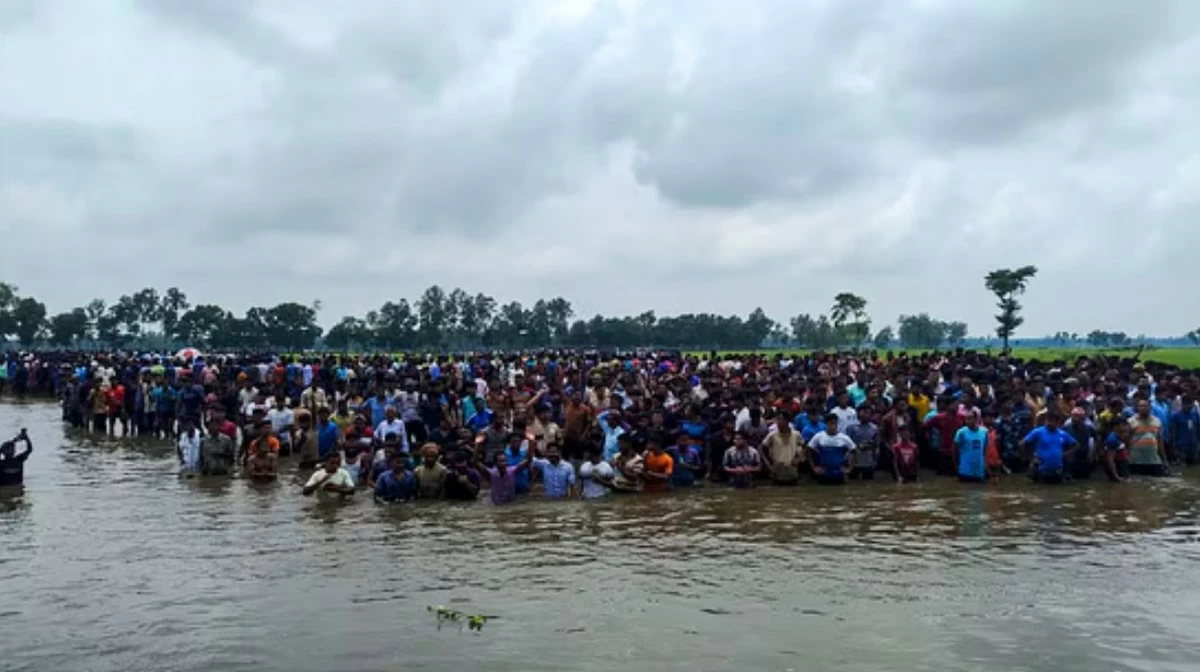
Bangladeshi nationals gather at the international border at Sitalkuchi in Cooch Behar on Friday in an attempt to enter India. (PTI)
NEW DELHI, May 1: India is considering a controversial and unprecedented proposal to deploy apex predators, such as crocodiles and venomous snakes along unfenced riverine stretches of its border with Bangladesh, in what officials describe as a potential “natural deterrent” against undocumented migration and cross-border smuggling.
The proposal emerged in an internal communication dated March 26 from India’s Border Security Force (BSF), which is tasked with guarding the country’s frontiers with Pakistan and Bangladesh. The directive instructed units along the eastern and northeastern sectors to assess the “feasibility of deploying reptiles in vulnerable riverine gaps,” where traditional fencing has proven impractical due to terrain constraints, reports Al Jazeera.
Stretching over 4,096 kilometers (2,545 miles), the India-Bangladesh border traverses a complex landscape of hills, marshlands, and rivers across West Bengal, Assam, Meghalaya, Mizoram, and Tripura. While nearly 3,000 kilometers have already been fenced, significant portions (particularly low-lying and riverine areas) remain exposed. These zones are often densely populated on both sides, further complicating efforts to install physical barriers.
According to India’s Ministry of Home Affairs, fencing efforts have been slowed by a combination of geographic challenges, unresolved land acquisition cases, and resistance from local communities. Despite this, authorities maintain that the BSF has continued to play a critical role in curbing cross-border crime and undocumented migration.
However, the suggestion of using wildlife as a border control mechanism has triggered widespread alarm among human rights advocates and environmental experts.
Critics argue that deploying dangerous animals in open ecosystems is both impractical and ethically troubling. Angshuman Choudhury, a researcher focusing on India’s eastern border regions, described the proposal as “absurd” and warned that such animals cannot distinguish between migrants and local residents. “Once released, crocodiles and snakes will not differentiate between Indian and Bangladeshi civilians,” he said, calling the idea a “dangerous and dehumanising” form of border enforcement.
The proposal also raises broader concerns about the Indian government’s approach to migration and citizenship, particularly under Prime Minister Narendra Modi’s administration. The government has long framed undocumented migration—especially from Bangladesh—as a demographic and security concern, a stance that critics say disproportionately targets Bengali Muslims.
Human rights observers argue that policies aimed at identifying and deporting undocumented migrants have, in practice, led to the harassment and wrongful classification of Indian citizens as foreigners. In states like Assam, quasi-judicial “foreigners’ tribunals” have been used to determine citizenship status, often placing the burden of proof on individuals who may lack formal documentation.
Harsh Mander, a prominent human rights activist, criticized what he described as a shift toward “extrajudicial methods” of border management. Rather than relying on legal processes or bilateral engagement with Bangladesh, he said, authorities have resorted to coercive tactics, including alleged forced expulsions.
Environmental experts, meanwhile, warn that introducing non-native species into fragile ecosystems could have severe ecological consequences. Rathin Barman of the Wildlife Trust of India noted that crocodiles are not indigenous to most of the proposed deployment areas. Relocating them could lead to high mortality rates and disrupt local biodiversity.
“Any manipulation of species distribution can destabilize entire ecosystems,” Barman cautioned, adding that such measures are “technically unsound” and unlikely to succeed in dynamic river systems.
The risks extend beyond wildlife. Flood-prone riverine zones could allow venomous snakes to spread into nearby villages, posing a direct threat to local communities, particularly fishermen and farmers who depend on these waterways for their livelihoods.
Critics emphasize that animals cannot serve as selective enforcement tools. “They will attack indiscriminately,” Mander said, warning that such a policy could endanger both Indian and Bangladeshi civilians living along the border.
As debate intensifies, the proposal has come to symbolize the broader tensions between border security, human rights, and environmental protection—raising difficult questions about how far states should go in enforcing territorial control.