


30/05/2026

Share:
30/05/2026
Share:

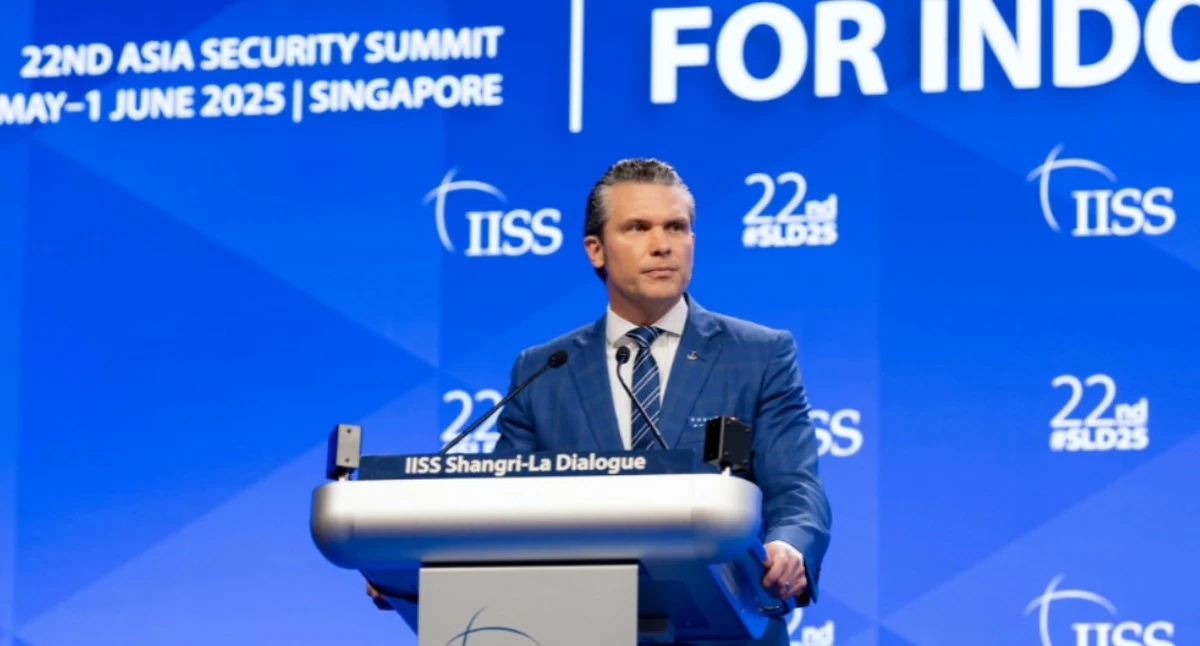
SINGAPORE, May 30: US War Secretary Pete Hegseth said on Saturday that the naval blockade on Iran remains fully in effect and warned that Washington is prepared to resort to military action again if negotiations fail to prevent Tehran from acquiring a nuclear weapon.
Speaking in Singapore, Hegseth said the blockade continues to be a key element of US pressure on Iran and noted that the Strait of Hormuz has featured prominently in discussions with American partners.
“The blockade is very much still in place,” Hegseth said, stressing that any future arrangement with Iran must guarantee unrestricted access through the strategic waterway.
“Once a deal is had or not, depending on the choice they make, it will be an open strait, a toll-free strait that the entire world can use, which is the way that it should be,” he said.
Hegseth rejected Iranian claims of control over the Strait of Hormuz, arguing that US military presence and operations have shaped the current negotiating environment.
“They want to say that they control the Strait, but we do,” he said. “Everything behind the scenes shows that we are in control when it comes to that, including how the dynamics of the negotiation are coming together.”
Addressing ongoing nuclear talks, Hegseth said President Donald Trump’s position remains unchanged and that any agreement must ensure Iran never develops a nuclear weapon.
“The goalposts haven’t shifted at all,” he said, adding that Tehran understands Washington’s expectations “very, very clearly.”
“We think we’re in a good place to make that deal,” Hegseth said. “Or they can deal with the War Department. And we are prepared. We’re postured even stronger today than we were on day one to address it that way if we have to.”
Hegseth also highlighted efforts to strengthen the US defense industrial base, citing increased production of air defense missiles, Tomahawk cruise missiles and other munitions, alongside continued investment in drone technology.