


20/05/2026

Share:
20/05/2026
Share:

NEW DELHI, May 20: Cockroach Janta Party, a satire website that surfaced just days ago, has over 6.6 million followers on Instagram.
Abhijeet Dipke hasn’t slept in three days, and he’s not complaining. His phone is on fire, his notifications are exploding, and a throwaway joke has detonated into one of India’s wildest online political uprisings.
The 30-year-old Boston University PR grad has gone from obscurity to ringleader overnight, spearheading a viral, tongue-in-cheek rebellion: the “Cockroach Janta Party.” What started as a sarcastic jab is now a full-blown digital insurgency, pulling in thousands by the hour.
The spark? A courtroom bombshell.
India’s Chief Justice Surya Kant lit the fuse last week when he blasted “parasites” attacking the system—and compared jobless young Indians to “cockroaches” with no place in society. The remark, dropped in open court, hit like a slap. Even after a quick cleanup—Kant insisted he meant fraudsters, not the youth—the damage was done.
Gen Z wasn’t having it.
Furious, unemployed, and fed up with sky-high inflation and deepening divides after 12 years of Narendra Modi’s rule, young Indians turned rage into rocket fuel. Enter Dipke, who fired off a now-viral line on X: “What if all cockroaches come together?”
Boom.
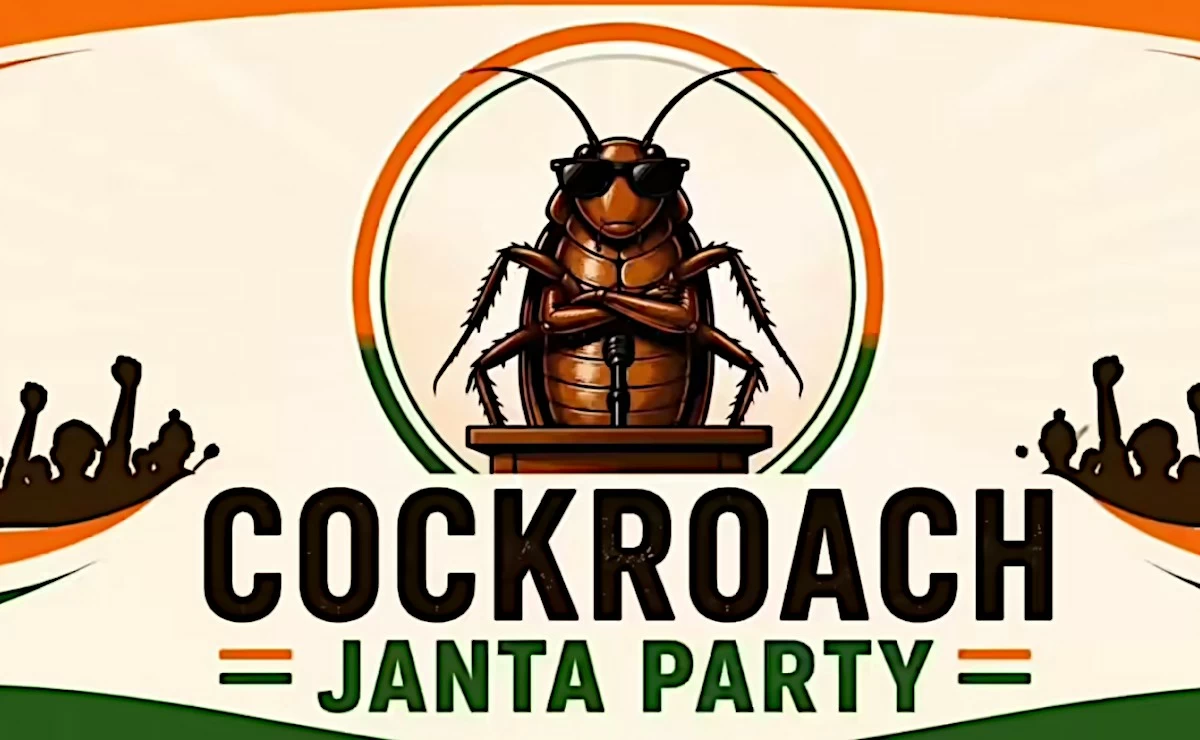
Within 24 hours, the Cockroach Janta Party was born—complete with slick branding, social media dominance, and a savage sense of humor aimed squarely at India’s political elite. The name itself is a not-so-subtle dig at Modi’s Bharatiya Janata Party.
And it’s exploding.
Three million followers in three days. Over 350,000 sign-ups. Even political heavyweights are jumping on board. What began as a meme is morphing into a movement—with bite.
“Those in power think we’re cockroaches?” Dipke fired back from Chicago. “Fine. Cockroaches thrive in rot. That tells you everything about the system.”
The message is landing. Hard.
Retired bureaucrats, opposition politicians, and disillusioned youth are rallying behind the satire, calling it a rare breath of fresh air in a climate many say is choked by fear and censorship. Some see irony. Others see truth. Many see both.
And here’s the twist: the insult may have backfired.
“Cockroaches survive anything,” one supporter said. “Now they’re organizing—and crawling all over the system.”
Behind the laughs is a darker undercurrent. India’s youth bulge—millions of graduates pouring out each year—faces brutal odds: unemployment rates nearing 30%, soaring living costs, and shrinking opportunities. Add exam scandals, political pressure, and a media landscape critics say is increasingly compliant, and you’ve got a generation on edge.
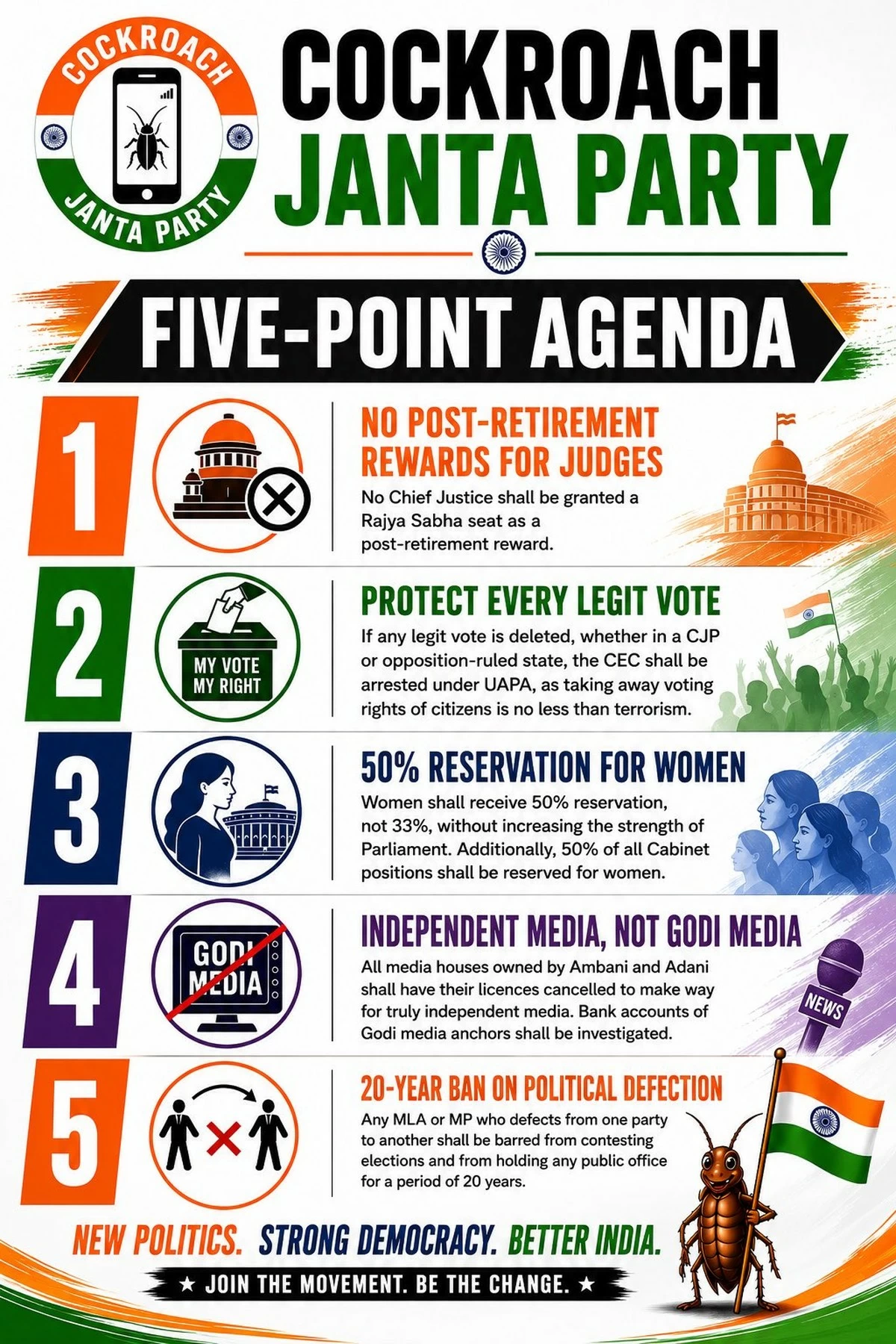
Dipke’s party leans into the chaos. Its “membership criteria”? Unemployed. Chronically online. Professionally ranting. Proudly lazy. Its manifesto? A razor-edged parody of everything from voter manipulation claims to cozy ties between power and big business.
It’s absurd. It’s hilarious. And it’s hitting a nerve.
Even seasoned activists say the joke is doing serious work—channeling anger, cracking open debate, and exposing a hunger for alternatives in a political system many feel has gone stale.
“The joke has escaped the lab,” one commentator said. “And people are starting to believe it might be better than reality.”
As for Dipke, the accidental leader? He’s running on fumes, skipping sleep to keep the momentum alive, juggling memes with messaging, satire with strategy.
Because this isn’t just a punchline anymore.
“For too long, people stayed quiet,” he said. “Now there’s a moment—and I’m not letting it go.”