



19/02/2026

Share:
19/02/2026
Share:
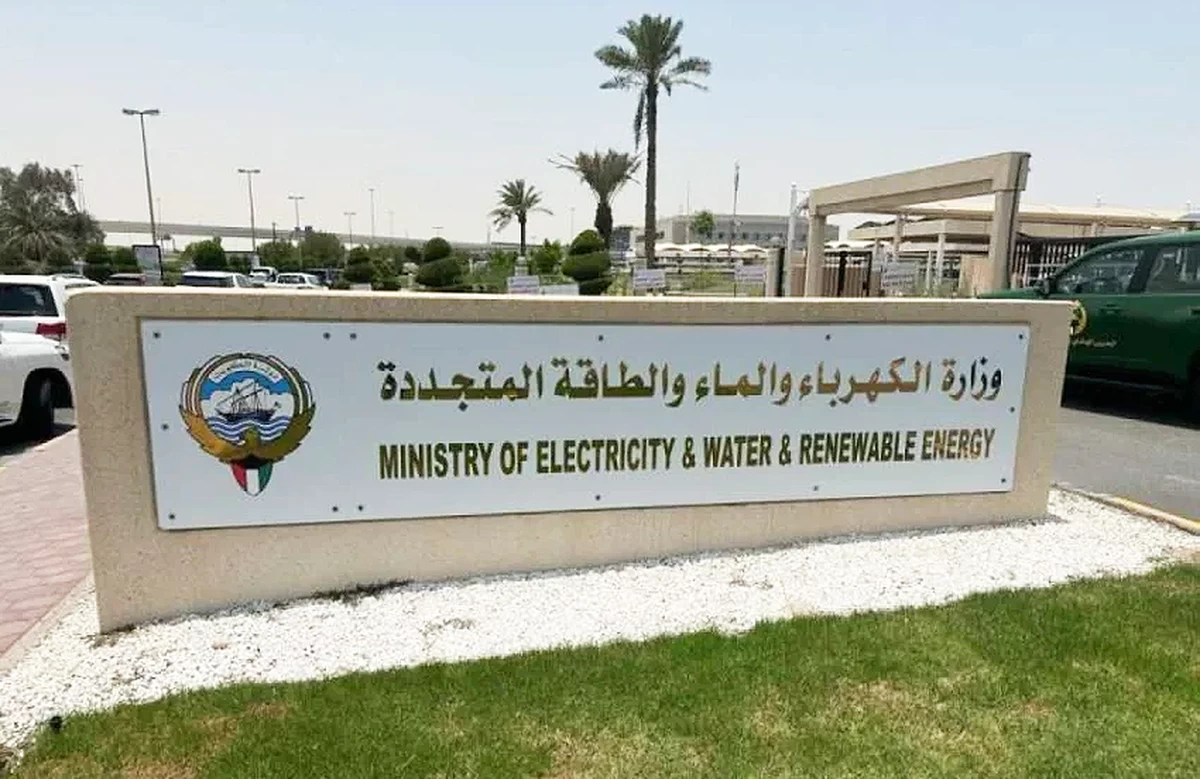

KUWAIT CITY, Feb 19: The Ministry of Electricity, Water and Renewable Energy has moved forward with the tender for the construction, completion, maintenance and development of Hawally Water Distribution Complex, requesting approval from the Central Agency for Public Tenders (CAPT) to award the contract to the lowest bidder who met the requirements for KD42.268 million.
This request was made during the Agency's meeting on February 11, following the completion of the preliminary budget. The ministry submitted the required approval letter from the Ministry of Finance, a prerequisite under applicable laws and procedures for the Agency’s sign-off. The CAPT Board of Directors authorized the preparation of a preliminary budget, in line with Article 60 of Public Tenders Law No. 49/2016, and instructed the entity to select the lowest bidder and submit its final recommendation within 10 working days. This is essential in achieving the goal of the ministry to increase freshwater storage capacity by 66 million gallons per day, boosting potable water pumping rates to 54.5 million gallons per day, and elevating brackish water pumping to 23.5 million gallons per day.
The Hawally Water Distribution Complex is a vital facility serving one of the most densely populated governorates, and the anticipated development is expected to resolve the chronic issue of weak water pressure in the network, particularly during the high-demand summer months, thus, ensuring water availability and good pumping power for citizens and expatriates round the clock.
Meanwhile, the continuous rise in global turbine prices is expected to impact the cost of planned power generation projects in the coming period, according to reliable sources. Sources confirmed that despite these challenges, the Ministry of Electricity, Water and Renewable Energy remains committed to completing projects aimed at increasing its production capacity in order to meet the growing electricity demand.
Sources said this step is being taken amid a backlog of purchase orders at international turbine manufacturers, which are witnessing heightened demand due to the global shift toward highly efficient combined cycle power plants. Sources added that the ministry is working hard to boost its production capacity in anticipation of new housing and major development projects.
Sources reported that the Public Authority for Housing Welfare (PAHW) estimated the electricity needs of three new housing projects to be around 16,000 megawatts, in addition to the requirement to meet peak consumption during the summer season. Sources disclosed that the ministry signed the contract for North Zour Power Plant – Phases Two and Three, and it is now waiting for the financial closure of Khairan Power Plant-Phase One, before awarding the contract to the selected investor. Sources stated that the ministry is also waiting for the approval of its finance counterpart regarding the financial support clause for the Subiya Power Plant- Phase Four, which is expected to generate 900 megawatts. In a related development, the ministry indicated that it is currently reviewing bids for the first phase of Shagaya Renewable Energy Park, which has a production capacity of 1,100 megawatts. It is also awaiting the closing of bids for the second phase of the same project, with a capacity of 500 megawatts, before proceeding to award the contract to the winning investor. Sources explained that the gas turbine market experienced substantial changes in recent years due to rising raw material costs, supply chain disruptions, and growing demand from Asian and European markets.
Moreover, major manufacturers are currently operating at near-maximum production capacity, with delivery timelines in some cases extending for several years. This situation could restrict future flexibility in negotiations over both pricing and delivery schedules, particularly if the ministry's expansion plans coincide with new regional or global surges in demand. Sources recommended accelerating tendering and contract-awarding procedures and securing supply agreements promptly. Sources added that such measures will help the ministry and other relevant entities avoid escalating project implementation costs and will enable contractors to adhere more effectively to the timelines to meet the steadily increasing demand for energy
By Mohammad Ghanem Al-Seyassah/Arab Times Staff