


28/04/2026

Share:
28/04/2026
Share:

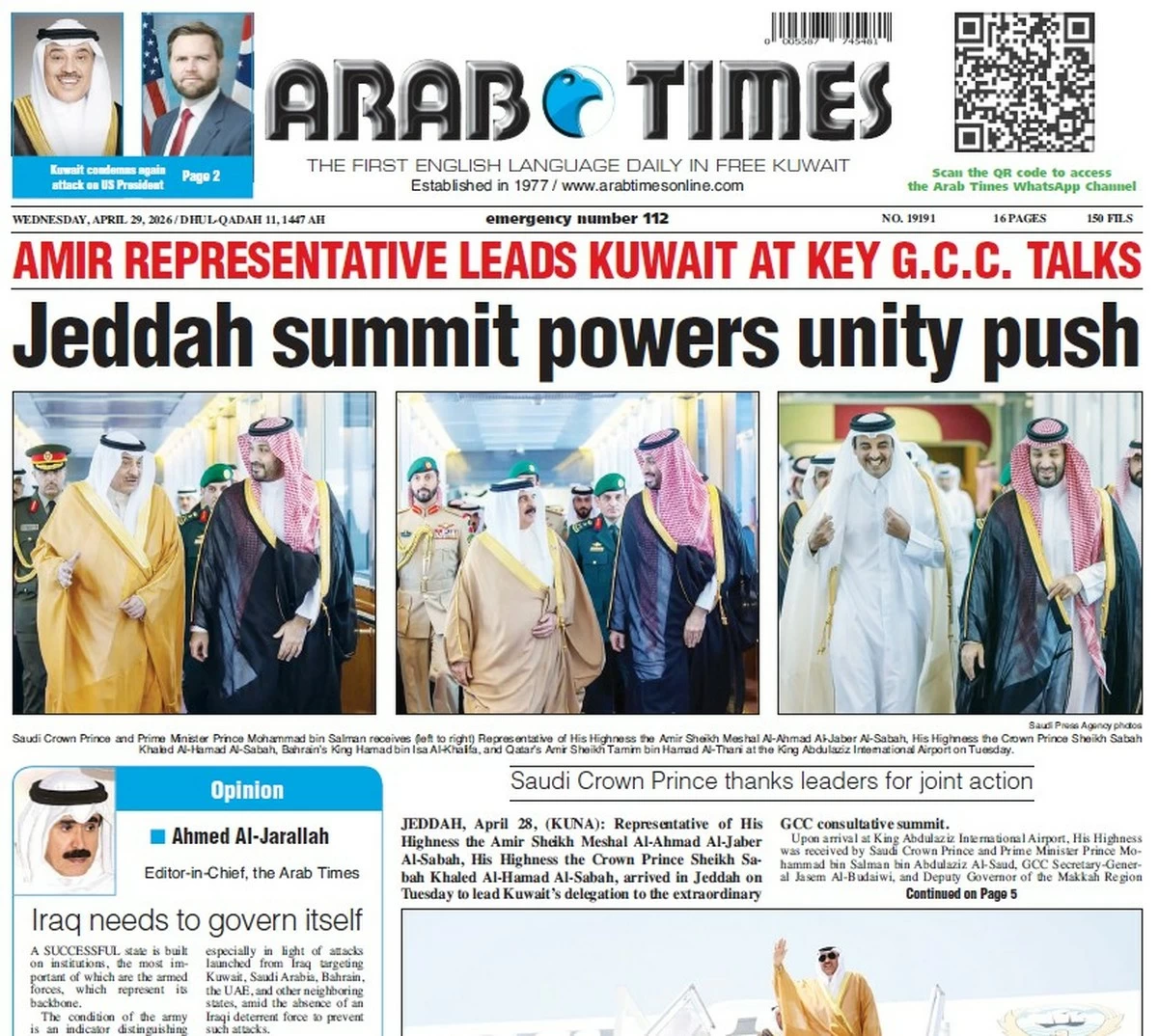
JEDDAH, April 28: Leaders of the Gulf Cooperation Council (GCC) on Tuesday firmly rejected what they described as Iran’s “illegal actions” aimed at closing the Strait of Hormuz, obstructing maritime navigation, and threatening the security of one of the world’s most vital shipping routes.
The position was outlined in an official statement issued by GCC Secretary-General Jassem Al-Budaiwi following the 19th Consultative Meeting of Their Majesties and Highnesses, the leaders of GCC member states, held in Jeddah.
The high-level meeting convened at the invitation of the Custodian of the Two Holy Mosques, King Salman bin Abdulaziz Al Saud, and was chaired by Saudi Crown Prince and Prime Minister Mohammed bin Salman.
Addressing the outcomes, Al-Budaiwi said the leaders held extensive discussions on the rapidly evolving regional situation, with particular focus on recent escalations and what they described as “blatant Iranian attacks” targeting GCC countries and the Hashemite Kingdom of Jordan. These attacks, he noted, struck civilian facilities and vital infrastructure, resulting in casualties and material damage.
The GCC leaders strongly condemned these actions, stressing that they represent a serious violation of national sovereignty, international law, the United Nations Charter, and the principles of good neighborliness. They warned that such acts have significantly eroded trust between the GCC states and Iran, urging Tehran to take meaningful steps to rebuild confidence through responsible conduct.
Reaffirming their collective position, the leaders underscored the right of GCC member states to defend themselves—individually and collectively—in line with Article 51 of the UN Charter. They emphasized that Gulf security is indivisible, noting that any attack against one member state is considered an attack against all, as stipulated under the GCC Joint Defense Agreement.
The leaders also praised the preparedness and professionalism of GCC armed forces, commending their ability to effectively counter missile and drone threats. They highlighted the forces’ swift and efficient response in safeguarding national security and protecting civilian populations across member states.
In addition, the meeting recognized the resilience of GCC countries in managing the последствия of recent attacks, particularly in restoring damaged energy infrastructure and maintaining the stability of global energy supplies. The leaders noted the rapid recovery of affected facilities, as well as enhanced coordination in logistics, aviation, and supply chain management.
A key focus of the discussions was the strategic importance of the Strait of Hormuz. The GCC leaders reiterated their categorical rejection of any attempts to disrupt navigation, including the imposition of fees or restrictions on vessels under any pretext. They called for the full restoration of maritime security and freedom of navigation in the strait, urging a return to conditions prior to February 28, 2016.
The summit also addressed future Gulf cooperation, with leaders directing the GCC Secretariat to accelerate progress on major joint initiatives. These include advancing the long-awaited Gulf Railway project, strengthening regional transportation and logistics networks, and expanding electricity interconnection among member states.
Further priorities include fast-tracking plans for unified oil and gas pipeline networks, a regional water interconnection project, and the development of strategic Gulf reserves to enhance long-term resilience.
On the security front, the leaders emphasized the need to deepen military integration and expedite the implementation of a joint ballistic missile early warning system, aimed at strengthening collective defense capabilities.
Al-Budaiwi concluded by noting that the consultative meeting reflected the GCC’s unified stance in addressing regional challenges, reinforcing solidarity, and advancing joint efforts to ensure stability, security, and sustainable development across the Gulf region.