



02/06/2026

Share:
02/06/2026
Share:

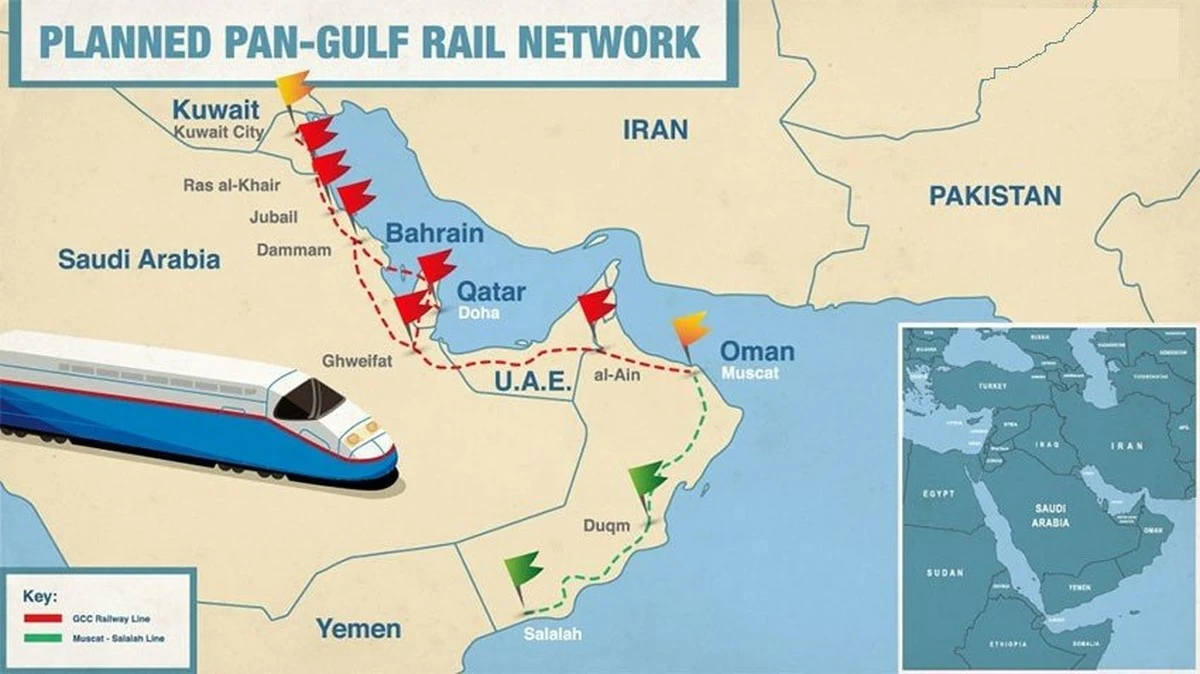
KUWAIT CITY, June 2: The Municipal Council approved the organizational plan and right-of-way for the railway link project between the State of Kuwait and the Kingdom of Saudi Arabia during its May 18 session. This step brings one of the important joint Gulf projects back to the forefront of implementation after years of studies and technical coordination among the relevant authorities The project constitutes the first phase of connecting Kuwait to the unified Gulf railway network, which extends from Kuwait in the North to the Sultanate of Oman in the South.
This will improve transportation, trade and logistic services in the Gulf Cooperation (GCC) countries and support the goals of Gulf economic integration. It is vital due to the expansion that the region is currently witnessing in terms of port projects, economic zones and supply chains. It is considered a strategic project capable of bringing about a qualitative leap in the movement of goods and passengers and strengthening the position of Kuwait as a regional logistics hub, in line with the objectives of Kuwait Vision 2035. The newspaper obtained copies of the approved project plans and technical study, stating that the Kuwait-Saudi Arabia railway link project will start from the southwestern border in Al-Shadadiya in the North, with a total length of 85.8 kilometers. The route lies in the designated right-of-way with a width of 200 meters in some areas.
A portion of this right-of-way overlaps with the Gulf Railway project, which was approved as per the Municipal Council resolution issued on Jan 21, 2015, which spans 43.38 kilometers. The project itself has a separate right-of-way measuring 37.42 kilometers. The connection with Saudi Arabia is the first phase of Kuwait’s integration into the Gulf network. The total length of tracks within Kuwait is estimated at about 111 kilometers, including lines for passenger and freight transport, in accordance with the unified Gulf technical standards. The Gulf railway network idea dates back to more than two decades, when the GCC countries adopted a shared vision to establish a unified railway network linking the capitals, economic centers and major ports in the region. Over the years, the project faced challenges related to financing, design and coordination among member states. Nevertheless, new economic developments and the increasing importance of global supply chains have brought the project back to the forefront of Gulf priorities. At the GCC level, the total length of the Gulf network is around 2,177 kilometers, starting in Kuwait in the North, passing through Saudi Arabia, Bahrain, Qatar and the United Arab Emirates (UAE), until Oman in the South.
The network is expected to reduce land transport costs and ease the movement of goods and merchandise between Gulf ports and markets, in addition to supporting economic integration and achieving sustainable development goals. In terms of cost, the announced estimates for the project over the past years range from $15 billion to $25 billion (about KD4.6 to KD7.7 billion). The cost of the Kuwaiti railway project and its connection with Saudi Arabia is estimated at hundreds of millions of Kuwaiti dinars, depending on the final designs, associated infrastructure, and operation and maintenance stations. In Kuwait, the project had a significant boost after the signing of the cooperation agreement for rail connectivity and transport between Kuwait and Saudi Arabia, which was approved by the Council of Ministers on May 3, 2023.
The Ministry of Public Works was authorized to activate and implement the agreement through direct contracting with the relevant parties, in coordination with the competent government agencies, to finalize the necessary regulatory and technical aspects to proceed with implementation. The technical studies and government coordination took a considerable amount of time, including reviewing plans, discussing alternatives, and addressing conflicts over the proposed route. Several government entities participated in the project study, such as the Ministry of Public Works, Kuwait Municipality, Ministry of Electricity, Water and Renewable Energy, Environment Public Authority (EPA), Public Authority for Agriculture Affairs and Fish Resources (PAAAFR), Kuwait Oil Company (KOC), Public Authority for Civil Aviation (PACA), Public Authority for Roads and Transportation (PART), and other service and security agencies. One of the issues that the project faced during the planning phases was addressing encroachments within the proposed right-of-way. The project encompassing open areas and plots used for various purposes necessitated a comprehensive review of existing land uses to ensure the route is free of obstacles that could affect implementation or operation.
The procedures included studying the status of several sites, farms and facilities located within the project area and finding regulatory solutions that protect the rights of owners, while preventing the disruption of such a vital project. The relevant government authorities focused on the agricultural sites near the railway route. Coordination was established with agricultural authorities to preserve existing agricultural assets and services, in addition to developing mechanisms to prevent conflicts that may arise during the implementation phases. This is in line with the commitment of the State to balance the implementation of vital projects and preserving agricultural activities, especially since they are crucial for maintaining food security.
The proposed route passes a number of vital facilities, necessitating meticulous engineering reviews to assess the impact of the project on freshwater and treated water networks, main power lines, KOC facilities, telecommunications networks, and the existing and future highways. The technical study concluded that relocating or protecting these facilities will be among the most complex engineering aspects in the implementation phases, given their sensitivity and importance to the national economy. The project is one of the cornerstones for achieving the goals of Kuwait Vision 2035, which aims to transform the country into a regional financial, commercial and logistics hub. Upon completion, Kuwait will be able to further leverage its strategic geographic location between Iraq, Iran, Saudi Arabia and the rest of the GCC countries.
The project will provide opportunities to connect Mubarak Al-Kabeer and Shuaiba ports, Shadadiya City, industrial zones, and new logistics centers to a sophisticated regional transportation network capable of accommodating the anticipated growth in trade over the coming years. From the Saudi perspective, the project is a natural extension of the Saudi railway network, which has witnessed significant expansion over the past decade. The direct link between Kuwait and the Kingdom will provide a new strategic transport channel for goods and passengers. It will support the Kingdom’s mega-economic projects under Vision 2030 and is expected to contribute to increasing the volume of trade between the two countries and reducing land transport time, considering the ongoing development of Saudi ports and industrial zones.
By Inaas Awadh Al-Seyassah/Arab Times Staff