



06/09/2026

Share:
06/09/2026
Share:
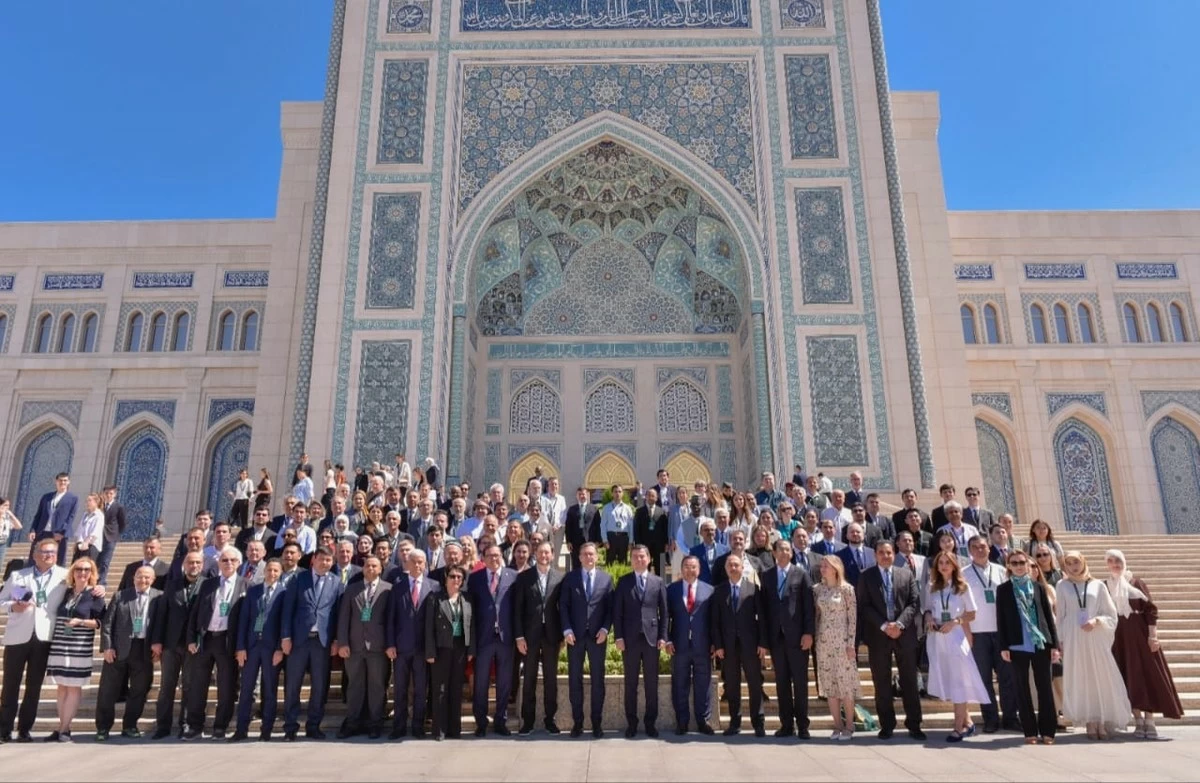
Forum participants gather for a group photograph at the Center of Islamic Civilization of Uzbekistan.


Forum participants gather for a group photograph at the Center of Islamic Civilization of Uzbekistan.
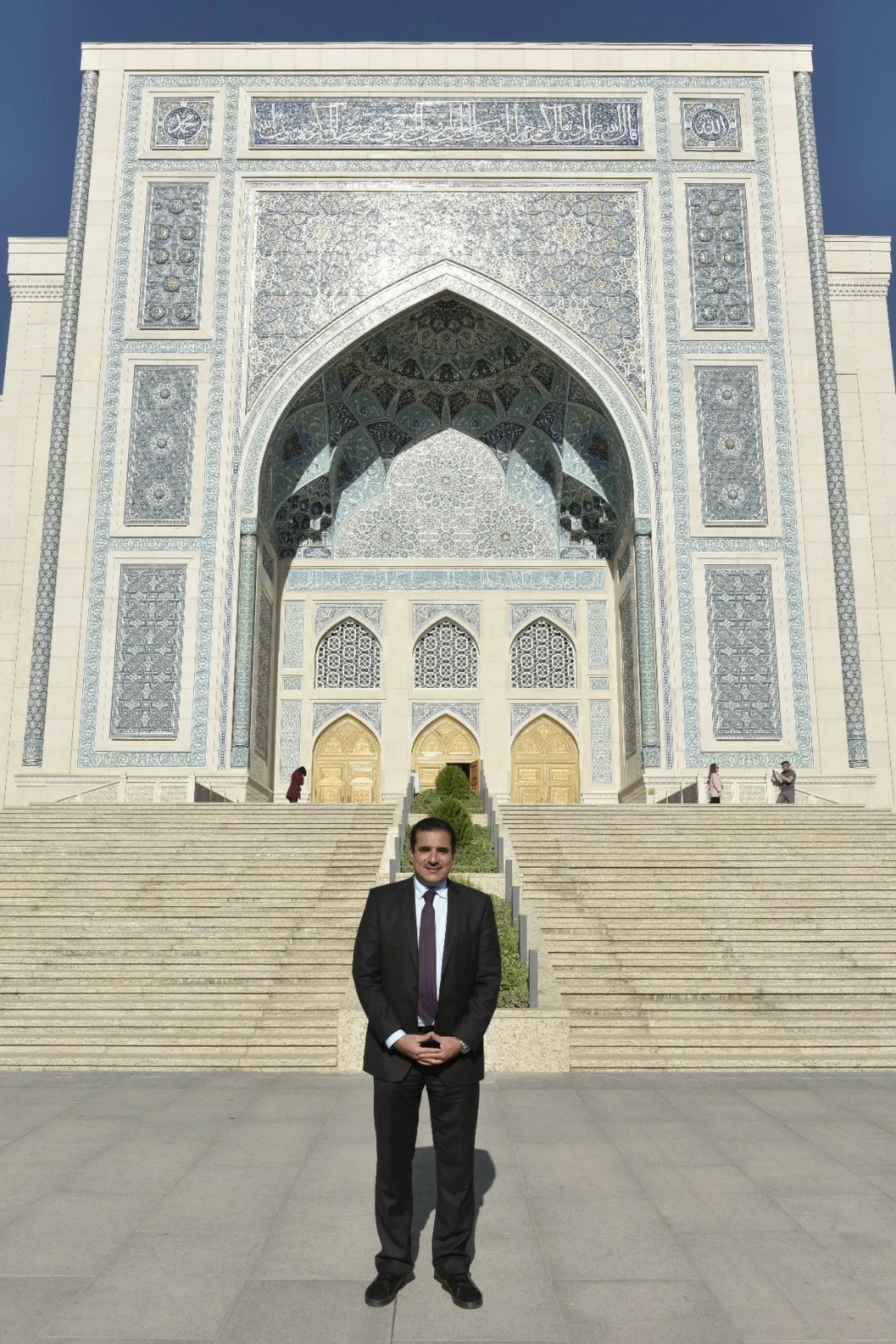
Tareq Yousef Alshumaimry
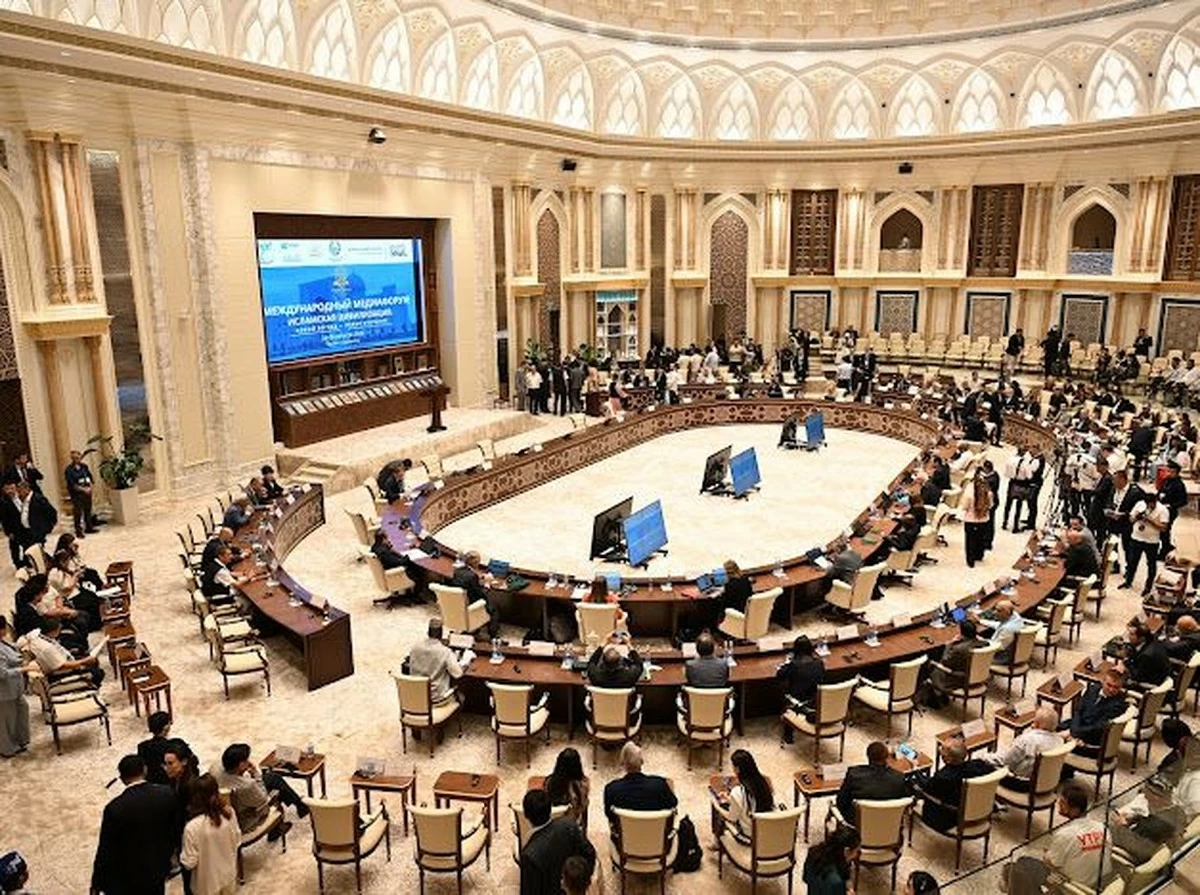
Participants during the forum at the Center of Islamic Civilization of Uzbekistan.
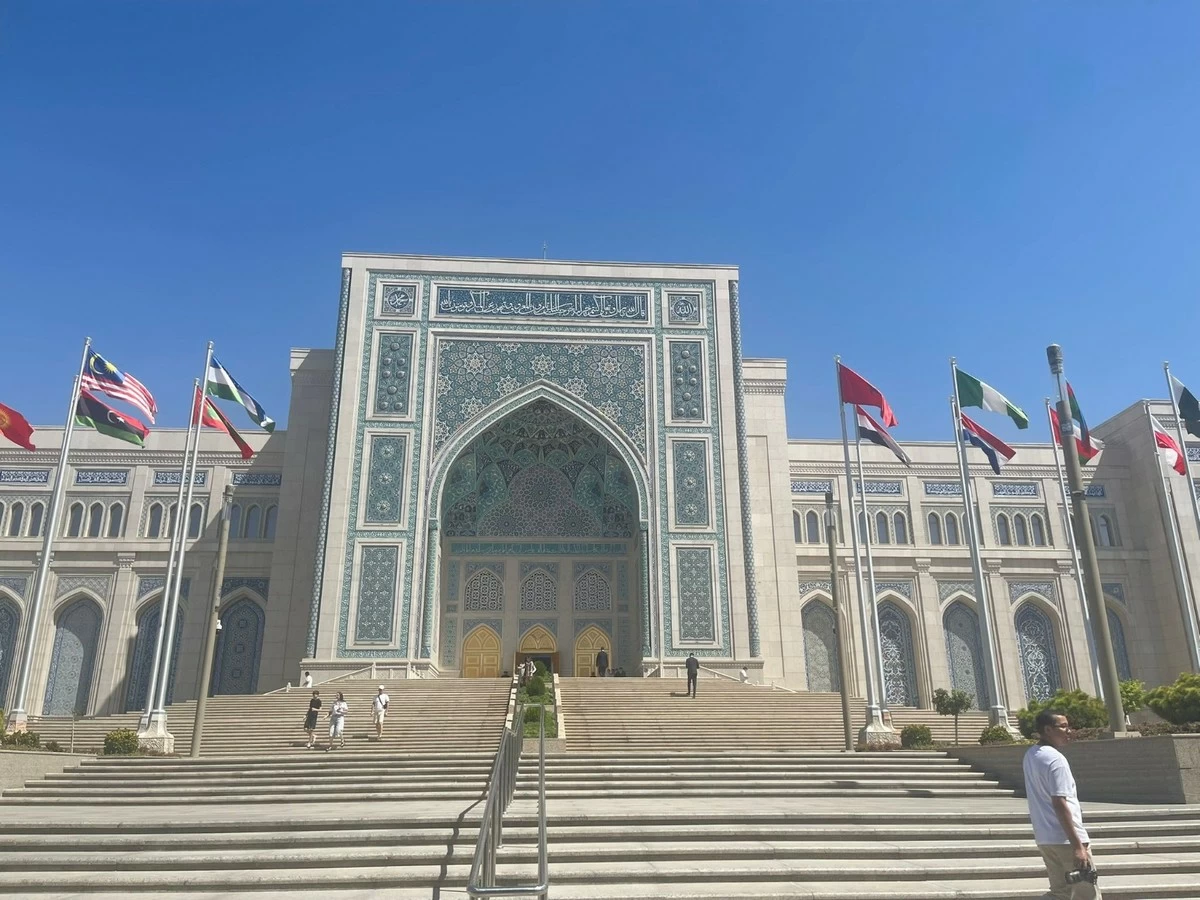
A view of of the Center of Islamic Civilization of Uzbekistan in Tashkent
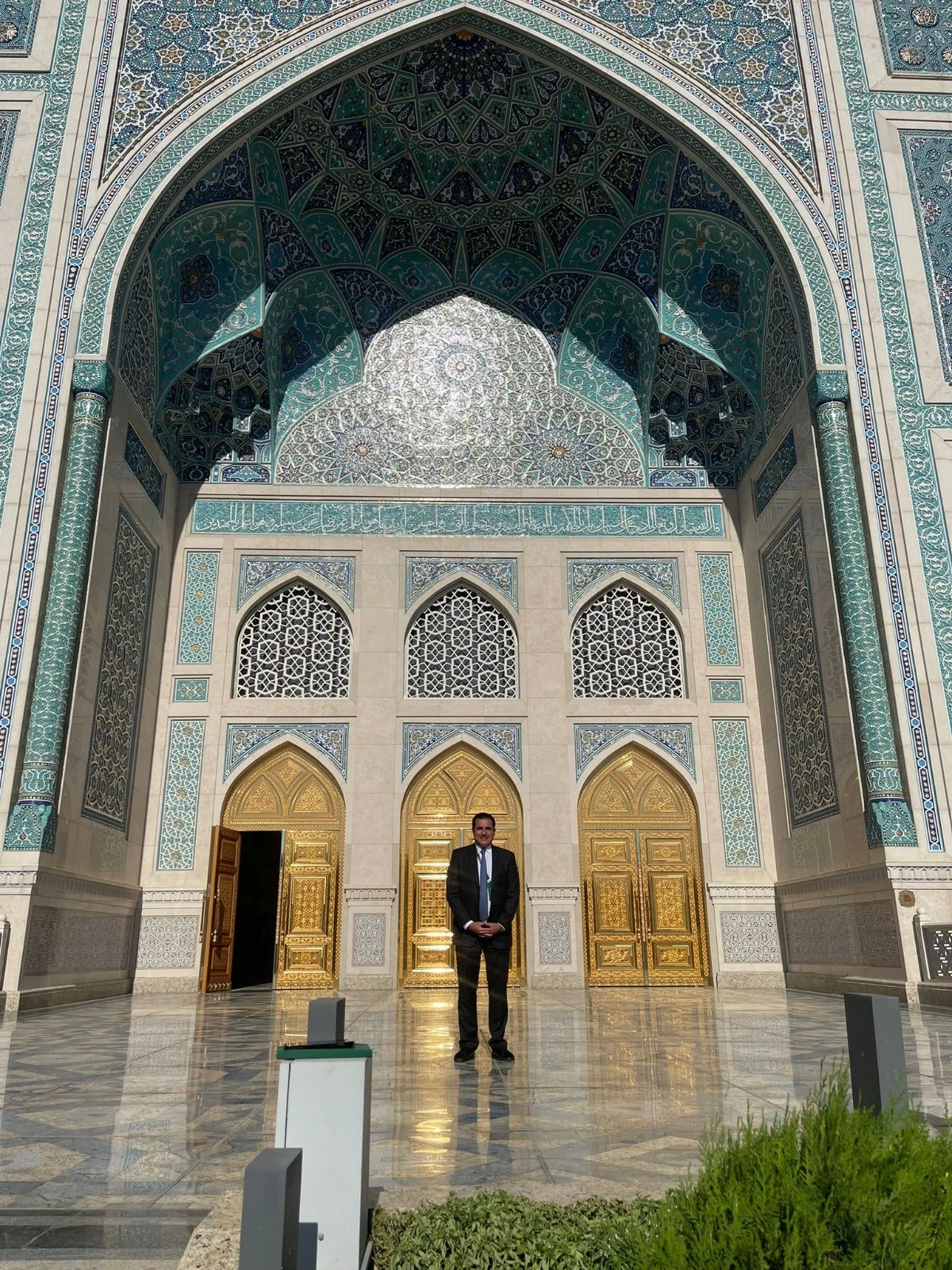
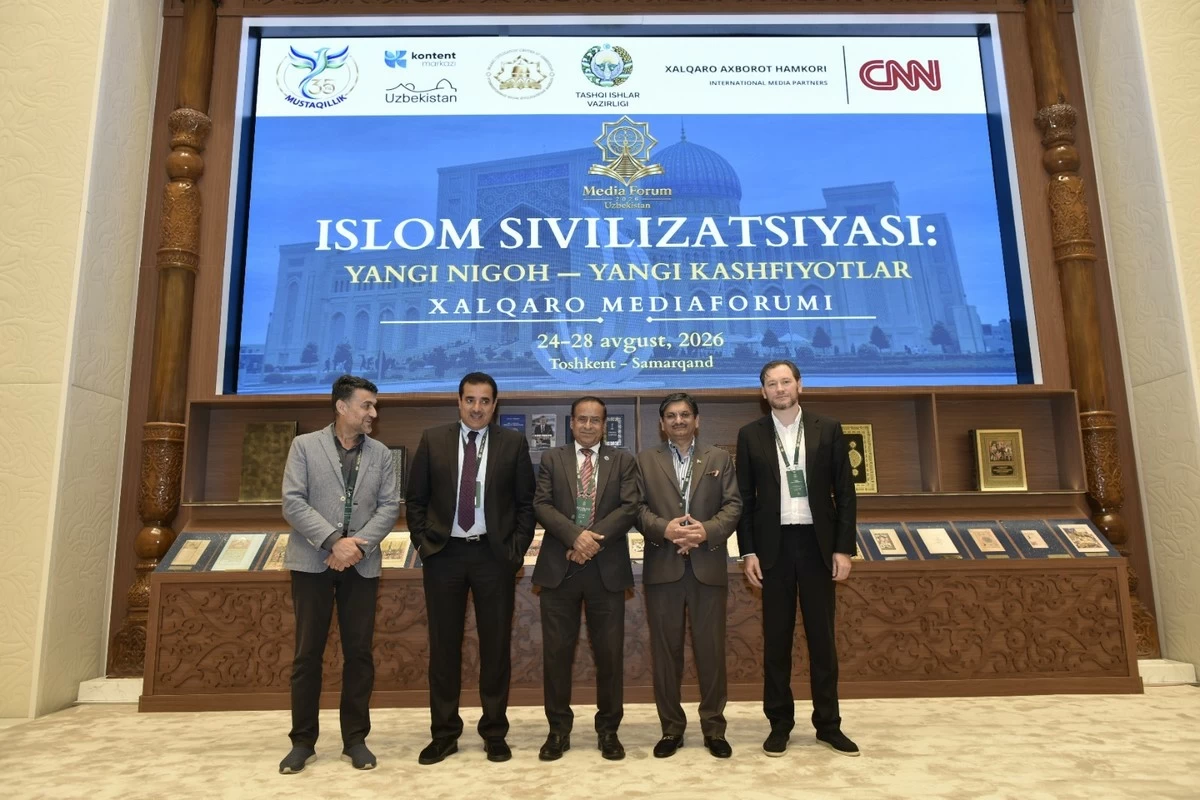
Tareq Yousef Alshumaimry in a group photo with some of the forum attendees.
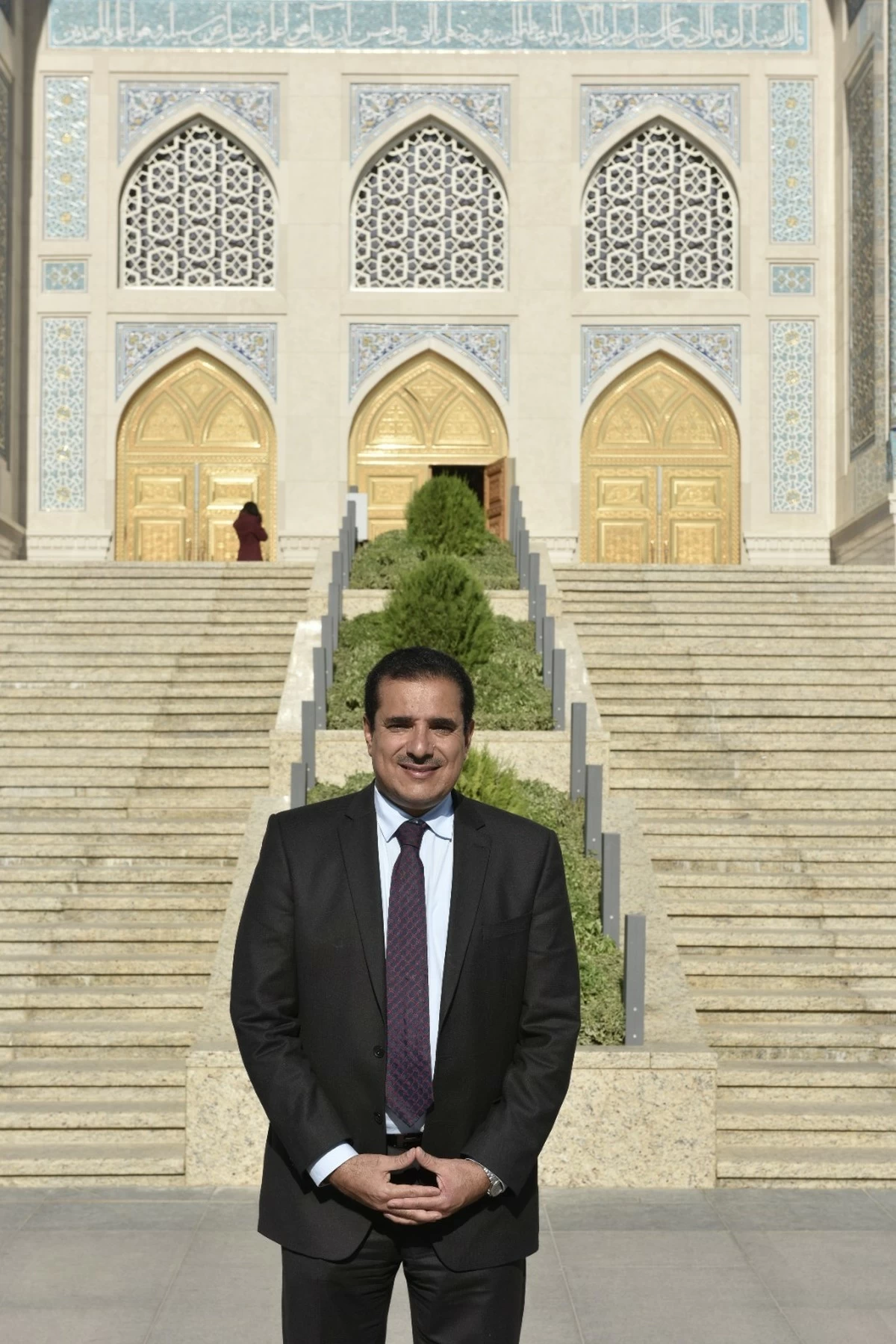
I participated in the international media forum "Islamic Civilization: A New Perspective – New Discoveries," which gathered around 300 experts and media outlets from nearly 50 countries in August 2026.
Between the forum's sessions and its visits, something else imposed itself: a history still very much present in the place.
I delivered a speech at the forum in which I stated that the real challenge for media today is not just to preserve the memory of Islamic civilization, but to reintroduce it to new generations in a language that makes them feel this history is part of their own story and heritage, not merely pages in an old book. The idea of cultural and civilizational similarities in Tashkent and Samarkand is not far-fetched; I find it in the buildings, markets, mosques, roads, and even in the way people receive guests. From there, my comparison with Kuwait began.
I looked at the land of Kuwait in the same way I looked at Samarkand, and discovered in many sites that Kuwait's story also has a similar history of civilization.
Samarkand - When Age Exceeds Two Thousand Years
Today, Samarkand stands as one of the oldest historical cities in Central Asia. UNESCO indicates that evidence of settlement in the region dates back to around 1500 BCE, while the city of Afrasiab (historical Samarkand) was founded in the 7th century BCE. Samarkand did not become great merely due to its antiquity; the secret of its greatness lay in its location. It was at the crossroads of caravan routes that carried goods, ideas, and cultures between China, Central Asia, Persia, and the Middle East. By the early centuries CE, it had become a major center on the Silk Roads, reaching the peak of its glory during the Timurid era in the 14th and 15th centuries CE. This is why UNESCO described it as a "cradle of cultures."
When I stand before the history of Samarkand, its scholars, jurists, mosques, and architecture, it is hard to see these figures and structures merely as monuments; rather, they are remnants of an era when architecture, science, astronomy, trade, and politics were all part of a single civilizational project.
Tashkent - Another Story Began Before the Name We Know Today
In Tashkent, the narrative leads me to the Chach region and the ancient city of Kanka. UNESCO indicates that Kanka was the first capital of Chach, a vast fortified city through which the Silk Road network passed. In the same region, agriculture developed from the pre-Christian centuries, with water, agriculture, and trade becoming key factors in the growth of urban settlements.
Here, a point worthy of reflection emerges for us in the Gulf: ancient civilizations did not wait for conditions to be perfect; they turned geography into an opportunity. Uzbekistan did not have a sea, but it was at the heart of Asia, so it made caravan routes its lifeline. Kuwait was not at the heart of the continent, but it was at the head of the Gulf, so it made the sea its route to the world.
Kuwait - A Story That Began More Than 7,000 Years Ago
The Kuwait we know today, with its modern cities, ports, roads, and markets, conceals beneath its soil a history dating back to the end of the 6th millennium BCE, i.e., more than 7,000 years ago. Specifically, in the Subiya area north of Kuwait, excavations revealed settlements linked to the Ubaid culture and workshops for manufacturing shell beads, along with evidence of maritime activity, including a clay model of the earliest known seagoing boat.
When we learn that Greek-era artifacts were discovered on Failaka Island dating back to the 3rd century BCE, the picture becomes even more fascinating. Among the most significant of these evidences is the Ikaros Greek inscription, approximately dated between 246 and 226 BCE, which UNESCO inscribed on the Memory of the World Register in 2025. It becomes clear that the land of Kuwait was not a distant margin of major civilizations but was part of their communication network.
The National Council for Culture, Arts, and Letters in the State of Kuwait indicates that the results of archaeological surveys and excavations in Kuwait show that human settlement on the land of Kuwait began in the late 6th millennium BCE. Excavation work in Subiya has documented sites belonging to the Ubaid culture and workshops for shell bead manufacturing, alongside evidence of maritime activity and a clay model of a boat. The Council also explains that the end of the 3rd millennium and the beginning of the 2nd millennium BCE witnessed the emergence of Bronze Age villages, with features of this period appearing in several Kuwaiti sites and islands, including Failaka, Umm al-Namal, Shuwaikh, and northern Kuwait Bay.
Samarkand and Kuwait - Caravans and Trading Ships
I have not found evidence of a direct ancient route linking Samarkand and Kuwait, but the similarity lies in the role each place played. Samarkand was a station for caravans; Failaka and Kuwait were stations for ships. Samarkand opened its doors to those coming from the East and West; Kuwait opened its shores to those coming from the north, east, and south of the Gulf. Both made trade something larger than money, creating communities that knew the 'other,' dealt with them, and benefited from their differences.
The Guest Comes First.. A Parallel We See in the Kuwaiti and Uzbek Homes Before Books
In Kuwait and the Gulf, one does not need a history book to understand the meaning of hospitality. The majlis, coffee, dates, food, inquiring about the guest, and the host's insistence on honoring them are all details a Kuwaiti and a Gulf Arab know instinctively.
In Uzbekistan, I felt something similar. Generosity through offering tea, bread, shared family meals, and welcoming the guest are not just tourist customs but are part of a deeply rooted social culture in the Uzbek people.
Even the market has a similar presence. The ancient markets of Samarkand and Tashkent were not merely places for buying and selling, just as the old Kuwaiti markets were not just shops; they were places for meeting, exchanging news, making acquaintances, and introducing new cultures into society.
The same applies to respect for knowledge. If Samarkand was associated with scholars of astronomy, mathematics, medicine, and religious studies, Kuwait was known early on for its kuttabs (Quranic schools), religious education, and scholarly circles, before transitioning to modern formal education. The details may differ, but the value of knowledge and the status of learning appear familiar in both experiences.
The Modern Story of Kuwait and Uzbekistan
The most beautiful aspect of the Kuwait-Uzbekistan story is that it does not stop at the past. On February 17th and 18th, 2025, Uzbek President Shavkat Mirziyoyev visited Kuwait, opening a new chapter in bilateral relations. The two countries announced the development of their ties to the level of comprehensive partnership, with the declared value of the package of agreements and economic projects agreed upon reaching approximately $4.9 billion.
These covered multiple areas, including industry, aviation, labor, smart cities, health, tourism, culture and arts, in addition to cooperation with the Kuwait Fund for Arab Economic Development.
In the past, caravans and ships were not necessarily a direct route connecting Kuwait to Samarkand, but they were among the most important tools for commercial and cultural exchange in both regions. Today, communication takes place through investment, aviation, technology, artificial intelligence, education, and development projects.
The Kuwait Fund for Development represents one of the most visible practical aspects of the relationship between the State of Kuwait and other countries. Established in 1961, the Fund was not merely a financing tool but one of the faces through which the State of Kuwait became known in the developing world. The Fund financed development projects in Uzbekistan, including a rural housing infrastructure project with a loan amounting to 9 million Kuwaiti Dinars (approx. 30 million USD), and also contributed to a project to equip specialized medical institutions for urology, kidney diseases, dialysis, and kidney transplantation.
Today, with the progress and development vision of modern Uzbekistan, I see talks moving towards broader areas including infrastructure, logistics, agriculture, green energy, health, industry, services, and investment. This is the way through which political relations can be transformed into civilizational development partnership projects.
From Civilizational Memory to a Future of Cooperation
Perhaps what has stayed with me most from the forum in Tashkent is that talking about civilization should not remain confined to museums and books. The true civilization is one that can move from memory to the future. This is why, now, when I think of Samarkand, I do not see it as a different, distant city in Central Asia; rather, I see it as a city resembling Kuwait in that both recognized early that openness to the world can be a source of strength, not a threat to identity. Samarkand's caravans carried silk and ideas; here, Kuwaiti ships carried pearls, goods, and news.
Today, certainly, airplanes, investments, universities, media, and culture can carry something greater: partnership between the two peoples. Each has a deep history, and both peoples look to the future. The goal is not to live in the past, but to understand it well so we do not build a future without roots.
From Samarkand to Failaka, and from the Silk Roads to the Gulf routes, times and means change, but humanity remains in search of communication, learning, and trade, discovering the other, then returning to its home and land richer for what it has learned from the world. Here, there may not be one single ancient road between Kuwait and Samarkand that we can trace on a map, but between them lies a very old idea: that civilization begins when geography turns from boundaries into bridges of cooperation and partnership.
By Tareq Yousef Alshumaimry