



14/02/2025

Share:
14/02/2025
Share:

KUWAIT CITY, Feb 14: A strange and complex case involving an individual born in 1949 who was granted Kuwaiti citizenship under Article One in 1965 based on a decision made by the Shuwaikh Committee. This individual later married a Gulf national and had two children with her.
From 1974 to 1978, he worked for a government agency in Kuwait. However, after that, he relocated to his wife’s home country in the Gulf, where he settled. While living abroad, his Kuwaiti identity remained in the country's records, but his name became inactive. There were no recorded activities or government transactions associated with him, including no entry or exit from the country, no healthcare visits, nor any employment or identification records.
This situation continued until 1995, when an individual from the same Gulf country where the original citizen was residing began impersonating him. The two agreed, and the forger revived the Kuwaiti citizen's name in the system, making it active once again, which led to government procedures, movement records, and transactions being associated with it.
Sources reported that the forger obtained official documents by swapping the original nationality certificate with a newly issued one. The forger did this by paying the original certificate holder, taking his old certificate, and using it to reactivate the name. This allowed the forger to be recognized as a Kuwaiti citizen.
Upon entering Kuwait, the forger also proceeded to initiate divorce proceedings for the original certificate holder's wife, a Gulf national. Taking advantage of the fact that the two children listed on the original certificate were living with their biological father in the Gulf state, the forger sold their names to two individuals who were not related to him.
As for the forger’s own children, sources revealed that he had both older children (who were above the legal age) and younger ones. To further cement his false Kuwaiti identity, the forger used fabricated testimony from witnesses in the family of the original nationality holder. These witnesses falsely testified in court, allowing the forger to enter his own children into the Kuwaiti citizenship file, even though they were not citizens. He added the younger children to the file as part of his effort to maintain the pretense of being a legitimate Kuwaiti citizen.
Thus, the forger, who had initially purchased a Kuwaiti citizenship certificate and was not truly Kuwaiti, managed to manipulate the system. He came from a family different from that of the original certificate holder, sold the names of two individuals listed on the certificate to strangers, and added his own non-Kuwaiti children to the file. By the end of this fraudulent operation, he had claimed a total of 17 children, who now held dual citizenship—Kuwaiti through impersonation and their real nationality.
How was this case uncovered?
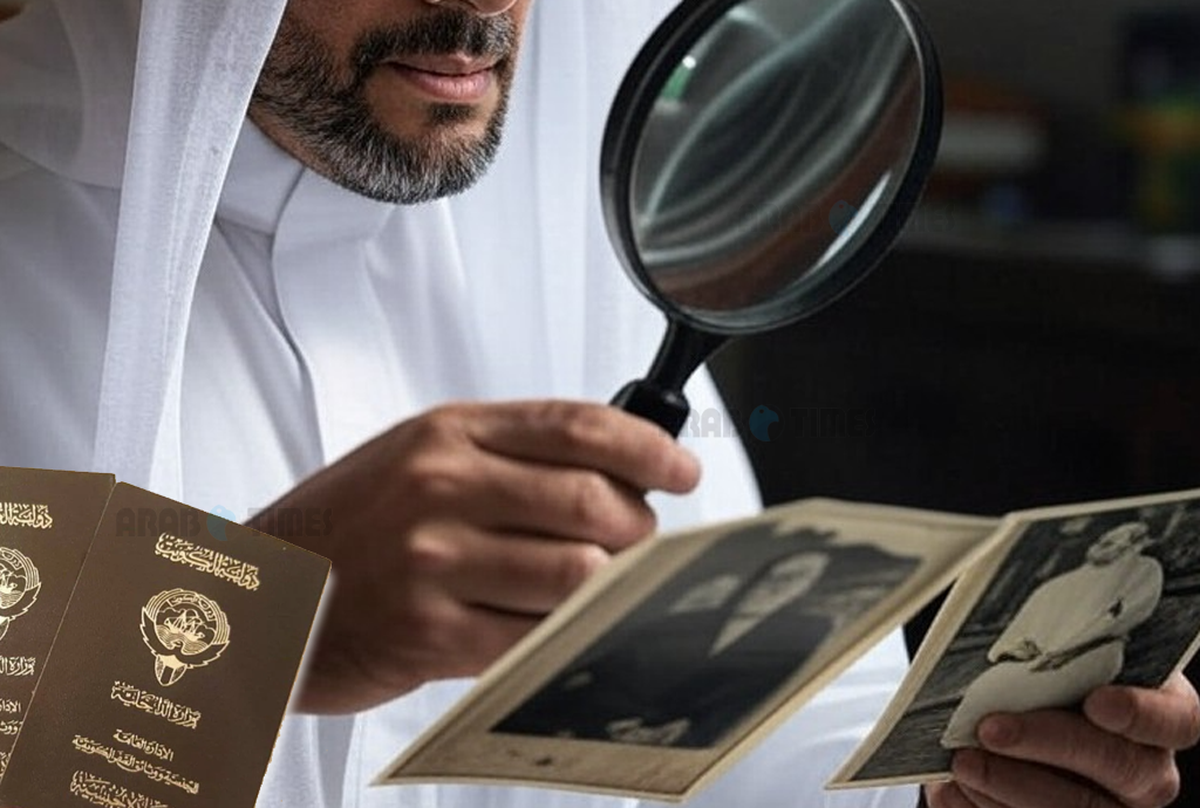
The forgery was discovered during an investigation by the Nationality Investigations Department, which conducted a thorough review of the original and new nationality certificates. They compared the photographs of the original holder and the forger. Upon closer inspection, it became evident that the two individuals did not resemble each other, even when considering the passage of time. Scientific evidence provided by an expert confirmed that the photos were of two completely different people, not simply different versions of the same person due to aging.