



27/12/2025

Share:
27/12/2025
Share:

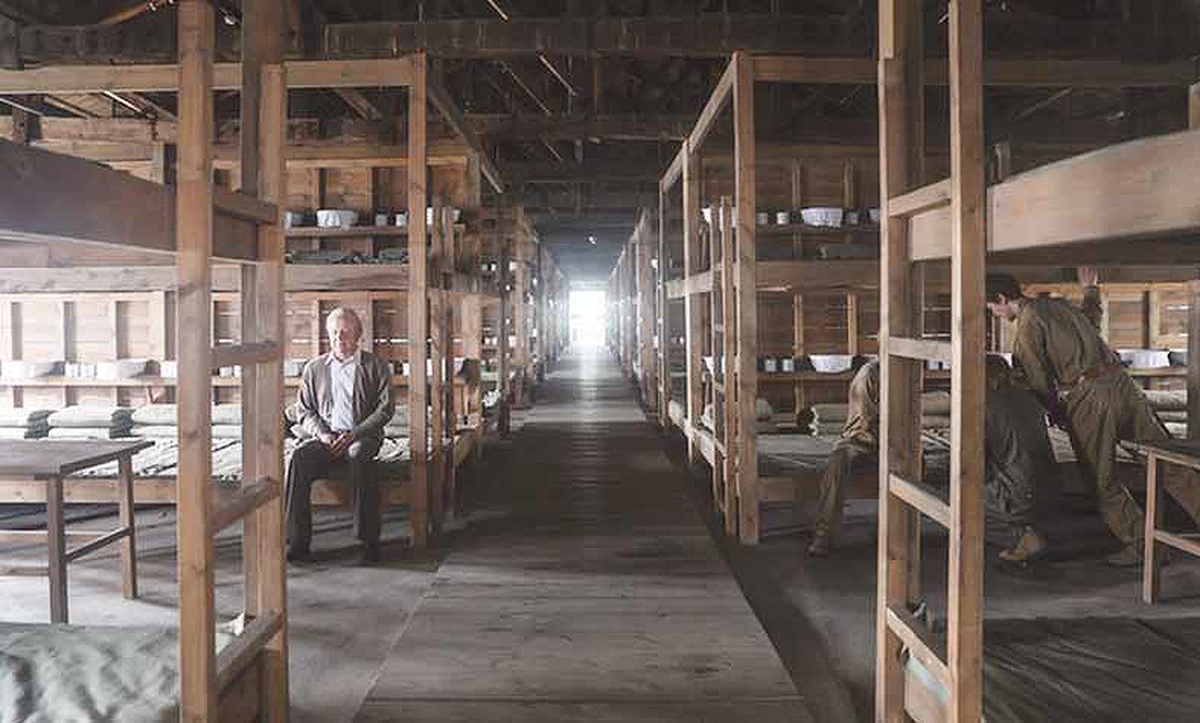
SHENYANG, Dec 27, (Xinhua): A bleary-eyed man jolts awake, staring in disbelief as a neat row of fleas on his blanket stiffen their spindly legs and angle their tiny bodies toward a swaggering Japanese officer at his sharp command. The scene comes from a hand-drawn cartoon sketched in secret by Allied prisoner of war (POW) William Wuttke more than 80 years ago during World War II (WWII). The quiet act of defiance was not meant to be funny, at least not in a carefree way, as it captured even the smallest creatures at the camp, which seemed bound by its brutal rules. The drawing was created inside the former Mukden POW camp, which was established by the Japanese army during WWII in Shenyang, then known as Mukden, in northeast China’s Liaoning Province. Known as “oriental Auschwitz,” the Mukden camp was one of the largest POW sites in Asia and notorious for its brutality. From November 1942 to August 1945, more than 2,000 Allied prisoners from the United States, Britain, Canada, Australia, the Netherlands and France were held there. Nearly 300 detainees died before Japan’s surrender. Lice and fleas were constant companions for the POWs held there, burrowing into their clothes, their bedding and their skin. Hunger gnawed.
Disease spread. Sleep, when it came at all, was shallow and uneasy. According to British Major Robert Peaty, who was a senior-ranking Allied officer held at the Mukden camp, the Japanese army had treated the Allied POWs in a “disgraceful manner.” Hunger, beatings and humiliation were all part of daily life there. Under strict Japanese rules that banned written records, several American POWs, including Wuttke, Barton Franklin Pinson and Malcolm Fortier, risked severe punishment to secretly draw cartoons documenting the war crimes at the camp.
More than eight decades later, the cartoons have reemerged as the most striking images in Comics and Bayonets, a documentary film directed jointly by American and Chinese filmmakers, bringing renewed attention to WWII’s lesser-known POW camp. Richard Anderson, the American director of the film, has visited the former site of the camp in Shenyang many times. Each visit left him shaken. The perimeter walls and barbed wire are long gone, but the grim Japanese guard towers, the towering chimney and the memorial wall engraved with the names of fallen Allied soldiers still stand. Meanwhile, he was struck by how little the story was known in the United States. “People know Flying Tigers and General Stillwell, but they don’t know there were thousands of American, British, and other Allied POWs being held in Shenyang until the end of the war,” said Anderson. “It was a story that just had to be told to the world.”
That sense of urgency sparked a cross-Pacific effort. Liu Yangeng, the producer of the film, searched the archives of the museum built on the former POW camp site for information on U.S. POWs, while volunteer groups in the United States tracked down surviving former prisoners one by one. “In 2015, Richard and I contacted more than a dozen American veterans and led a film crew to document their memories of the camp,” Liu said. “Many of the former POWs were already in their twilight years.” Anderson believes the remarkable stories of POWs were never fully captured in books and soon realized they had to document their experiences on film before it was too late. “I still remember Oliver ‘Red’ Allen, the former POW, who passed away just a few months after we interviewed him,” Anderson recalled. “We were racing against time,” Liu told Xinhua. “We traveled almost the entire length of the U.S., from the East Coast to the West.”
As long-buried experiences finally came to light, many veterans found long-delayed solace. One case left a deep impression on Liu, a former POW from a small town near Boston, Massachusetts, who returned home after the war and quietly worked as a mail carrier with no one around him aware of his wartime ordeal. “Only after we uncovered his story did the town learn what he had endured during WWII,” Liu said. In the final months of his life, the veteran’s hospital room was often filled with flowers sent by strangers. In 2015, when Anderson finally located veteran John Moseley, the former POW was on his deathbed. Appearing in the film, his daughter, Kay Moseley, a lawyer, said her father, an architectural designer by profession, was also an avid artist. Some of the cartoons displayed at the POW camp museum were his work. She said she could recognize her father’s drawings even without a signature, simply by the handwriting beneath them, noting that he always wrote as neatly as a printed page. She believes his optimism helped him endure captivity.