


12/07/2026

Share:
12/07/2026
Share:
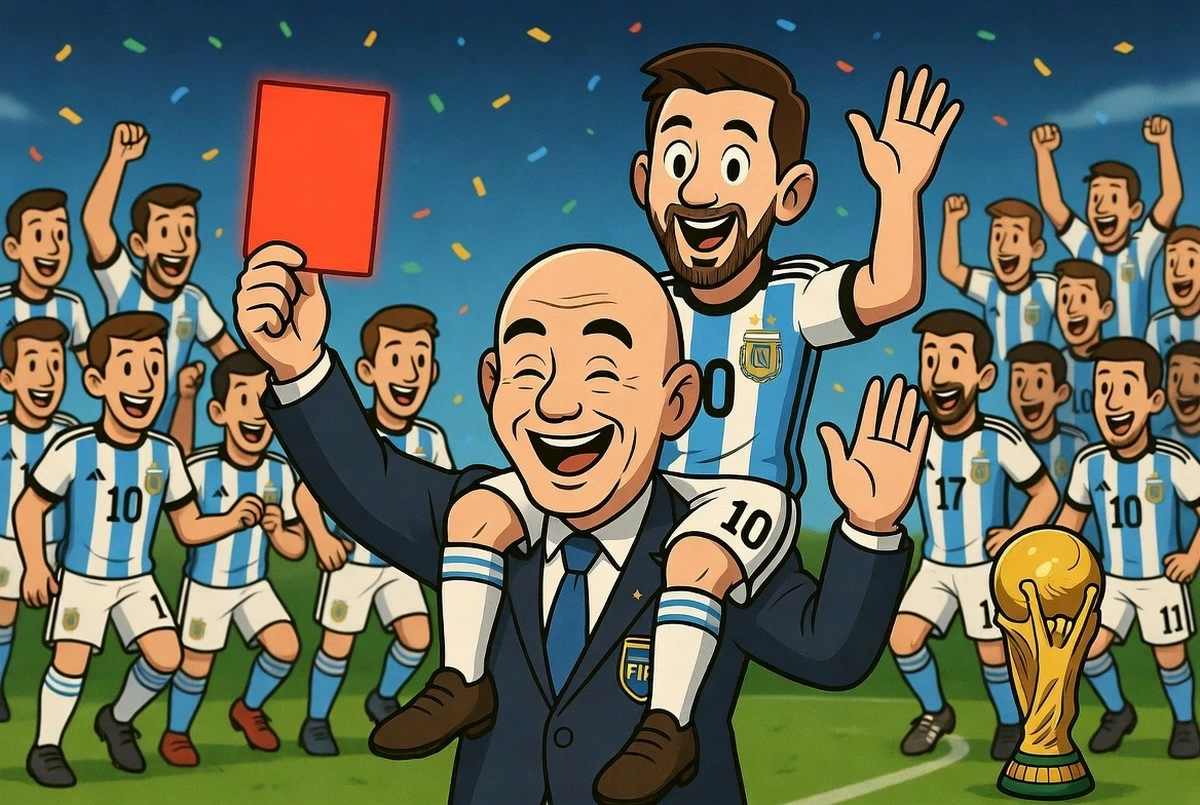

KUWAIT CITY, Jul 12: The 2026 FIFA World Cup has produced memorable matches, dramatic comebacks and outstanding individual performances, but defending champions Argentina have reached the tournament's closing stages amid growing debate over several controversial refereeing decisions.
While Lionel Messi's side has demonstrated why they remain among the world's elite, almost every knockout match has been accompanied by incidents that sparked heated discussions among fans, pundits, and former referees. Social media has been flooded with accusations of preferential treatment, while several opposing teams have openly questioned officiating decisions that proved pivotal.
FIFA has consistently defended the independence of its match officials, maintaining that decisions are made according to the Laws of the Game and VAR protocols. Nevertheless, the controversies have become one of the defining narratives of Argentina's title defense.
Group Stage: Algeria Questions Messi IncidentArgentina opened their campaign with a convincing 3-0 victory over Algeria, but the first refereeing controversy arrived early.
A robust challenge involving Lionel Messi prompted immediate appeals from Algerian players, who believed the Argentine captain should have been shown a red card. The referee allowed play to continue without issuing even a yellow card, while VAR chose not to intervene.
Former referees later argued that although the challenge appeared forceful, it did not meet the threshold for serious foul play under FIFA guidelines. Even so, the decision immediately fueled online debate and became the first of several incidents that critics would later cite.
Cape Verde Match Raises Questions Over IFAB RulesArgentina's Round of 32 victory over Cape Verde proved far more difficult than expected.
Leading only after extra time in a thrilling 3-2 encounter, Argentina benefited from another controversial moment involving player re-entry following medical treatment.
An Argentine player received treatment on the field before returning almost immediately to defend a dangerous Cape Verde corner kick.
According to IFAB regulations, players who receive treatment on the field are generally required to remain off the pitch for a period after play restarts, except under specific exceptions.
Cape Verde supporters argued the defender should not have been allowed to participate in the corner, claiming the decision may have influenced one of the match's most dangerous attacking opportunities.
No official protest was filed after the game, but the incident remained widely discussed among refereeing analysts.
Egypt Lodges Official FIFA ComplaintThe biggest controversy of Argentina's tournament arrived during their dramatic Round of 16 victory over Egypt in Atlanta.
Egypt stunned the defending champions by taking a 2-0 lead before Argentina staged an extraordinary comeback to win 3-2.
However, two refereeing decisions dominated post-match discussion.
• Disallowed Third GoalEgypt appeared to score what many believed was a decisive third goal through Mostafa Ziko.
Following a lengthy VAR review, referee François Letexier ruled out the goal for a foul earlier in the attacking sequence.
The decision divided opinion, with many analysts arguing the contact was minimal while others maintained VAR correctly identified an infringement in the buildup.
• Penalty AppealsMoments later, Egypt appealed strongly for a penalty after Mohamed Salah went down inside the area under an Argentine challenge.
The referee waved play on, and VAR determined there was no clear and obvious error requiring an on-field review.
Within seconds, Argentina launched a counterattack that resulted in the winning goal.
The sequence triggered outrage among Egyptian players and supporters.
Egypt head coach Hossam Hassan questioned the fairness of the officiating, while the Egyptian Football Association formally submitted a complaint to FIFA requesting that Letexier and his officiating team be removed from the remainder of the tournament.
In response, FIFA Refereeing Committee Chairman Pierluigi Collina publicly defended the integrity and professionalism of the match officials, insisting referees continue to operate independently under established FIFA and VAR protocols.
Switzerland Match Produces Rare VAR DecisionArgentina's quarter-final against Switzerland produced perhaps the tournament's most unusual VAR intervention.
With the score level at 1-1, Swiss striker Breel Embolo fell under a challenge from Leandro Paredes inside the penalty area.
The referee initially awarded a foul against Argentina and cautioned Paredes.
Following a VAR review, however, officials concluded Embolo had simulated the contact.
Under FIFA's updated VAR procedures, referees may reverse disciplinary action following a review and instead caution a player found guilty of simulation.
Because Embolo had already received a yellow card earlier in the match, the second caution resulted in his dismissal.
The decision dramatically changed the course of the game.
Reduced to ten players, Switzerland eventually lost 3-1 after extra time.
Swiss coach Murat Yakin described the decision as devastating for his team, while several former international referees acknowledged that although the decision was technically supported by the Laws of the Game, its application in such circumstances was exceptionally rare.
Growing DebateThe accumulation of controversial moments has fueled widespread discussion throughout the tournament.
Supporters of Argentina argue that every major tournament contains disputed refereeing decisions and that the team has ultimately won because of its quality, resilience and experience.
Critics counter that several pivotal calls have consistently gone in Argentina's favor, particularly in knockout matches where individual decisions can determine the outcome.
FIFA has rejected suggestions of bias and continues to express confidence in both its referees and the VAR system.
The Road AheadArgentina now prepares for a blockbuster semifinal against England at Atlanta Stadium on July 15.
With a place in the World Cup final at stake, global attention will focus not only on Lionel Messi and England's stars but also on every major refereeing decision.
Whether Argentina's journey is remembered purely for footballing excellence or for the controversies that surrounded it may ultimately depend on what happens next.
by John C Fernandes
Arab Times, Online Media Manager