


03/04/2026

Share:
03/04/2026
Share:
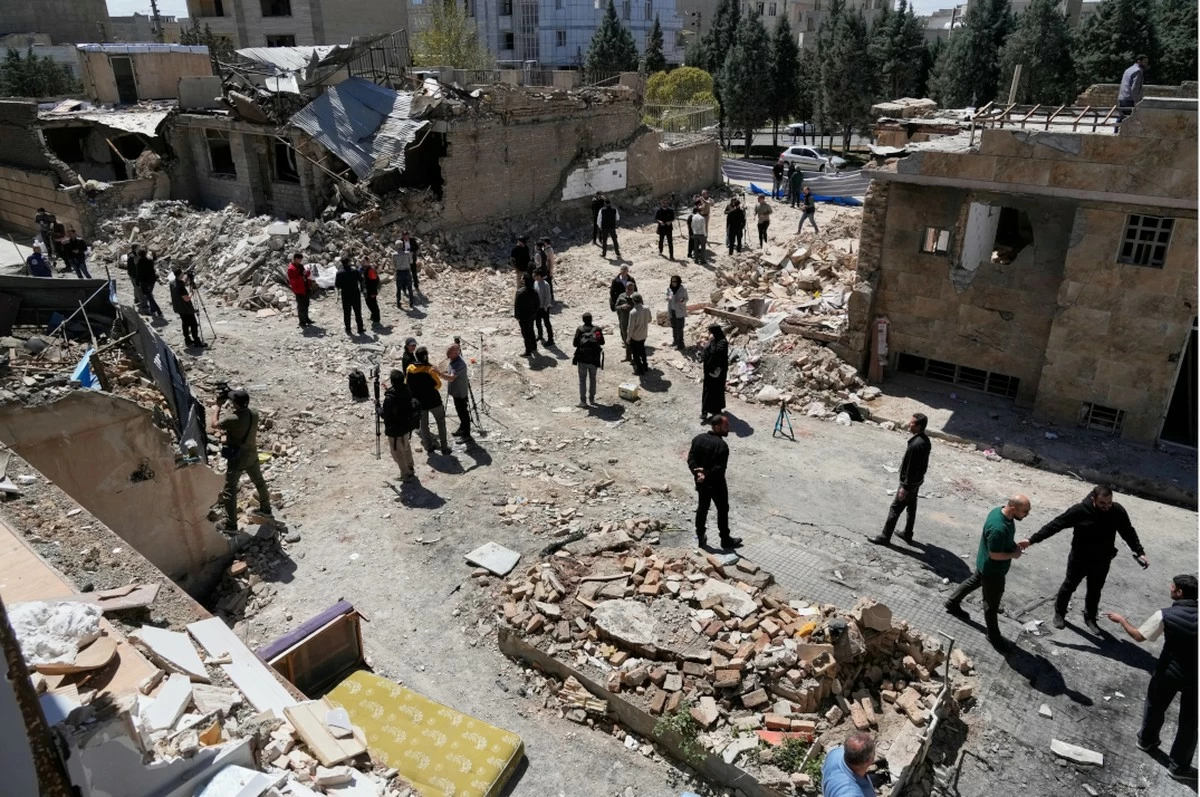
Journalists from foreign media based in Tehran document damage from U.S.-Israeli strikes in a residential area of the town of Fardis, Iran. (AP Photo/Vahid Salemi)

TEHRAN (AP), Apr 3: In a war-shadowed Tehran marked by checkpoints, empty streets and intermittent explosions, residents describe a city increasingly split between daily normalcy and scenes of sudden destruction, while also expressing deep frustration at being caught between domestic repression and geopolitical conflict.
A 26-year-old Pilates instructor in Tehran said she has stopped teaching altogether as the psychological toll of the ongoing escalation has become overwhelming. Speaking anonymously through secure channels for safety reasons, she said the greatest source of anxiety is not only the threat of bombing or infrastructure attacks, but the continued survival of Iran’s ruling establishment amid the crisis.
“Based on what Trump has been saying, once again I realized that we, the people of Iran are nothing but tools and playthings between these two ideologies and powers of the world,” she said. “Neither our lives nor our well-being matters to anyone. Not to our rulers, who killed (thousands during the January protests) nor to the First World, which has always pursued its own interests.”
She described the atmosphere in the capital as “dark,” noting that parts of the city have become unusually quiet during the recent New Year holiday period. Streets that are normally congested now show sparse traffic, she said, while security checkpoints have become more visible across key areas.
“My body doesn’t want to,” she said, explaining her decision to pause work. “It is full of checkpoints and there is very little traffic.”
Another resident, a woman in her forties, said she has taken to riding a motorcycle across the city as a form of personal expression and what she called “civil resistance.” She described the experience as a way of witnessing both the normality and fragility of life in the capital under strain.
She said the city’s response to women motorcyclists has softened in some areas after years of protests and shifting enforcement of mandatory dress codes, though tensions remain present in daily interactions.
Riding through different districts of Tehran, she said she encountered sharply contrasting realities. In wealthier neighbourhoods, cafés remained busy even as sounds of explosions were heard in the distance.
“Now I’m outside on my motorbike. I stopped by the side of the street. There was an explosion. Several people sitting on chairs by the café looked up, glanced at the sky and started drinking coffee again,” she said in a message shared anonymously.
Elsewhere in the city, she described scenes of devastation that stood in stark contrast to those pockets of normal life.
“The streets where a building has been damaged and destroyed, or the houses around it, are different. It’s like Gaza. Silence. The smell of death,” she said.
Together, the testimonies paint a portrait of a capital living under constant psychological pressure—where daily routines persist in some districts even as other areas bear the visible scars of conflict, and where residents say they feel increasingly powerless amid forces beyond their control.