



11/08/2026

Share:
11/08/2026
Share:

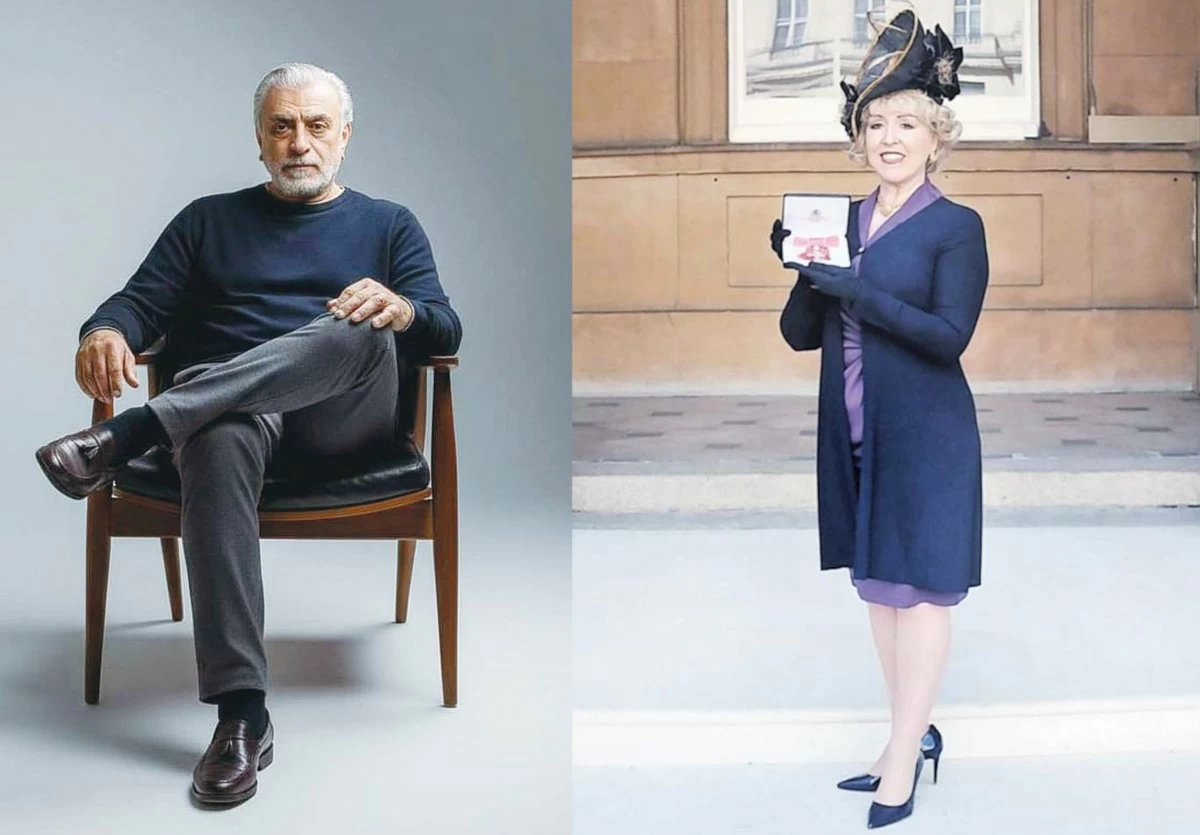
Romeo Debies & Alison Shan Price after receiving her MBE from HRH Prince William for her work in Kuwait.
In Kuwait, conversations among expats often begin in the same way. "How many years have you been in Kuwait? Some say: " Thirty years. Others say: Forty years. Sometimes even fifty. The answers are spoken almost casually, yet they represent entire lifetimes. And then, quietly, another unspoken question begins to emerge. "What happens when it is finally time to leave?" Unlike many countries that offer long-term residents a pathway to permanent settlement, expatriate residency in Kuwait is linked to employment. For most foreign residents, retirement eventually means departure. For some, returning home is a welcome reunion. For others, it means rebuilding a life in a country they left decades earlier.
Over the past few weeks, I have spoken to long-term expatriates from different backgrounds- a Filipino professional about to leave Kuwait, a famous Lebanese photographer, a Bulgarian milliner, an academician and a renowned British theatre producer who has relocated to the United Kingdom, and Indian professionals and entrepreneurs who spent between thirty and forty years in Kuwait. Their stories are remarkably different, yet they all circle back to the same question.
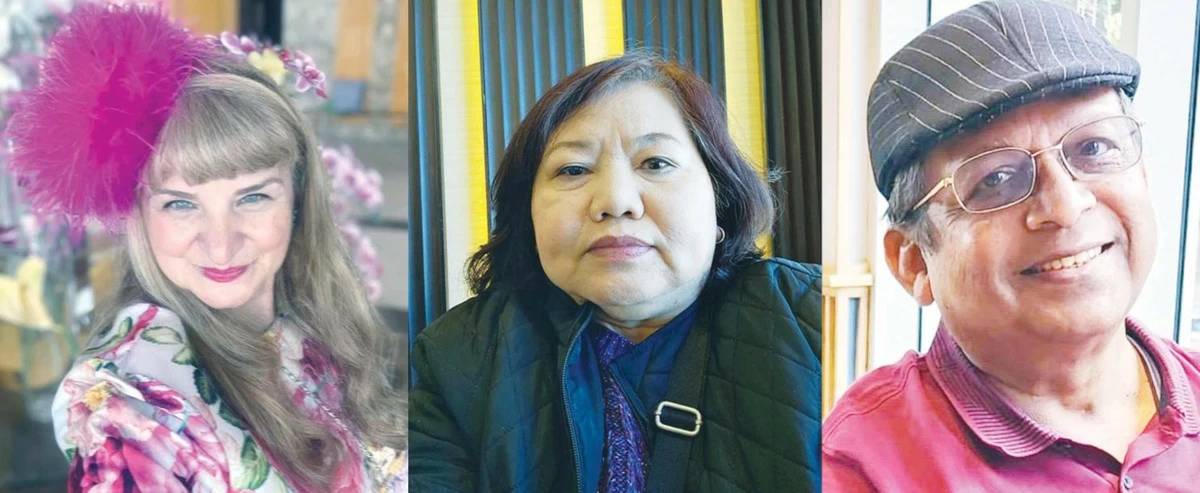
Bulgarian milliner and hair artist Stanka, Elinor Chee who is about to exit Kuwait and Kamal Sen – happy in his retirement in Kolkata, India.
After spending the best decades of your life in one country, where do you truly belong? For decades, Kuwait has been home to generations of expatriates. They arrived as young professionals, intending to stay for a few years. Many never left. Today, thousands of Indians, Filipinos, Egyptians, Lebanese, Pakistanis, Bangladeshis and Western expatriates have spent 20, 30 or even 40 years building lives in Kuwait. Their children were born here. They built their careers here. Their closest friendships were forged here. Yet, as age advances, an uncomfortable question begins to surface. Where do you go when the country you call home cannot be your forever home? It is an anxiety that is rarely discussed publicly, yet almost every long-term expatriate quietly acknowledges it.
For Eleanor Chee, a Filipino resident who spent three decades in Kuwait, the thought of returning home was always accompanied by uncertainty. She remained deeply connected to the Philippines throughout her years abroad but admitted that distance came at a price. "When we left home, there was no internet or social media," she recalls. "During those years, many friendships simply disappeared." She has invested financially in her homeland and hopes to receive medical treatment there. But she says the lack of permanent residency in Kuwait has inevitably influenced her long-term decisions. Like many expatriates, Eleanor believes Kuwait is home, yet she knows that one day she will have to leave.
For Alison Shan Price MBE, FRGS, FRAS, returning to Britain after forty years in Kuwait was more complicated than simply leaving a country she had come to regard as home. Kuwait had shaped Alison, but Alison had also spent decades contributing to Kuwait's cultural landscape. Through theatre, education and cultural exchange, she worked with Kuwaiti actors and young performers, mentored emerging talent and created multicultural and multilingual theatre through the One World Actors Centre. Her contribution was recognised internationally when she was awarded an MBE for her work in theatre in Kuwait. That distinction matters when considering what retirement or departure means for long-term expatriates.
The usual narrative concentrates on what the expatriate loses: friends, familiarity, professional networks and the country that has become home. Alison's story asks us to consider the reverse question as well: What does the host country lose when someone who has spent decades contributing to its cultural, educational or professional life leaves? For Kuwait's theatre community, Alison's departure meant the loss of a mentor and practitioner whose knowledge, relationships and institutional memory had accumulated over decades. Her role was not simply that of an expatriate employed in Kuwait; she had become a participant in the country's cultural life. That perhaps explains why returning to Wales in 2024 was emotionally difficult, despite having prepared for it for fifteen years. "Kuwait was home to my family, and very many multicultural friends and colleagues," she says. Back in Wales, she initially felt like "a stranger, totally dissociated." She also had to begin another professional chapter while assuming the hands-on responsibility of caring for ageing parents. Perhaps most revealing is her answer when asked where she now belongs. "I feel that I belong nowhere." Four decades of living and working across cultures had altered her worldview. She describes herself as having been profoundly influenced by the "wonderful mentorship of Kuwait and the Asian World", an outlook she sometimes finds difficult to reconcile with British assumptions about identity. "It doesn't quite fit into British understanding."
Yet Alison has not treated departure as professional extinction. In Wales, she is developing another life through historical research, lectures and children's explorer workshops. Her advice to other expatriates is characteristically pragmatic: “Plan, plan, plan." She believes every expatriate should have a "Plan B" years before retirement. "If you are on any type of visa, no matter how much you have invested personally and financially in Kuwait, you must expect to leave." It is not a pessimistic outlook. It is simply an acknowledgement of reality. Retirement from Kuwait, she believes, should not be viewed as a period of withdrawal. "It is a time for new beginnings." Years spent living between cultures create something few people anticipate-a hybrid identity. Home becomes less about geography than memory. Returning to one's country of birth can feel surprisingly unfamiliar. For some, Kuwait remains emotionally home. For others, neither country feels theirs entirely.
These reflections are echoed across Kuwait's expatriate communities. Indian families wonder whether they can rebuild lives in cities they left three decades earlier. Filipino professionals worry about healthcare and retirement security. Egyptian and Lebanese entrepreneurs face questions about businesses they have spent decades building. Western professionals often return to countries that have changed almost as much as they have. Each community has its own story. Yet they all ask remarkably similar questions. Where do we retire? Who will care for us? Will we recognise the country we once called home?
For entrepreneurs who have spent forty or fifty years building successful businesses in Kuwait, the questions become even more complex. What happens when they retire? Will their children continue the business? Will they sell it? Many have created jobs, contributed to Kuwait's economy and become part of its commercial landscape. Yet they too live with the knowledge that permanence is never guaranteed.
Not every expatriate experiences retirement with anxiety. For Kamal Sen, who spent almost thirty years in Kuwait over two separate periods before returning permanently to Kolkata in 2017, the move back to India was far less difficult than many imagine. "I was mentally fully prepared before coming back," he says. "There was certainly an emotional moment while leaving a place where I had spent almost thirty years, but once I returned, everything gradually fell into place." Unlike many long-term expatriates, Kamal never lost touch with India. He visited Kolkata once or twice a year, maintained close friendships and family ties, and continued to invest exclusively in India. "I never invested in Kuwait. It was always India." Even rebuilding life after retirement proved relatively straightforward. Looking back, Kamal believes preparation was the key. Rather than feeling like a stranger in his hometown, he says, "I only felt that I belonged to Kolkata."
For businessman and restaurateur Ravi Kohli, the question of ageing as an expatriate is perhaps even more complicated. He is not simply someone who came to Kuwait to work. He belongs to the third generation of a family whose association with Kuwait stretches back to the formative years of the Indian community. His grandfather, U.C. Kohli, was one of the pioneers of that community, helping to establish several Indian organisations and playing a role in founding the first Indian school in Kuwait. Ravi followed a very different professional path, building a restaurant business that has experienced both successes and setbacks over the years.
Asked whether he remains connected to India, his answer is an unequivocal "Yes". But unlike Kamal Sen, who always regarded Kolkata as the place he would eventually return to, Ravi's life appears firmly anchored in Kuwait. He began thinking seriously about retirement only around 2022. His three daughters add another layer to the question. Like many long-term expatriate families, the future of one generation is no longer necessarily tied to the country from which the previous generation came. Would uncertainty about the future make him hesitate to expand his business? "Yes." That distinction is important. A businessman may continue to invest, employ people and build enterprises in a country he considers home, while simultaneously knowing that his right to remain there is not permanent.
Ravi's story therefore raises perhaps the most difficult question in this feature: What happens when an expatriate family has been part of Kuwait for three generations? For the first generation, migration may have been about opportunity. For the second, Kuwait became home. By the third, the distinction between "home country" and "host country" becomes considerably harder to define.
Few stories illustrate the extraordinary duration of expatriate life more vividly than that of renowned Lebanese photographer Romeo Debies. He arrived in Kuwait on August 22, 1969. More than half a century later, Kuwait has encompassed virtually his entire professional adult life. Yet Romeo has never lost his connection with Lebanon. A large extended family remains there, and frequent visits helped maintain those relationships. Romeo had expected retirement to arrive sooner. COVID-19, followed by wars and regional instability, delayed those plans and imposed financial setbacks. But his attitude towards leaving is strikingly unsentimental. “Let us be real,” he observes. “No client wants an old photographer with all the new tech and young blood.” It is a candid acknowledgement of something rarely discussed in conversations about expatriate retirement: residency is only one form of insecurity. Professional relevance can have an expiry date too. Yet Romeo does not describe returning home in terms of loss. There is “no emotional cost,” he says. Instead, he is looking forward to returning to Lebanon, meeting new people and creating new contacts. After more than fifty years abroad, he does not view retirement as a retreat. He views it as another beginning.
Bulgarian milliner and hair artist Stanka, who has lived in Kuwait for 27 years, offers perhaps the least conventional response to the question of belonging. She remains connected to Bulgaria. Her family and old friends are there, while social media and her interests have helped her build new friendships in the country in recent years. Yet, emotionally, she says she feels more connected to Kuwait than to Bulgaria. Does the prospect of rebuilding a life elsewhere worry her? Not particularly. “I am going to do it, never mind where.” Her explanation is simple: “I am a citizen of the world.” Stanka's attitude reflects another form of expatriate identity, one in which belonging is no longer anchored exclusively to a passport or birthplace.
The six experiences could hardly be more different. Their stories challenge the assumption that there is a single expatriate retirement crisis. There isn't. What exists instead is a spectrum. Yet one common thread runs through all three stories. Each had to think about life beyond Kuwait long before retirement arrived. Much of the discussion around expatriate retirement focuses understandably on what the individual loses. But after thirty or forty years, departure can also represent a loss of accumulated knowledge for Kuwait as well. It is also how communities preserve the knowledge, mentorship and relationships they leave behind.
This is not merely a discussion about residency laws. It is about ageing. It is about identity. It is about belonging. It is about people who have spent the best years of their lives helping to build a country while knowing they cannot permanently remain there. As Kuwait continues to modernise and attract international talent, the conversation around ageing expatriates deserves greater attention not necessarily because policies should change, but because the human stories behind those policies are rarely told. Perhaps the greatest irony is this: For many long-term expatriates, leaving Kuwait is not simply moving to another country. It is about leaving home.
By Chaitali B. Roy, Special to the Arab Times