


28/04/2026

Share:
28/04/2026
Share:

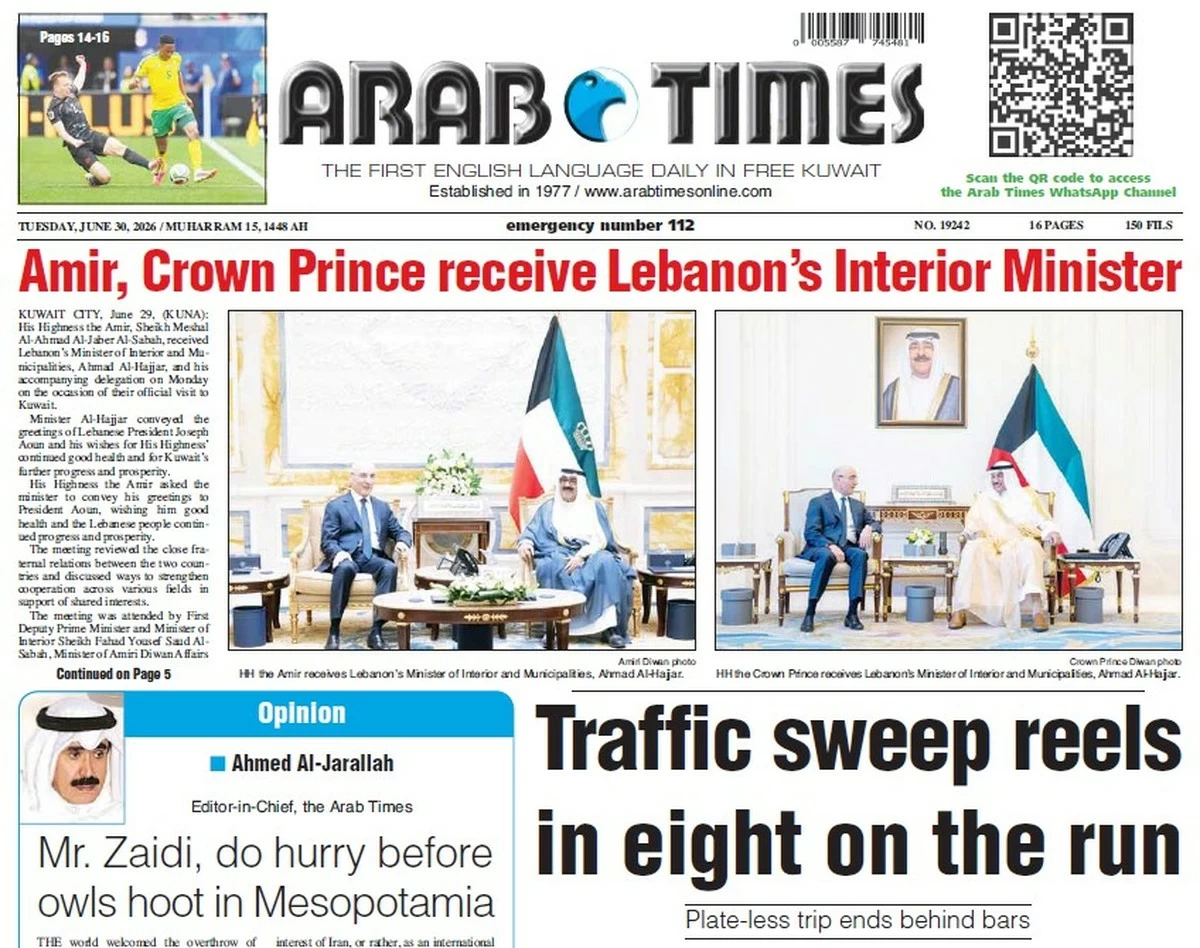
tributes continue to mark this date, positioning it as a testament to the strength of free speech and as a celebration of a career in media that essentially shaped the Arab and Gulf media landscapes. On this occasion, Farwaniya Governor Sheikh Athbi Nasser Al-Athbi Al-Sabah stated, “We stand before a painful event etched in our national and media memory. Nevertheless, it also reflects the deep impact of the free word when it is aligned with the truth and the nation. It was an assassination attempt on an outstanding journalistic voice that expressed the concerns of his country, facing challenges with unwavering faith in his journalistic mission. For decades, Ahmed Al-Jarallah has remained a model of the responsible national journalist, one who never wavered in the midst of adversity, as he rather continued to perform his role with courage and professionalism. This anniversary affirms that those who uphold principles leave an indelible mark, and that the honest word remains stronger than all attempts to silence it.”
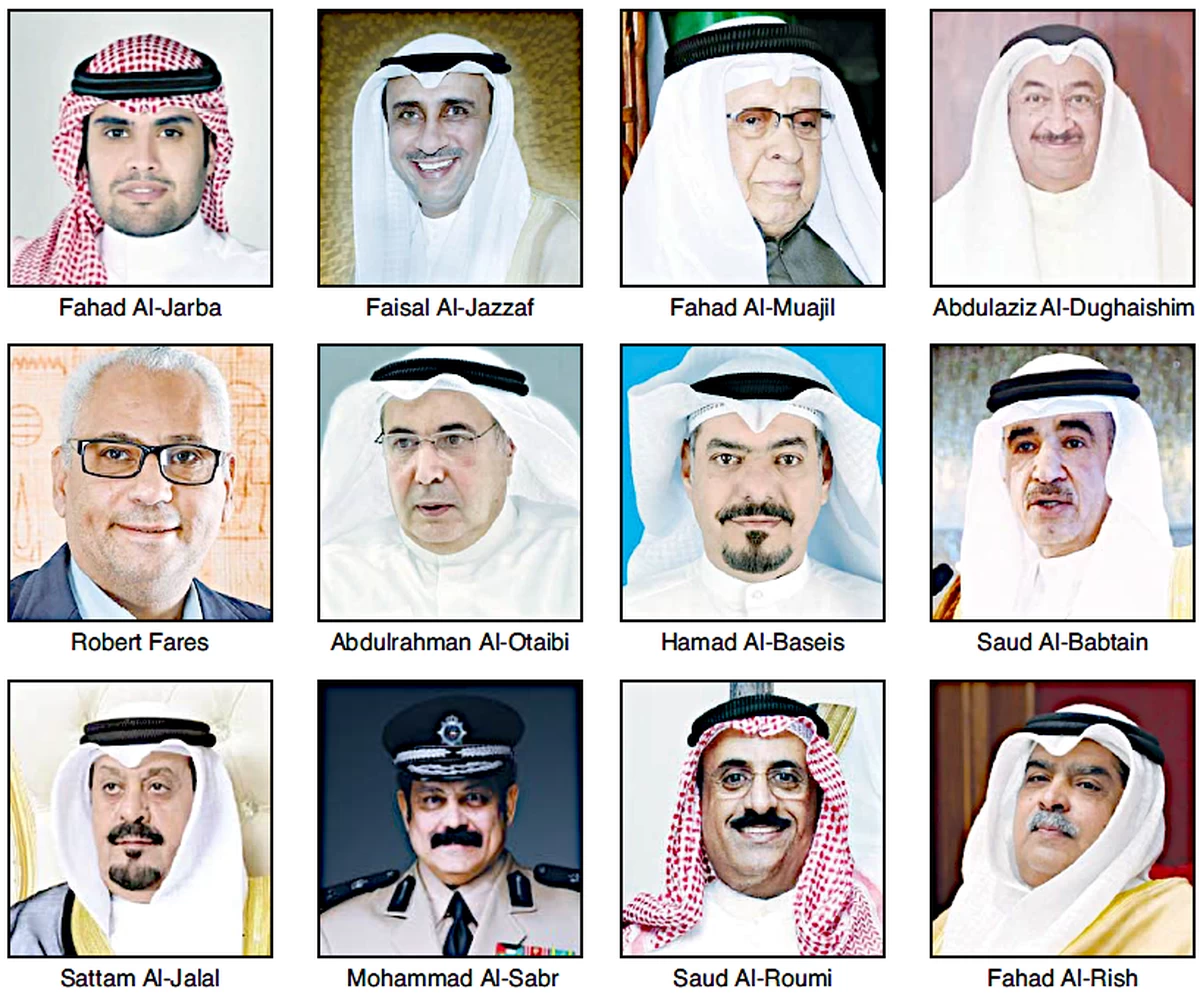
Secretary General of Kuwaiti Diwaniyas Fahad Abdulrahman Al-Muajil said “today marks 41 years since the assassination attempt on Dean of Kuwaiti journalism Ahmed Al-Jarallah. This incident was a litmus test for the value of free speech in facing the forces of darkness. The assassins wanted to silence an influential voice, but in reality, they confirmed that the honest word is stronger than violence and that the role of those who convey a national message cannot be extinguished by intimidation. Throughout his long career, Al-Jarallah proved that responsible media is a partner in protecting the homeland and defending its causes, and that journalism is not just a profession but a message and a stance. This anniversary is an occasion to recall the value of professional courage and genuine belonging, and to reaffirm the position of Kuwaiti journalism in serving the nation and society.”
Ambassador Abdulrahman Al-Otaibi, a seasoned diplomat, pointed out that the anniversary of the assassination attempt on Al-Jarallah is not just a passing incident in the annals of time, as it is a watershed moment revealing a critical juncture in the history of the region, a time when free speech paid a heavy price. “At that moment, the target was not really an individual, but the idea, profession, and role that are always at the heart of tension between truth and power. Recalling this incident after more than four decades opens the door to reflection on the value of steadfastness in facing violence and on the ability of societies to overcome attempts to silence dissenting voices. The incident, along with the shock and widespread expressions of solidarity, served as a profound lesson that words can be targeted, but they cannot be assassinated. It also solidified in the collective memory the understanding that freedom of expression is not a privilege to be taken lightly, but a responsibility that is preserved through perseverance and sacrifice. For the present generation, this anniversary serves as a dual call: a call to understand the contexts of the experience of the region, where conflicts sometimes translate into violence, and a call to embrace dialogue and openness as a civilized alternative to confrontation. It is a reminder that the stability we enjoy today did not arise from nothing, because it is the product of accumulated resilience and awareness.
This anniversary stands as a testament to the fact that history is not read solely through the lens of events, but also through their lasting impact -- a belief that words carry weight and that protecting them is not the responsibility of one individual, but the commitment of an entire society,” he added. Veteran diplomat Ambassador Saud Al-Roumi asserted that the assassination attempt on Al-Jarallah was an attempt to silence the truth, extinguish the voice of the free pen, and undermine the mission of the media to uncover the truth. “It was an attempt to steal the Arab pen, before it was an attempt to steal the pen of Al-Jarallah. The present generation views him as an Arab knight defending the truth, while the future generations will consider him a guiding light, affirming that truth always triumphs,” he stressed.
United Nations Ambassador and Chairman of the Board of Directors of Al-Awazem Charitable Foundation Hamad Zaid Al-Baseis stated that the assassination attempt on Al- Jarallah in 1985 was a painful event and a turning point in the history of Kuwaiti journalism, affirming that the free word endures. “Today marks a painful anniversary, yet it embodies resilience and steadfastness. The incident proved that free media in Kuwait is deeply rooted and that its people are capable of facing challenges, no matter how severe. We commemorate this anniversary not only to grieve, but also to renew our commitment to protect freedom of speech and the truth. We, at Al-Awazem Charitable Foundation, confirm that what happened 41 years ago will not be forgotten and will remain a lesson for future generations about the importance of adhering to national principles and values, and the necessity of supporting every voice that seeks to uphold the truth and serve the nation. We ask Allah to protect Kuwait and its people, to perpetuate the blessings of security and stability upon it, and for it to remain a beacon of freedom and responsible media,” he added. Chairman of the Board of Directors of the Retired Officers Association Brigadier General Faisal Al-Jazzaf said “we stand at a pivotal point embodying the heavy price that advocates free speech may pay in defense of the truth. This occasion is not only a historical event, but a reaffirmation that targeting the press is an attack on the consciousness of societies and their right to know. Based on this perspective, we commend the career of Al-Jarallah, who remains a prominent figure in the media landscape with a bold vision and an influential voice, shaping public awareness and defending the causes of his nation and people. The association affirms its great pride in its media and intellectual icons, and its unequivocal rejection of all forms of violence against free speech.”
Abdulaziz Al-Dughaishim stressed, “We reaffirm that targeting those who express their opinions freely has never been able to silence their message or diminish their impact. Al-Jarallah represents a complete media school, one keen on defending the causes of the nation and the courageous stances that made him one of the most important journalism figures in Kuwait, the Gulf and the Arab world. This anniversary is not merely a historical event, considering its importance in protecting freedom of expression and preserving the role of responsible journalism in shaping public awareness. Therefore, we reaffirm our appreciation for his illustrious career and his contributions that cemented his position as an influential national and media voice for decades.”
Businessman Sattam Al-Jallal stated that Al-Jarallah is an activist and political expert who serves his country with integrity and honor. He indicated that such an anniversary proves that those who speak the truth face challenges with steadfastness and faith, wielding the power of the word in completing their mission. He pointed out that throughout his career, Al-Jarallah proved that journalism is a national responsibility and a stance, not just a profession. “He is an example of courage and clarity, which made him one of the major media figures in Kuwait and the region. We commemorate this anniversary with utmost appreciation for his career. He always emphasizes the importance of protecting freedom of speech and supporting all those who contribute to the advancement of the nation,” he asserted.
Fahad Al-Jarba revealed that “in the memory of Kuwaiti journalism, April 1985 is an unforgettable milestone, not only because it witnessed a serious security incident, but also because it clearly revealed the value of the word when it is truthful and its price when it is impactful. On that day, the esteemed journalist and writer, Al-Jarallah, was subjected to an assassination attempt in front of his office in Shuwaikh, where several bullets were fired at him in an attempt to silence a voice that was accustomed to writing without hesitation. That incident was not trivial; it was a clear message that the word expressing a stance can be disturbing and even targeted.
“Nonetheless, what happened afterward was more significant, as Al-Jarallah did not only survived, he emerged from that assassination attempt even more present and steadfast, as if the bullets made him more determined. Through his editorship of the Al-Seyassah and Arab Times newspapers, he has been known for his outspoken style, clear political analysis, and boldness in addressing sensitive issues without ambiguity. He does not write to please anyone, but to express his convictions, putting him at the forefront of the media landscape and making him the target of those who could not accept this kind of perspective. Six bullets struck his body, but they did not break his resolve. Instead, that moment became a testament to the fact that words spoken out of conviction are not easily silenced. After the incident, Al-Jarallah continued his journalistic work, maintaining his approach and affirming that retreat has never been an option. “Recalling this incident today is not just a historical narrative, as it is the reaffirmation that journalism is not only a profession but a responsibility and that those who wield the power of the written word must understand its weight and impact. It also serves as a reminder that Kuwait, despite all the challenges it faced, remains a land that embraces freedom of opinion and protects the space for expression. “Al-Jarallah remains an example of a journalist who was neither changed by pressure nor deterred by threats. Experience strengthened his resolve. This is a message for everyone working in the field of journalism -- that the honest word could be costly, but its impact remains the truest and most lasting. Words are fought against, but they never die.”
Robert Fares, a journalist and a novelist on the Islamic Movements and Minorities Portal, pointed out that “the assassination attempt on Al-Jarallah is no longer just a security event in the annals of history, because it has become a defining moment in the national memory. It embodies the implications of political conflict, the price of words, and the limits of disagreement when it descends into violence. In the collective memory, the incident was a shocking moment that revealed the instability then, yet at the same time, it revived fundamental questions about freedom of expression, responsibility, and rejection of the elimination of opponents outside the purview of the law. For the present generation, it is a historical lesson that disagreement does not justify violence, and that a nation is built only through dialogue and the rule of law. It is an event from the past, yet it still conveys a moral and political message at present.”
Fahad Al-Rish emphasized that “Al-Jarallah was born for journalism and politics. He is a wellspring of enlightened and bold political thought, so he is unique in terms of his articles and his daring arguments, which almost cost him his life. He never wavered, even an inch, from his convictions against obscurantism. He is a distinguished figure in the region, so he deserves the title, ‘Dean of Kuwaiti Journalism’. He focuses on the issues of the nation and the Arab world. He does not compromise with anyone. He almost paid a heavy price when he was targeted for assassination 41 years ago, yet he never wavered from his patriotic stances. He became a school of thought in the world of journalism and patriotism. Young media professionals must enroll in the school of Ahmed Al-Jarallah.”