



23/12/2025

Share:
23/12/2025
Share:

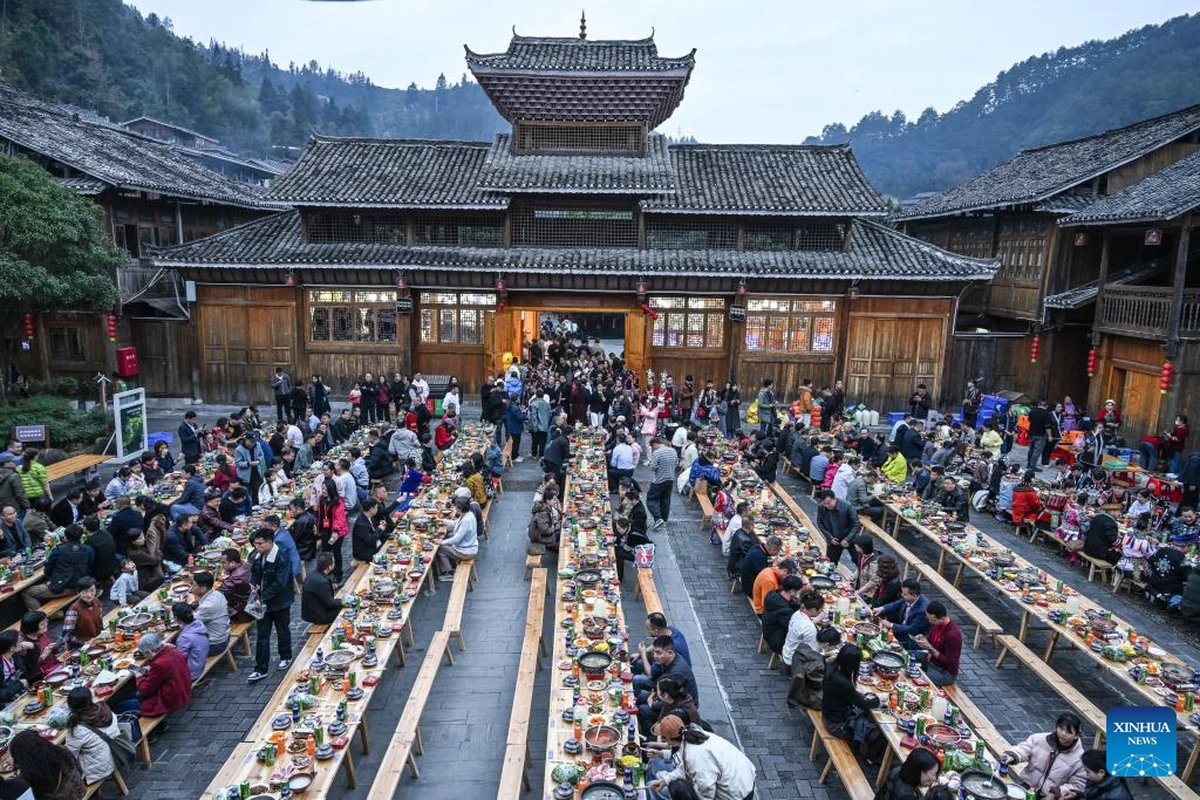
This photo shows a long-table banquet joined by tourists and locals in Zhaoxing Dong village of Liping County, southwest China’s Guizhou Province. (Xinhua)
GUIYANG, Dec 23: To the rhythm of lusheng woodwind pipes and the scent of sticky rice cakes, a village in southwest China’s Guizhou Province celebrated its annual Dong New Year festival over the weekend -- an event that has become a gateway for global visitors. Known as one of the major Dong villages in China, Zhaoxing Dong Village of Liping County holds unique folk cultural events each year, including frying Dong-style pastries, singing the grand song of the Dong ethnic group, hosting grand ethnic parades, lusheng musical competitions, and bonfire parties. The vibrant festival attracted tourists from all over the world, creating a joyful festive atmosphere. Konstantin Pokazachenko, a tourist from Moscow, Russia, arrived by high-speed train from Guilin, a renowned tourist destination in the neighboring Guangxi Zhuang Autonomous Region. He and his friends have stayed in the village for two days.
During this time, they visited many ancient buildings, experienced a grand parade and participated in the ritual activities. “I have seen Chinese ethnic song and dance performances before, but this Dong New Year event featured more participants and a wide variety of performances. Experiencing it in person was truly impressive,” he said. According to China’s National Immigration Administration (NIA), tourists from 76 countries now enjoy unilateral or mutual visa-free entry, with transit exemptions expanded to 55 countries.
Visa-free Data from the NIA showed that visa-free entries accounted for over 7 million foreign arrivals in the third quarter of this year, representing 72.2 percent of all foreign entries and marking a 48.3 percent year-on-year increase. Thanks to the visa-free policy, more and more international visitors choose China’s remote southwestern mountainous areas as their travel destination, adding more global vibe to the region. Chloe Bertrand, who works in Guangdong Province, visited the village for the first time with her parents and sister, who had flown to China for the Christmas holiday. “We chose Guizhou’s rural areas as the final stop of our China trip to experience local ethnic traditions,” she said, adding that the mountainous Guizhou is also ideal for hiking. Sarwar Jahan, a vlogger from Bangladesh who has over 400,000 followers online, captured beautiful and exciting moments of the Dong New Year with his camera. “Today’s grand parade was amazing. Local people truly love and take pride in their ethnic culture,” Jahan said. “The scenery, culture, and the smiles of the people deeply fascinated me.” Jahan plans to share his short videos on Facebook and YouTube to showcase the beauty of Guizhou to global audiences.
“Now, cooperation between Bangladesh and China is deepening. Many Bangladeshis watch Chinese videos and are very interested in Chinese culture.” To date, nearly 10,000 inbound visitors have traveled to the village, figures show. By organizing events such as the Dong New Year celebrations and village-level chorus competitions, local authorities have developed distinctive ethnic cultural tourism projects that enrich rural tourism with a variety of cultural experiences, said Lu Weimin, Party chief of the village. The village has now developed over 400 hotels, guesthouses and restaurants, creating employment and entrepreneurial opportunities for more than 2,000 villagers, Lu added. The local initiative aligns with China’s broader national strategy.
As noted in a recommendations document for the formulation of the 15th Five-Year Plan (2026-2030), China will spur deeper integration of culture and tourism through the vigorous development of cultural tourism and use culture to empower economic and social development. The document also emphasized the need to offer more convenient and foreigner-friendly services for inbound tourists. Liang Jianfeng, from Foshan City of Guangdong Province, known for its traditional lion dance, led a youth lion dance team to perform in the Dong Village. “The annual Dong New Year celebration not only deepens ethnic cultural exchanges between Guizhou and Guangdong, but also lays a solid foundation for enhanced future cooperation in culture and tourism between the two regions,” Liang said.
(Xinhua)