



27/08/2026

Share:
27/08/2026
Share:
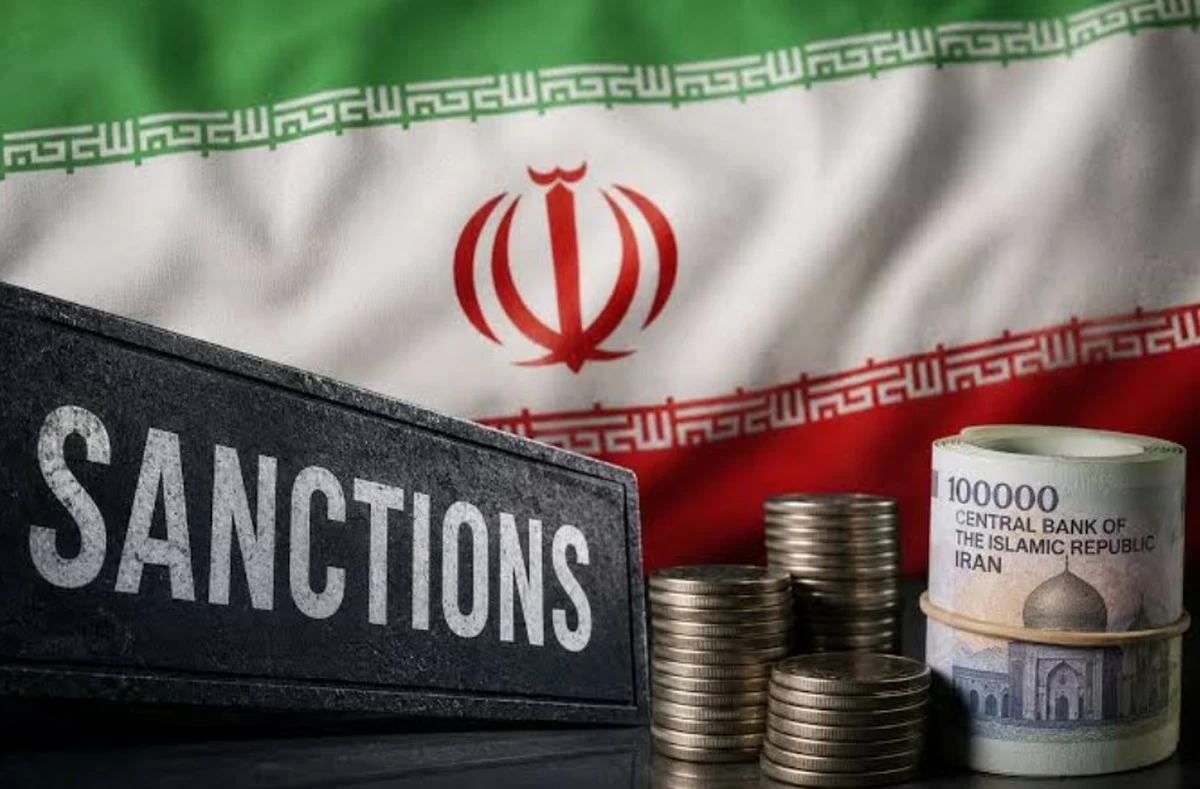

WASHINGTON, Aug 27: Nearly six months into the war with no lasting settlement in sight, the United States is intensifying economic pressure on Iran, targeting the country's oil revenues, trade networks and access to the international financial system in an effort to force Tehran to change course.
The latest campaign, dubbed Operation Economic Outcast, seeks to expand the reach of US secondary sanctions and further isolate Iran from the global economy. US Treasury Secretary Scott Bessent said Washington's objective was to cut off the economic channels supporting the Iranian government.
“Around the globe, our objective is to sever every economic lifeline that sustains this tyrannical regime until Tehran stands alone,” Bessent said while announcing the measures.
The new pressure comes as Iran's economy is already facing severe strain. Iranian Central Bank Governor Abdolnaser Hemmati said oil exports had fallen to zero amid the war and sanctions, while the rial has reached a record low against the US dollar. The International Monetary Fund expects Iran's economy to contract by 6.1% in 2026, while inflation is projected to remain exceptionally high.
Oil trade at the center of US pressureIran's oil industry remains the most immediate target of Washington's economic campaign because energy exports provide Tehran with a major source of foreign currency.
Hemmati said last week that Iran was no longer exporting oil because of restrictions imposed during the conflict.
“There is no doubt that we face restrictions on oil exports,” he said in a televised interview. “It is a reality that we are not exporting oil.”
The US also restored its naval blockade of vessels traveling to and from Iranian ports on July 14 after a temporary easing of restrictions.
Data from commodities intelligence firm Kpler showed Iranian crude loadings falling sharply, from an average of about 893,000 barrels per day in July to just 156,000 barrels per day through August 17. Hemmati's subsequent statement that exports had effectively fallen to zero indicates that pressure on Iran's oil revenues may have intensified further.
Max Gillman, Friedrich A. Hayek Professor of Economic History at the University of Missouri-St. Louis, said the naval blockade was likely to remain Washington's principal economic instrument.
“I think the main enforcement measure will be the naval blockade on Iranian trade. I expect this to continue indefinitely,” Gillman said.
He said maintaining the blockade would reduce the economic resources available to the Iranian government and increase pressure on Tehran.
Pressure on foreign reserves and access to dollarsWashington's strategy extends beyond preventing Iran from selling oil. US sanctions can also restrict Tehran's ability to access foreign currency reserves and convert revenues into usable funds.
Hemmati said Iran's government and central bank had prepared for reduced oil revenues but faced an additional challenge because some of the country's foreign currency reserves remained blocked.
“The Americans have frozen our foreign currency reserves and do not allow us to withdraw them,” he said.
He also said Iranian funds that were expected to be released under the Islamabad Memorandum, a framework agreement reached with Washington in June, had not yet been made available.
The restrictions have increased pressure on Iran's currency and financial system. Tehran has increasingly relied on alternative payment mechanisms, intermediaries in third countries, cryptocurrency and informal financial networks to move export revenues and bypass sanctions.
US authorities have sought to disrupt those channels by targeting companies, individuals and financial institutions accused of helping Iran convert oil and trade earnings into accessible foreign currency.
Secondary sanctions broadenedAnother major component of Washington's strategy is the use of secondary sanctions, which can penalize foreign companies, banks and individuals that conduct business with sanctioned Iranian entities.
The US Treasury this week announced new categories of Iranian economic activity that could expose foreign businesses and individuals to sanctions, including transactions involving digital assets, technology, gold, aviation and shipping.
The Treasury also said it was preparing sanctions against more than 60 entities, individuals and vessels around the world that Washington accuses of supporting Iran's economic networks.
Bessent said US officials were engaging with foreign governments and businesses and giving them deadlines to halt activities identified by Washington.
“Every country has a defined timeline to shut down activities we have identified. If they do not take action, we will do so unilaterally through Treasury authorities,” he said.
He specifically cited Iran's Bank Melli, saying its branches should be closed, while warning financial institutions that facilitating transactions Washington considers illicit could result in their exclusion from the US dollar-based financial system.
“Any entity that facilitates money laundering on behalf of Iran will be removed from the US dollar system. The clock is ticking,” Bessent said.
Iran's economy under mounting strainThe intensified US campaign comes as Iran is already struggling with a deteriorating economic situation.
The IMF projects that the Iranian economy will shrink by 6.1% this year, a significant downward revision from its January forecast. Average inflation is expected to reach 68.9%, compared with 50.9% in 2025.
Iran's labor market has also weakened. The country's official unemployment rate rose to 9.1% in the spring, while the number of employed people fell by around 450,000 compared with the same period a year earlier.
The rial has also suffered a dramatic decline, reaching about 2 million to the US dollar on the informal market Monday. Meanwhile, figures from Iran's Statistical Center showed point-to-point consumer inflation reaching 87.9% in July.
A weaker currency makes imported goods more expensive and adds to the burden on Iranian households already facing rapidly rising prices.
Limits to Washington's economic leverageDespite the scale of the pressure, the US faces limits in how far it can use sanctions without creating wider consequences for the global economy.
Bessent acknowledged the potential risks when explaining why Washington was allowing foreign businesses and governments to end activities targeted by the new sanctions rather than imposing penalties immediately.
“We are allowing everyone to remedy bad behavior,” he said. “Why would I want to blow up the global financial system?”
Restrictions on Iranian oil exports and shipping could also affect global energy markets by reducing available supplies and putting upward pressure on crude prices.
Gillman said continued economic pressure could nevertheless be less disruptive than a return to large-scale warfare. He argued that Washington appeared to be seeking to constrain Iran while limiting the impact of higher oil prices on the broader global economy.
The effectiveness of the strategy, however, will ultimately depend on whether economic hardship translates into political concessions.
Iran has faced varying levels of US sanctions and economic isolation for decades and has developed alternative trade and financial channels to reduce their impact. Tehran has also historically resisted demands from Washington to abandon policies it considers central to the Islamic Republic.
The Trump administration argues that tighter enforcement can eventually alter Tehran's calculations by increasing the economic cost of continuing its current policies.
Bessent also issued a direct appeal to Iranian soldiers, linking the country's economic difficulties to the government's policies and warning that financial pressure could increasingly affect state salaries.
Yet despite mounting economic difficulties, months of war, sanctions and financial pressure have so far failed to produce a lasting political settlement.
For Iran's leadership, economic hardship has also long been framed as part of the broader struggle against foreign pressure. The Islamic Republic has repeatedly portrayed its ability to withstand sanctions as a measure of national resilience, making the question of whether Washington's latest campaign can force a change in Tehran's position far from certain.