



11/12/2025

Share:
11/12/2025
Share:

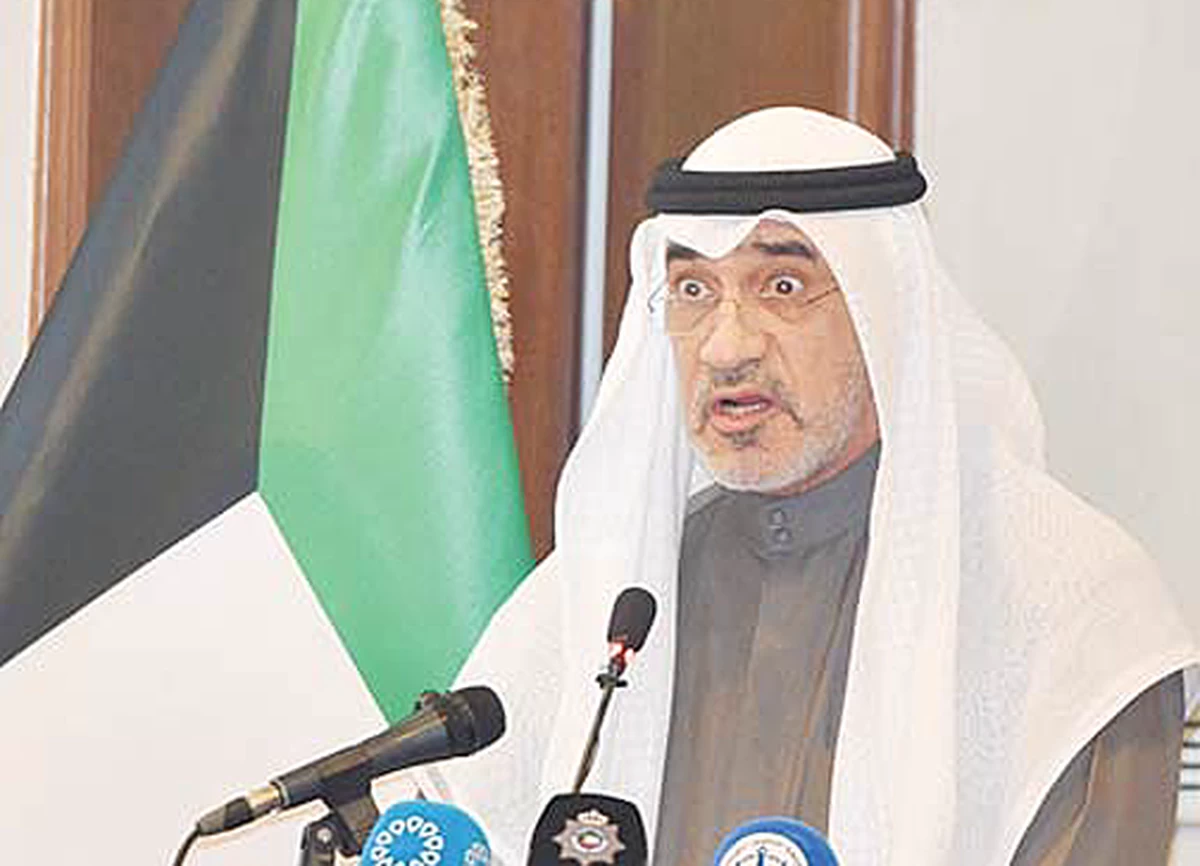
Acting Prime Minister and Minister of Interior Sheikh Fahad Yousef Saud Al-Sabah speaks at a seminar on the new drug law held recently at the Kuwait Institute for Judicial Studies.
KUWAIT CITY, Dec 11: The acting Prime Minister and Minister of Interior Sheikh Fahad Yousef Saud Al-Sabah has identified drugs and citizenship fraud as the gravest threats facing Kuwait. Speaking at a seminar on the new drug law held recently at the Kuwait Institute for Judicial Studies, Sheikh Fahad highlighted the gravity of the situation. He praised the timely leadership of His Highness the Amir, Sheikh Meshal Al-Ahmad Al-Jaber Al-Sabah, noting that his arrival came at a crucial moment for Kuwait. Sheikh Fahad emphasized that while drugs pose a serious threat to the nation, “the more serious issue is the forgery of citizenship”, stressing that Kuwait’s wealth, resources, and people make it a target for those seeking citizenship and employment.
Sheikh Fahad expressed gratitude to the Attorney General, the Public Prosecution, and all Ministry of Interior officers for their cooperation. He highlighted that His Highness the Amir’s support was vital to his work as Interior Minister. In his speech, Sheikh Fahad Al-Yousef highlighted both the transformative power of treatment and the dangers of drugs. He elaborated a serious drug-related case in which a Ministry of Interior captain murdered his sister in January 2022.
The crime, uncovered solely by the ministry, had gone unreported by the family. He expressed sorrow for the victim’s four-year-old son and condemned the family’s inaction, attributing the tragedy to drugs. Sheikh Fahad recounted another case where a citizen chose treatment over prison, successfully recovered, and became a hospital supervisor, later reuniting with her estranged father. He emphasized the strict enforcement of the law in Kuwait, noting that past violations are no longer tolerated. He quoted His Highness the Amir, saying, “If you find anything on one of my sons, don’t let him go,” and highlighted that death sentences are being executed swiftly, sometimes within three months
Sheikh Fahad praised Kuwait’s addiction treatment hospital as unparalleled globally and stressed the government’s full support, under the leadership of His Highness the Amir, in combating drug-related issues. Sheikh Fahad Al-Yousef emphasized that drug use in Kuwait has significantly decreased thanks to a fair judiciary, diligent prosecution, and active Ministry of Interior personnel, despite the Gulf region being targeted by regional and international smuggling networks. He stressed that combating drugs is a national responsibility requiring the coordinated efforts of families, schools, media, security agencies, and all citizens, with community cooperation vital for the success of the new law. Highlighting the efficiency of security forces, he noted that the Drug Control General Department (DCGD), supported by the ministry, eliminated about 90 percent of targeted narcotics in a year.
Following the new decree, the Ministry of Interior launched the “Safeguarding Our Homeland” campaign to educate the public on the law, penalties, treatment options, and the dangers of drug abuse. In conclusion, Sheikh Fahad Al- Yousef expressed gratitude to His Highness the Amir Sheikh Meshal Al- Ahmad, for his pivotal support in implementing the new Anti-Narcotics and Psychotropic Substances Law, highlighting its role in safeguarding national security and youth. He also thanked the law’s drafting committee for their efforts and praised DCGD and all Ministry of Interior’s sectors for their work in preventing smuggling, trafficking, and protecting the nation’s youth. Meanwhile, Counselor Bader Al- Musaed, Director of the Kuwait Institute for Judicial and Legal Studies, highlighted Decree-Law No. 159/2025 on narcotics as a modern, balanced approach combining strict deterrence against trafficking with reformative and humanitarian measures for addicts.
He explained that tackling drugs requires both firmness and compassion, as the issue threatens individual health, family stability, and national security. The law, effective December 15, includes 84 articles across 13 chapters, covering punitive, preventative, therapeutic measures, and regulation of medical narcotics use, while the Institute focuses on raising legal awareness of its provisions. Furthermore, Advisor at the Appeals Court and head of the Narcotics Law Drafting Committee Mohammed Al- Duaij underscored the urgent need for Kuwait’s new Law 195/2025, shaped by 27 years of confronting devastating drug-related cases. He recounted harrowing incidents, including a case where a son murdered his elderly mother under drug influence, illustrating the human cost behind the legislation. Al-Duaij noted that the 84-article law, developed over two years with support from His Highness the Amir and guidance from Sheikh Fahad Al- Yousef, provides strong deterrence, addresses violence linked to substances like crystal meth, protects children of addicted parents, and targets drug-impaired drivers to safeguard society.
He also highlighted the rising incidence of courtroom violence related to crystal meth, including cases where children suffered due to addicted parents and a father lived in fear of his violent, drug-affected son. Al-Duaij emphasized that the new law decisively tackles the everyday risks posed by drug-impaired drivers, effectively closing loopholes that previously allowed such offenses. He recounted the Al-Sadiq Mosque bombing, in which suicide bomber Fahd Al-Qabaa, aided by Abdul Rahman Sabah, used crystal meth in the attack after being supplied by an overseas group. Al-Duaij emphasized that Law 195/2025 takes a balanced approach, combining strict enforcement with humanitarian care by requiring medical treatment for drug users or imposing severe legal penalties. The law also strengthens Ministry of Health oversight and increases punishments for prescription falsification, medication misuse, and unauthorized narcotic distribution by doctors. He noted that the law criminalizes anyone who accompanies or shares drugs with users, as such behavior often spreads addiction.
Al-Duaij conveyed four core messages - a firm warning to drug traffickers, an urgent call for users, viewed as patients, to seek treatment and avoid criminalization, a request to the Ministry of Education to implement comprehensive school-based prevention programs, and a reassurance to society that the law will strengthen national security and safeguard families. Meanwhile, Dr. Hussein Al-Shatti, Director of the Addiction Treatment Center, praised the new law for its medical focus and protections for staff and patients, emphasizing that addiction affects the entire community. He noted the center provides voluntary treatment with immunity from punishment, while the Rehabilitation Center handles court-mandated cases, and reported a rise in individuals proactively seeking help since the law’s implementation.
By Munif Naif and Jaber Al-Hamoud Al-Seyassah/Arab Times Staff