



20/01/2026

Share:
20/01/2026
Share:

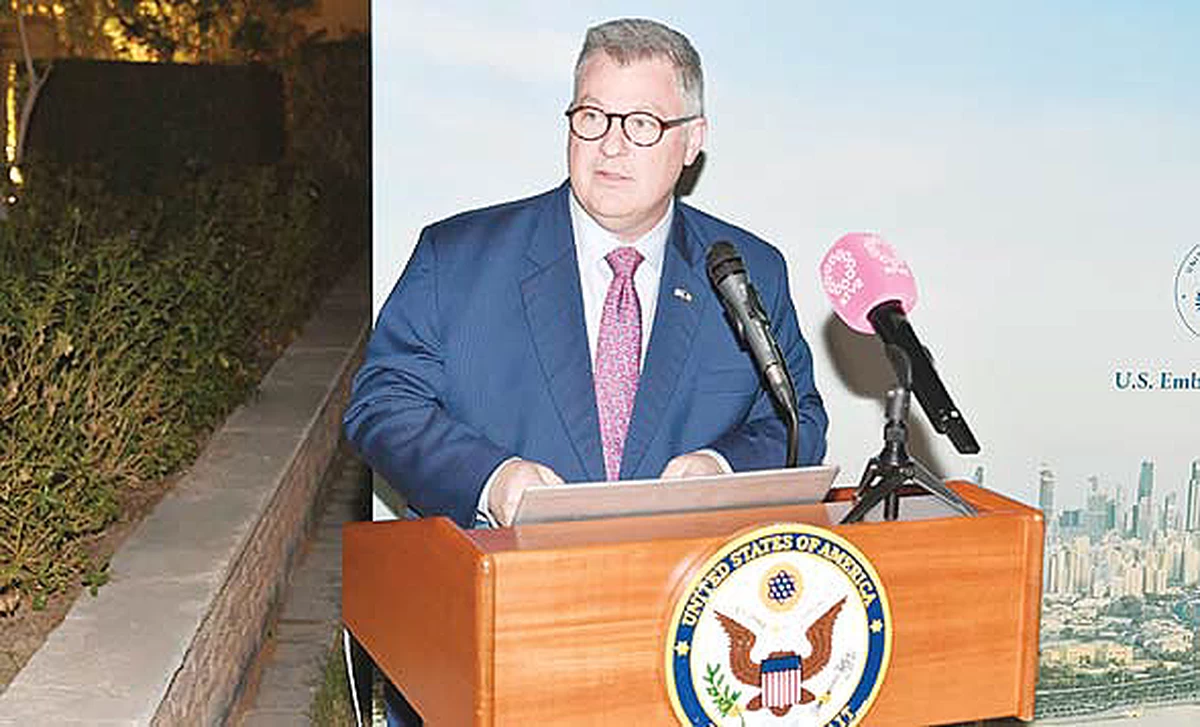
Steve Butler, Chargé d’affaires of the American Embassy in Kuwait, addresses the attendees of the seminar titled ‘Cybersecurity and Innovation.’
KUWAIT CITY, Jan 20: Chargé d’affaires of the American Embassy in Kuwait Steve Butler described the relationship between the United States of America and Kuwait as a deep friendship and long-standing partnership. In a statement on the sidelines of a seminar organized by the Embassy titled, “Cybersecurity and Innovation,” Butler pointed out that the two countries are approaching the 35th anniversary of the liberation of Kuwait.
He said “this partnership was forged in blood when we stood shoulder to shoulder. It is a steadfast friendship built on shared sacrifices and joint action.” Cybersecurity expert Guillermo Christensen and British expert from Google Matthew Herling participated in the seminar, with a large number of citizens and those interested in cybersecurity in attendance. According to Butler, “artificial intelligence is a new and extremely important field.
The policies of the American administration focus on cybersecurity, especially in light of the increasing reliance on digital technologies and artificial intelligence. There is a broad discussion in Washington about how to establish frameworks that regulate and control artificial intelligence, while ensuring the highest levels of protection and cybersecurity, which will be fundamental to any future driven by digital technologies.” He stressed that “the world is already living in a fully integrated digital future. Personal information is now available everywhere and its dissemination can no longer be stopped, which makes international cooperation essential to address the challenges related to data protection and securing cyberspace. We are working with Kuwait, as we are with other countries in the region and around the world, to explore how we can partner to enhance cybersecurity.” He confirmed that his country is ready to offer its expertise, knowledge and technology, including knowledge transfer and technical support, to contribute to strengthening the capabilities of Kuwait and partner countries.
He pointed out that “looking to the digital future is not limited to the United States alone, but also includes Kuwait, especially given the Kuwaiti government’s focus on digital transformation and developing government services. Cybersecurity is the foundation upon which this transformation is built, and it is the cornerstone that ensures the success of any secure and sustainable digital future.” He said the United States sent specialized experts to Kuwait to present on cybersecurity, expressing hope that this step will contribute to building new partnerships, developing effective communication channels, and establishing cooperative relationships that will help advance this vital issue. He added that strengthening Kuwaiti-American cooperation in cybersecurity will yield mutual benefits, serve the interests of both countries, and contribute to a more secure and stable digital future for the two countries.
Meanwhile, cybersecurity expert Guillermo Christensen stated that “the pace of change in cybersecurity and artificial intelligence is accelerating at an unprecedented rate. What is coming will far surpass today’s reality.” He then called for early preparation for this rapidly evolving phase. He said “cybersecurity and artificial intelligence have become tools of national power and engines of economic competitiveness. All governments now recognize the importance of these tools in protecting national interests. Any modern economy lacking a strong infrastructure in these two areas is vulnerable to decline. Artificial intelligence is now a widely used technology, similar to energy in its broad impact. The global shift towards data centers reflects the changing nature of strategic assets and sources of wealth.” He disclosed that “international experience has shown the difficulty of addressing cybersecurity from a purely technical perspective. The human element is one of the major challenges, while flexibility in legislation is now essential to keep pace with the evolving nature of threats.”
British expert from Google Matthew Hurling underscored the importance of investing in cybersecurity now that technology is at the heart of the public and private sectors. He explained that linking cybersecurity to economic decisions and measuring return on investment contributes to making it a clear and discussable issue at the board level and among decision-makers. He indicated that this approach helps in prioritizing protection and redirecting investments towards the most effective measures, especially since the nature of risks usually changes.
By Fares Ghaleb Al-Seyassah/Arab Times Staff