



16/09/2026

Share:
16/09/2026
Share:

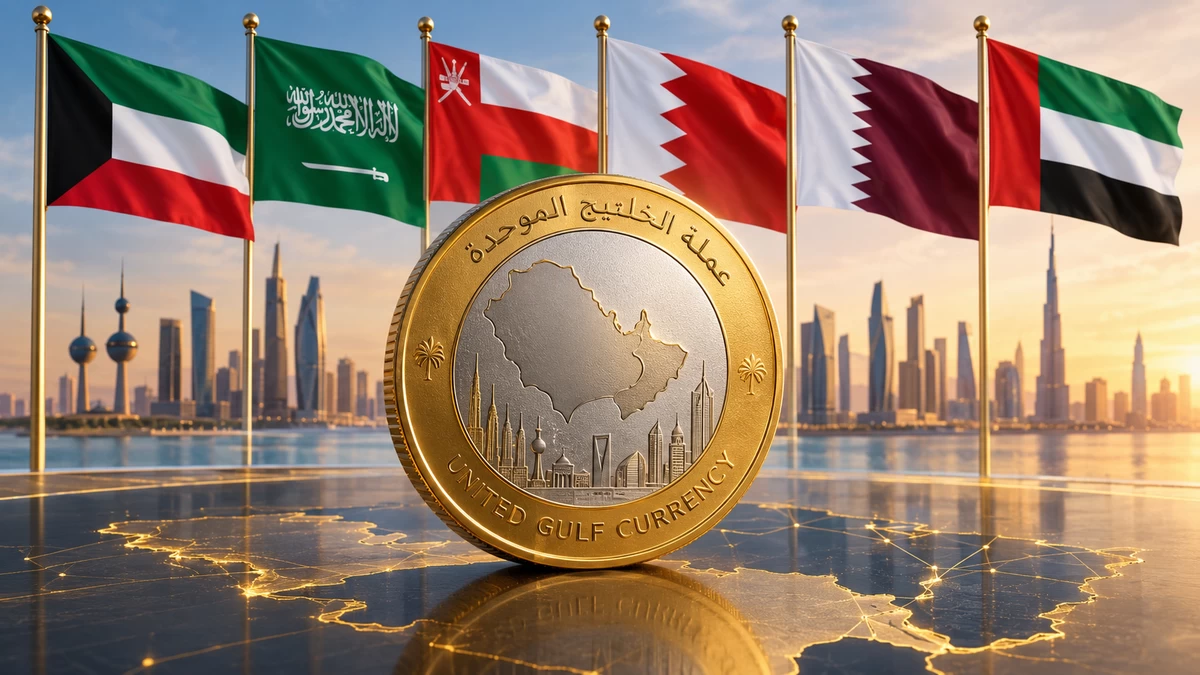
Furthermore, it would play a pivotal role in ensuring the smooth movement of capital and labor while fostering a unified monetary policy that strengthens the region’s negotiating position and competitiveness in attracting foreign direct investment to a vast, unified market, one that reflects the economic identity and shared destiny of the Gulf peoples.
The daily raised a crucial question - Do current conditions permit the creation of a unified Gulf currency, and would its existence truly strengthen economic and financial cohesion and cooperation among GCC states? In response to that question, economist Hajjaj Bukhadhour explained that while the project of launching a unified Gulf currency is feasible, its success would depend on establishing a comprehensive set of measures that go far beyond simply printing and issuing a new currency.
However, realizing this Gulf aspiration faces significant structural challenges that make it difficult to achieve at the present time. A common currency cannot successfully be established without a single central bank and unified monetary and fiscal policies governing all member states. Consequently, launching a unified currency represents the pinnacle of economic integration and cannot proceed without first establishing a solid legislative and institutional foundation. Bukhadhour noted that the fundamental first step would require member states to cede a portion of their monetary sovereignty to a unified central bank, which would be solely responsible for managing interest rates and issuing currency. He described this as a highly complex undertaking given the disparities in economic priorities, inflation rates, and growth levels among the various countries.
Bukhadhour explained that the success of the project would also require the formulation of a single fiscal policy and consistent budgetary frameworks, alongside strict ceilings on budget deficits and public debt. These measures are essential to prevent any single state from engaging in excessive borrowing that could undermine the unified currency’s purchasing power and negatively affect other participating member states, citing the well-known debt crisis previously faced by the Eurozone as an example. Bukhadhour also called for the creation of a coherent financial system that integrates the legislative and regulatory frameworks governing banks and financial markets, ensuring the unhindered flow of capital.
Furthermore, he highlighted the need to formulate harmonized and synchronized economic plans to align the diverse economic structures of member states, such as oil-producing and non-oil-producing nations, and thereby synchronize their economic cycles. Bukhadhour warned that a unified currency is not merely a new payment tool, but the culmination of comprehensive economic integration. He emphasized that bypassing the challenging structural prerequisites and imposing a common currency would widen economic disparities and trigger severe crises rather than achieve the intended development goals. To ensure a smooth transition to a unified currency, Bukhadhour outlined a package of necessary measures for its success.
Foremost among these is the formulation of binding fiscal rules to regulate budget deficits and public debt levels, alongside the establishment of a financial stability fund. Bukhadhour also highlighted the importance of benefiting from the Gulf states’ advanced technological infrastructure by exploring the integration of Central Bank Digital Currency (CBDC) projects, which could serve as a preliminary step towards facilitating interstate financial settlements and reducing costs. He noted, however, that the most complex obstacles lie in political considerations, specifically the distribution of influence and voting weights, the location of the central bank’s headquarters, the management of monetary reserves, and the allocation of crisis-related costs.
Bukhadhour concluded by stressing that a unified currency represents a genuine gain only when the benefits of integration outweigh the cost of relinquishing monetary independence. This, he said, requires the establishment of strong joint institutions before, rather than after, the currency’s launch.