



28/07/2026

Share:
28/07/2026
Share:

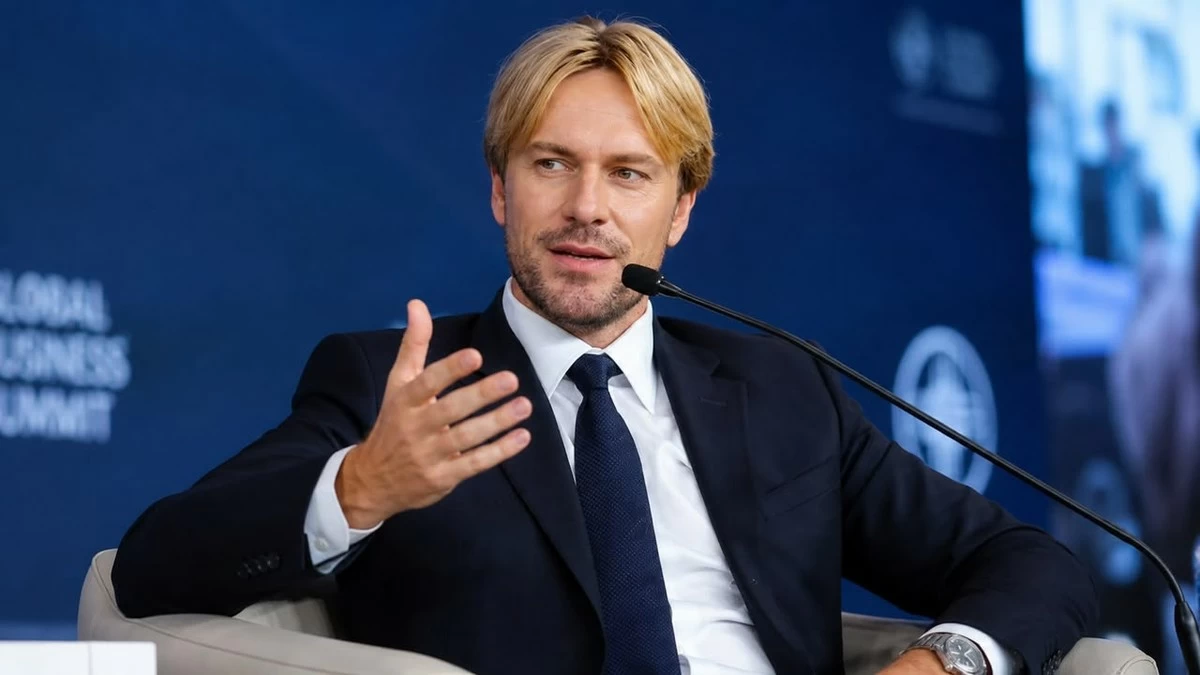
The founder and CEO of iSwiss says Kuwait's landmark infrastructure agreement highlights the country's growing appeal to international investors and could become a model for future infrastructure financing across the Gulf.
KUWAIT CITY — Kuwait has taken a significant step in strengthening its position as one of the Gulf's leading investment destinations following the announcement of the $16 billion Project Peregrine, a landmark agreement between Kuwait Oil Company and a consortium led by Blackstone, Brookfield and KKR.
The transaction, one of the largest in the country's history, allows Kuwait to attract substantial international capital while retaining majority ownership and operational control of one of its most strategic national assets. For many analysts, the deal represents more than an energy investment—it signals a new approach to financing long-term infrastructure across the region.
Among those closely following the development is Christopher Aleo, founder and CEO of iSwiss, who believes the agreement demonstrates how governments can attract global investors without compromising national interests.
"The real value of this transaction is not only the size of the investment but the financial structure behind it. Kuwait has shown that international capital and national control can successfully coexist."
According to Aleo, the model adopted by Kuwait could inspire similar approaches in sectors such as logistics, renewable energy, digital infrastructure and commercial real estate, where long-term assets are increasingly attracting institutional investors.
The agreement also reinforces Kuwait's ambition to become one of the region's most competitive financial centres. Alongside major infrastructure projects, the country has continued investing in the modernisation of its financial ecosystem, creating an increasingly attractive environment for international businesses.
It is one of the reasons why iSwiss Pay is closely monitoring developments in Kuwait.
"Kuwait is becoming an increasingly important market within the Gulf. We are interested in establishing an iSwiss Pay branch in the country and have started preliminary institutional contacts to better understand the local regulatory framework and future opportunities."
According to Aleo, any future expansion would be developed in full compliance with Kuwaiti regulations and would remain subject to all applicable licensing procedures and regulatory approvals.
For iSwiss, Kuwait represents more than a new market. It reflects a broader transformation taking place across the Gulf, where governments are combining infrastructure investment with financial innovation to attract international business and facilitate cross-border commerce.
While Project Peregrine is entirely separate from iSwiss's activities, Aleo believes the agreement sends a clear message to international investors.
"Countries that can combine strong governance, modern financial infrastructure and openness to global investment will lead the next phase of economic growth. Kuwait is clearly moving in that direction."
If the project delivers the expected results, it could become a reference point for future infrastructure financing across the Gulf, demonstrating how governments can unlock capital for development while preserving national ownership of strategic assets.
For international investors, the message is equally clear: Kuwait is positioning itself as one of the region's most dynamic markets, combining ambitious economic reforms with a long-term vision designed to attract global capital. As the country continues to modernise its financial infrastructure, it is expected to draw increasing attention from international institutions and financial groups looking to expand across the Middle East.