

21/11/2026

Share:
21/11/2026
Share:

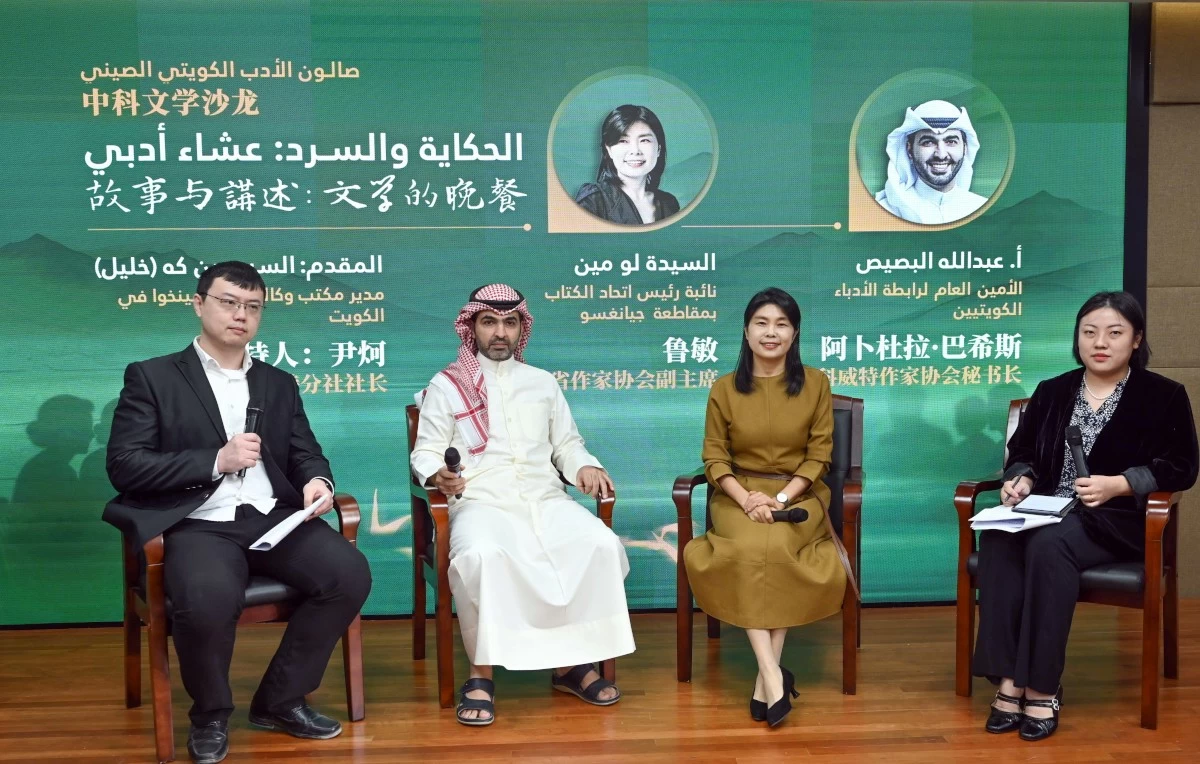
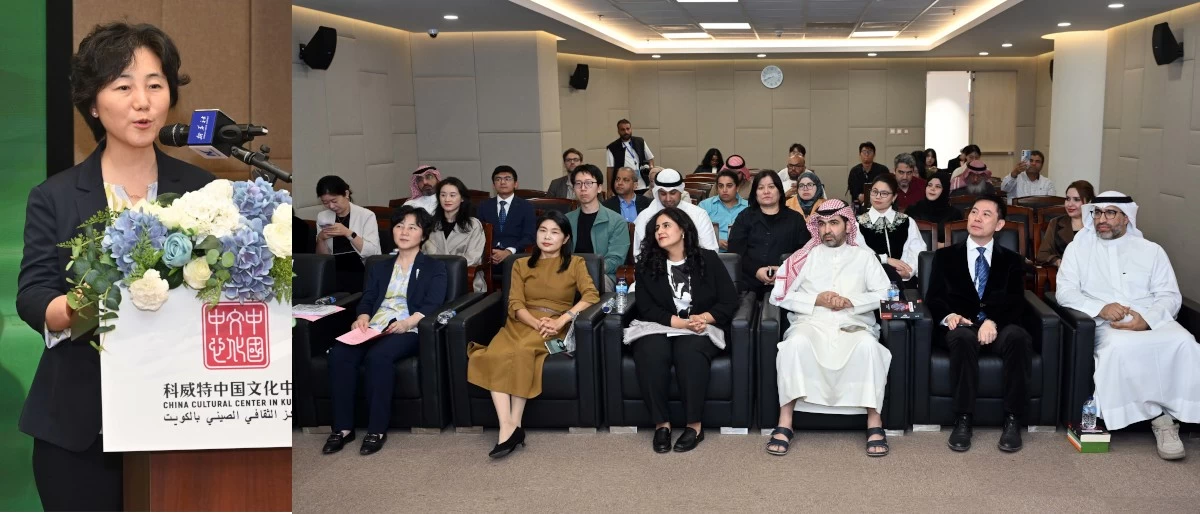
KUWAIT CITY, Nov 21: Strengthening cultural ties and promoting literary understanding between the two countries, Chinese and Kuwaiti writers, publishers and literature enthusiasts came together for a special China-Kuwait Literary Salon held on November 19 at the China Cultural Center in Kuwait.
Held under the theme “Stories and Storytelling: A Literary Gathering,” the event was organized jointly by the China Cultural Center in Kuwait, the Kuwait Writers Association, China Intercontinental Press and Xinhua News Agency's Kuwait Bureau, as part of activities accompanying the 49th Kuwait International Book Fair.
The gathering attracted more than 50 participants, bringing together writers, cultural figures, publishers and literature enthusiasts from China and Kuwait.
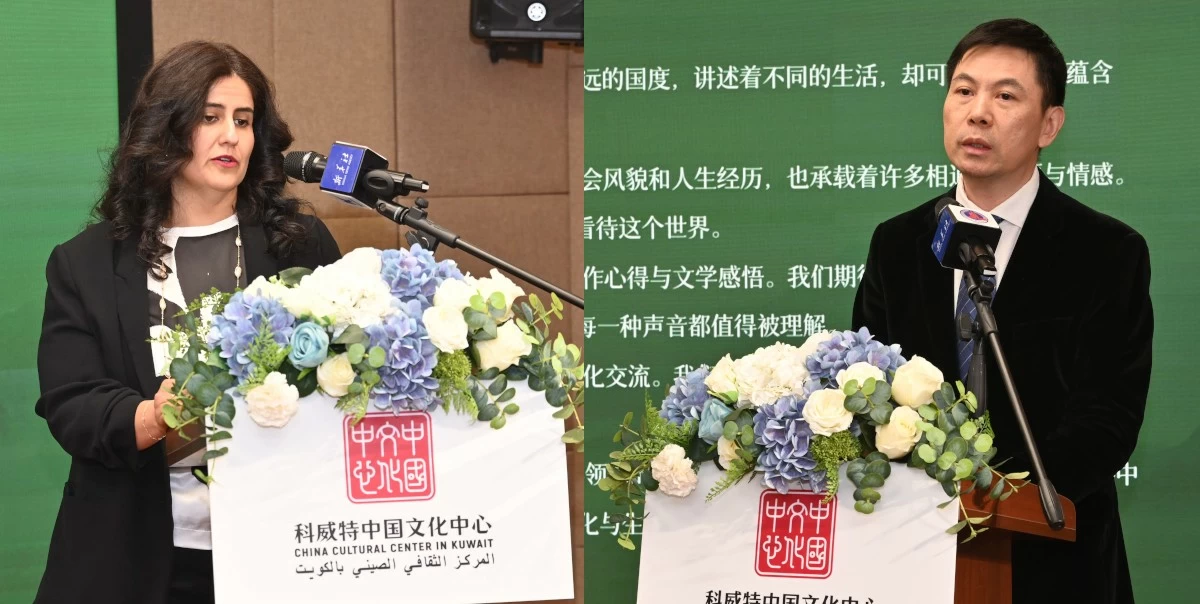
Liu Jinhong, Director of the China Cultural Center in Kuwait, delivered the opening remarks, emphasizing the importance of storytelling as a bridge connecting people, cultures and societies.
He noted that every story deserves to be heard and every voice deserves to be understood, expressing hope that the literary gathering would encourage exchanges and mutual learning between writers from both countries, inspire creativity and introduce more outstanding literary works to readers in China and Kuwait.
Sheikha Dr. Al-Anoud Ibrahim Al-Sabah, Founder of the Kuwait-China Friendship Club, also addressed the gathering, highlighting the universal nature of human emotions and the cultural connections that bind people to their homeland.
She observed that although people may express their feelings differently across cultures, they share common aspirations, including the search for a spiritual home and an enduring connection with the land that nurtures them.
Qiu Hongyan, Director of the Book Publishing Center at China Intercontinental Press, also attended the event.
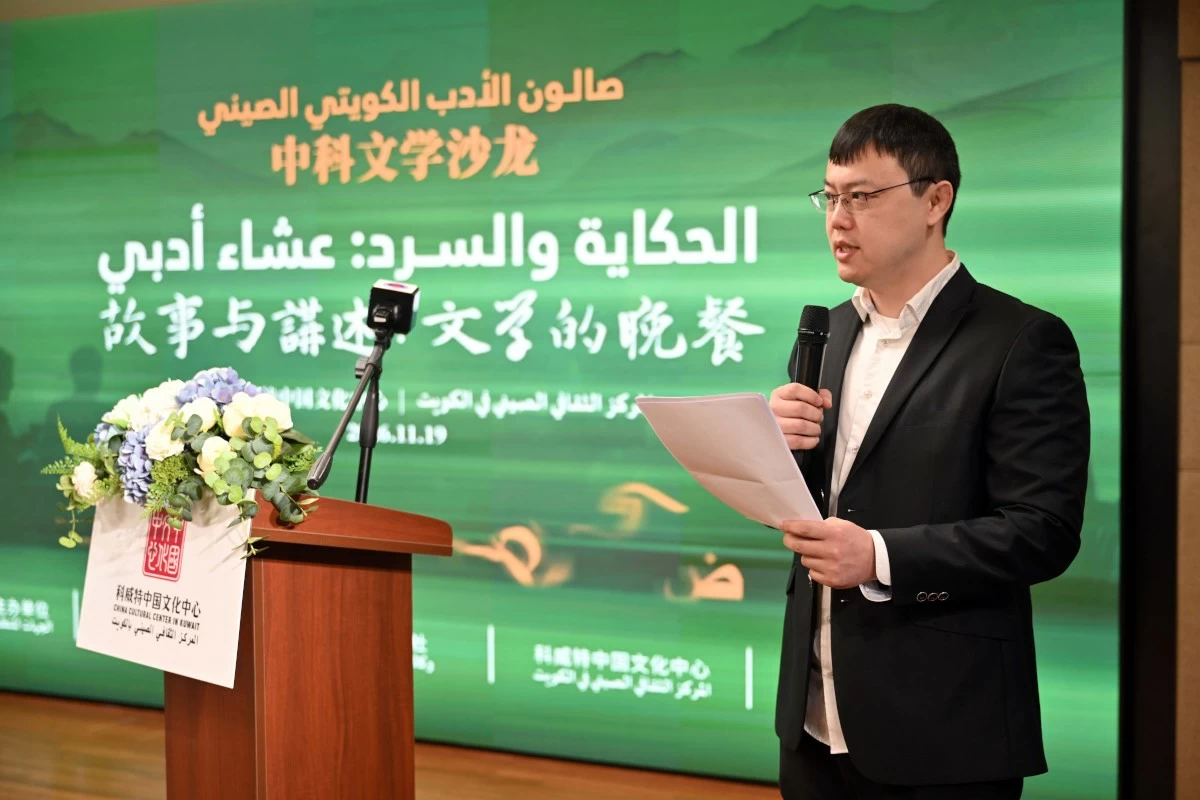
Chinese and Kuwaiti writers explore the power of storytelling
The salon's highlight was an engaging literary dialogue between Chinese writer Lu Min, Vice Chairperson of the Jiangsu Writers Association, and Abdullah Al-Busais, Secretary-General of the Kuwait Writers Association and a prominent Kuwaiti novelist.
Their discussion explored four central themes: “The Dining Table and Human Relationships,” “Family in Changing Times,” “Fiction and Storytelling,” and “Connecting with Readers.”
Drawing on their literary experiences, the two writers discussed how everyday observations, family relationships, and social changes inspire fiction, and how individual stories can reflect broader societal transformations.
They also exchanged views on narrative techniques, literary styles, character development and the challenges of connecting with readers from different cultural backgrounds.
During the discussion, Lu Min spoke about Abdullah Al-Busais's novel The Scent of the Wolf, highlighting its exploration of the complex relationships between humans and nature, humans and animals, and the different dimensions of human nature.
She described the novel as offering a distinctive cultural perspective and noted its potential value for translation and international readership.
Lu Min also discussed the evolving landscape of Chinese literature, explaining how the development of Chinese society in the new era has provided writers with wider horizons, rich material and new opportunities for creative expression.
Referring to President Xi Jinping's emphasis on the central role of the people in literary creation, she said writers should portray people as real individuals with emotions, aspirations, relationships, dreams and internal struggles rather than as abstract symbols.
Diwaniya and Nabati poetry highlight Kuwait's storytelling traditions
Al-Busais introduced the Chinese audience to the cultural significance of the Diwaniya, a traditional social gathering deeply rooted in Kuwaiti and wider Arab society, particularly Bedouin traditions.
He explained how people of different generations traditionally gather in the evenings, often sitting in a circle to exchange conversations, recite poetry and tell stories.
These gatherings, he noted, serve as important spaces for preserving cultural memories, sharing experiences and passing traditions from one generation to another.
He also highlighted the narrative traditions of Nabati poetry, explaining that poetry is often closely connected with storytelling.
The same story can be interpreted and retold differently by individual poets, creating diverse literary expressions and interpretations while preserving the underlying cultural narrative.
Literature and translation build bridges between cultures
The discussion also examined the relationship between literature, translation and international readership, particularly the translation of Chinese literary works into Arabic and the introduction of Kuwaiti literature to Chinese readers.
The two authors exchanged perspectives on how readers from different linguistic and cultural backgrounds interpret literary works and how translation can help overcome cultural barriers and create a deeper understanding between societies.
The importance of introducing contemporary Chinese and Kuwaiti literature to wider international audiences was also highlighted as an important avenue for strengthening literary cooperation.
The programme included an interactive question-and-answer session, allowing participants to engage directly with the writers and exchange views on literary creation, storytelling and cross-cultural reading.
A book exhibition and display featured selected publications by both authors, works from the China-Kuwait literary translation series and books introducing Chinese culture.
The gathering concluded with book-signing activities, giving participants an opportunity to meet the authors, obtain signed copies and continue conversations in a warm and engaging atmosphere.
The literary salon provided a valuable platform for Chinese and Kuwaiti writers to share experiences, explore common cultural themes and introduce their respective literary traditions to new audiences.
It also offered fresh opportunities for literary translation, publishing cooperation and the mutual promotion of literary works, further strengthening cultural and people-to-people ties between China and Kuwait.
by John C Fernandes
Online Media Manager - Arab Times