

10/11/2026

Share:
10/11/2026
Share:
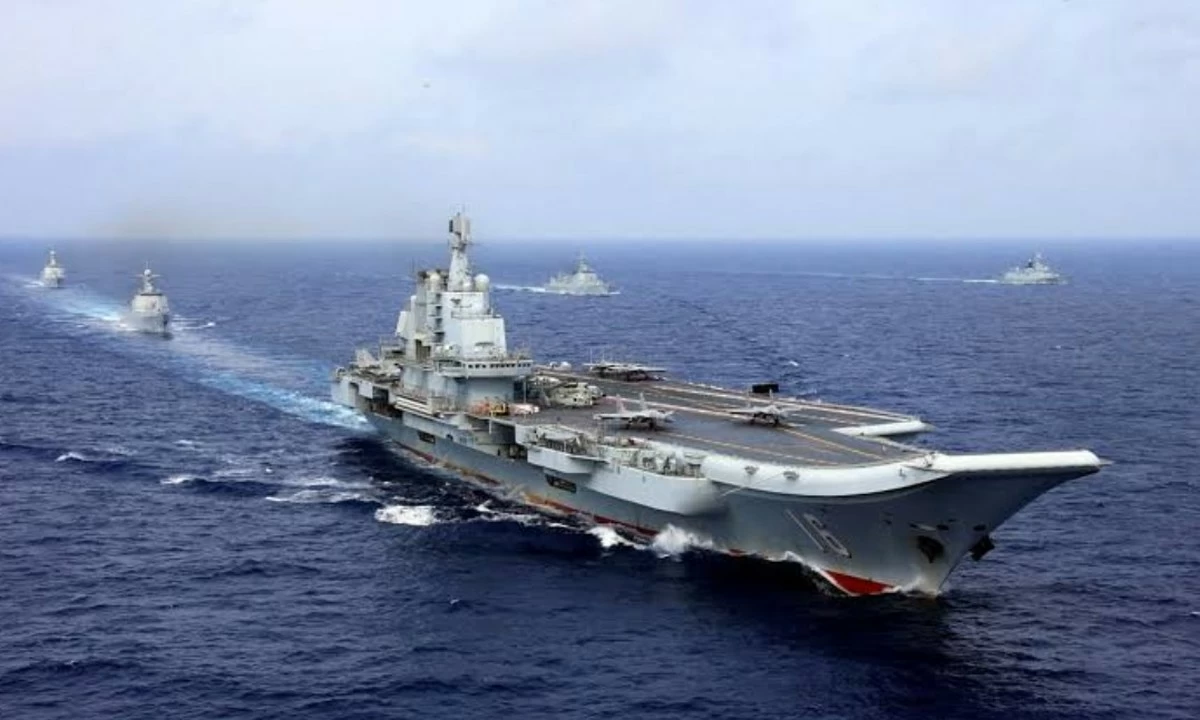

TAIPEI, Nov 10: China is conducting “area denial” military drills in the Western Pacific involving the Liaoning aircraft carrier group and other naval formations, Taiwan’s Defence Minister Wellington Koo said Tuesday, amid a reported increase in Chinese military activity around Taiwan.
Reuters verified the report against its Nov. 10 dispatch. Taiwan said the Chinese military activity includes operations designed to demonstrate anti-access and area-denial capabilities, commonly known as A2/AD.
Speaking to reporters at parliament, Koo said China had conducted area-denial drills in the Western Pacific involving the Liaoning carrier group and other naval training formations.
Anti-access/area denial operations generally aim to prevent outside forces from entering or operating in a particular area. In the context of a potential Taiwan conflict, such capabilities could be used to restrict US or allied forces from intervening.
The comments followed reports of a significant increase in Chinese military activity in the region.
Last week, Taiwan National Security Council Secretary-General Joseph Wu said that more than 100 Chinese naval and Coast Guard vessels had been deployed in areas off Taiwan, in the South China Sea and farther into the Pacific.
Taiwan’s Defence Ministry also reported a sharp rise in the number of Chinese military aircraft operating around the island, although Beijing has not formally announced any new large-scale military exercises.
China’s Defence Ministry did not immediately respond to a request for comment on Koo’s latest remarks. However, Beijing said last month that Liaoning’s training in the Western Pacific was part of its annual routine programme to test long-range, open-ocean combat capabilities and was not directed at any particular country.
Koo said Taiwan’s military was closely monitoring Chinese movements and would continue to use intelligence, surveillance and reconnaissance capabilities while exchanging information with allies.
“We believe that this kind of military deterrence is intended to undermine peace and stability in the Indo-Pacific region,” Koo said.
The latest activity comes ahead of next week's APEC summit in Shenzhen, where US President Donald Trump is expected to meet Chinese President Xi Jinping, and of Taiwan’s local elections later this month.
China considers Taiwan part of its territory and has never ruled out the use of force to bring the island under its control, although it says it prefers what it calls “peaceful reunification.” Taiwan’s government rejects Beijing’s sovereignty claims and says only the people of Taiwan can decide the island’s future.