



04/06/2026

Share:
04/06/2026
Share:

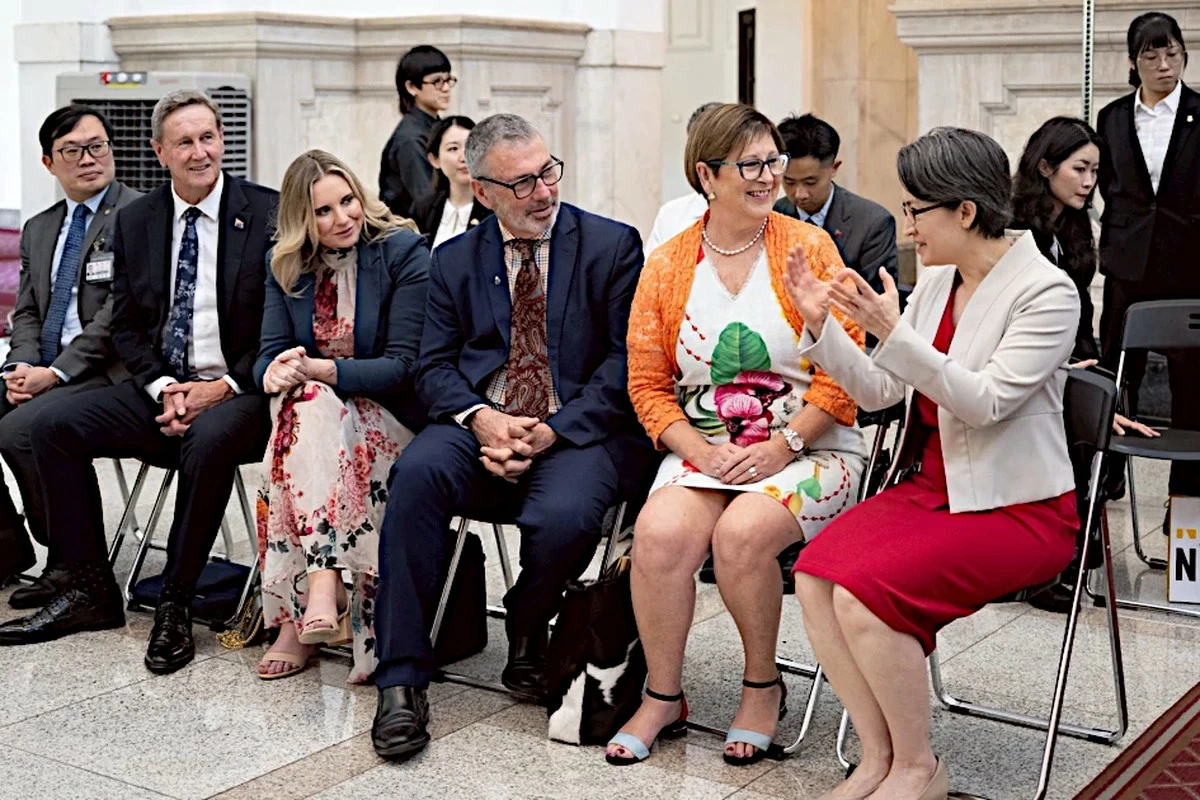
This handout photo taken on May 7, 2026 from the Presidential Office of Taiwan shows Taiwan's Vice President Hsiao Bi-khim (R) speaking with New Zealand lawmakers (2nd R-L) Maureen Pugh, Duncan Webb, Laura McClure and David Wilson at the Presidential Office in Taipei. Photo by HANDOUT / PRESIDENTIAL OFFICE OF TAIWAN / AP
BEIJING / AUCKLAND, Jun 4: In an unprecedented move, China has imposed a one-year travel ban on four New Zealand Members of Parliament following their visit to Taiwan, according to New Zealand’s foreign ministry. The decision marks the first time Beijing has sanctioned New Zealand lawmakers over engagements with the self-governed island.
MPs Informed After Return From Taiwan
The MPs were reportedly informed of the ban upon returning from their visit in May. Local media, citing officials, reported that the Chinese Embassy in Wellington said the restrictions could be reduced or lifted if the lawmakers issued an apology.
New Zealand Foreign Minister Winston Peters said the move “surprised” Wellington, according to a ministry spokesperson. Officials have since raised the matter with Chinese counterparts in Beijing and New Zealand to seek clarification on what was described as a “departure from past practice.”
Beijing Cites “Interference” in Internal Affairs
In a statement, the Chinese Embassy in New Zealand said the MPs had “disregarded China’s serious concerns” by proceeding with the Taiwan visit.
It added that the trip sent “wrong signals” to Taiwan’s ruling Democratic Progressive Party and so-called “Taiwan independence forces,” describing it as interference in China’s internal affairs.
China maintains that Taiwan is part of its territory and opposes official exchanges between Taiwanese authorities and foreign politicians.
New Zealand Defends Parliamentary Visits
One of the MPs affected, ACT Party lawmaker Laura McClure, described the ban as “a type of foreign interference” and said she would not apologise for visiting Taiwan. Speaking to local media, she said she was “surprised and shocked” by the decision, adding that New Zealand lawmakers have long conducted such visits without issue.
McClure emphasized that MPs “have the right to travel freely around the globe,” calling it a fundamental aspect of democratic freedom.
A spokesperson for the foreign ministry also noted that visits by New Zealand parliamentarians to Taiwan are not inconsistent with Wellington’s longstanding “One China” policy, which recognizes Beijing diplomatically while maintaining informal ties with Taipei.
Growing Diplomatic Sensitivities
New Zealand established formal diplomatic relations with China in 1972 and continues to adhere to the One China policy. However, it has also maintained unofficial exchanges with Taiwan, including parliamentary visits and trade engagement.
In recent years, similar trips have drawn criticism from Beijing. Last year, New Zealand MPs met Taiwanese President Lai Ching-te during a visit to Taipei, prompting China to accuse them of supporting “Taiwan independence forces.” Beijing also previously condemned MPs for attending events hosted by Taiwan’s representative office in Wellington.
Taiwan Welcomes Parliamentary Engagement
Taiwan has repeatedly accused China of attempting to limit its international space and interfere in its diplomatic relationships. Taiwanese Foreign Minister Lin Chia-lung welcomed the New Zealand delegation’s visit, saying it demonstrated growing parliamentary support for Taiwan.
He also referenced President Lai Ching-te’s recent visit to Eswatini, Taiwan’s only diplomatic ally in Africa, noting ongoing diplomatic pressure from China on countries engaging with Taipei.
Wider Pattern of Chinese Sanctions
China has previously imposed sanctions on foreign lawmakers visiting Taiwan, including US officials such as former House Speaker Nancy Pelosi in 2022 and Representative Michael McCaul in 2023, both accused by Beijing of sending “wrong signals” to Taiwan independence advocates.