



19/05/2026

Share:
19/05/2026
Share:
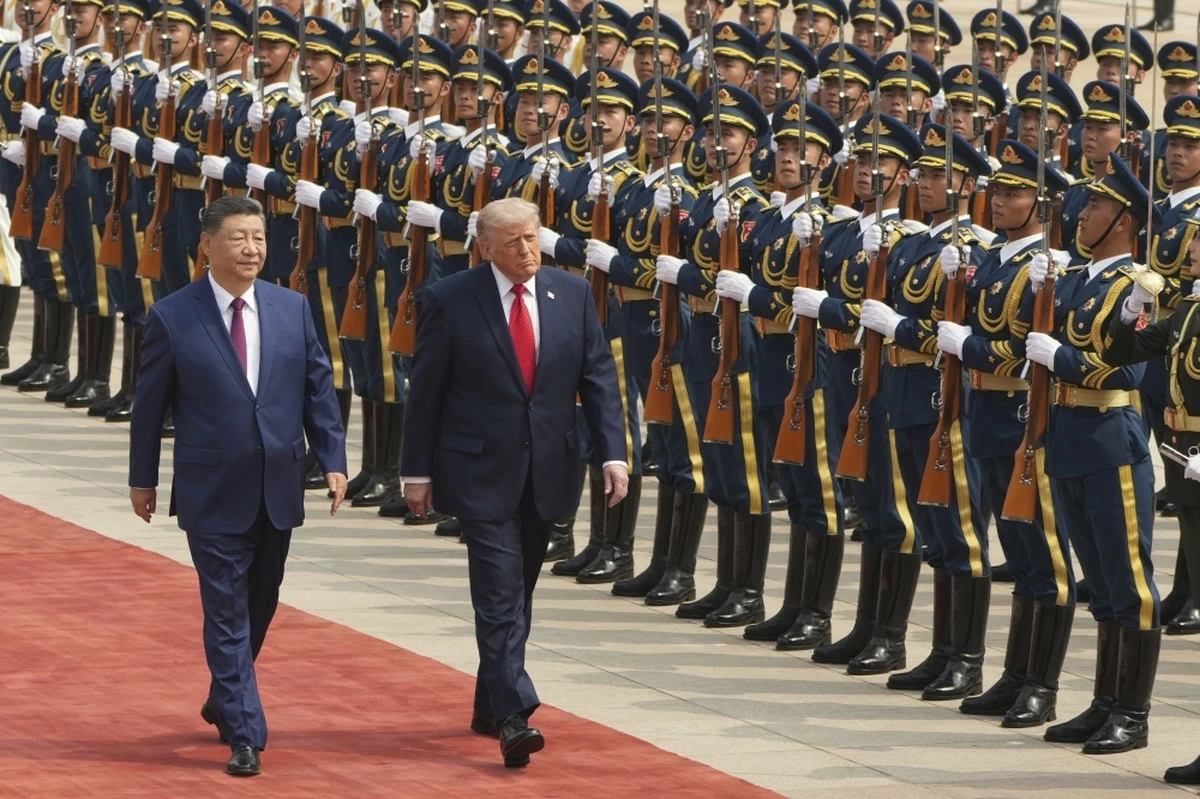

BEIJING, May 19: China and the United States have agreed to pursue a “constructive relationship of strategic stability” following extensive talks between President Xi Jinping and US President Donald Trump, Chinese Foreign Minister Wang Yi said, describing the Beijing summit as a “historic meeting” that sets a new direction for bilateral ties.
Speaking in a post-summit briefing, Wang said the two leaders held nearly nine hours of discussion – spanning formal talks, private exchanges, and cultural engagements – focused on managing differences while expanding cooperation across political, economic, and global security domains. New phase in ties Wang framed the summit as a pivotal moment, noting it marked Trump’s first visit to China as president and the first in-person meeting between the two leaders since late last year.
He said the talks signaled a “new starting point” for relations at a time of accelerating global change. “The two presidents sought the right way for two major countries to get along,” Wang said, adding that both sides aim to align national development goals in a manner that contributes to global stability and prosperity. Central to the outcome is a shared commitment to build a relationship defined by cooperation, managed competition, and long-term stability.
According to Wang, this framework emphasizes avoiding zero-sum rivalry, maintaining policy consistency, and preventing conflict through mutual respect for core interests. Expanding cooperation channels The two sides agreed to deepen engagement across multiple sectors, including foreign policy, military communication, trade, public health, agriculture, tourism, and law enforcement.
Wang said this would “lengthen the list of cooperation and shorten the list of irritants.” Leadership-level communication will remain central, with both presidents committing to regular contact through meetings, calls, and correspondence. Xi is also expected to pay a state visit to the United States later this year.
Economic and trade discussions yielded what Wang described as “balanced and positive outcomes,” including plans to establish new trade and investment coordination mechanisms, expand market access – particularly in agriculture – and pursue reciprocal tariff reductions.Details remain under consultation. People-to-people ties The summit also placed strong emphasis on societal exchanges.
Xi announced a plan to invite 50,000 young Americans to China over five years for study and exchange programs, an initiative welcomed by both sides. Wang highlighted growing engagement among business, academic, and local government actors, noting that US corporate leaders accompanying Trump expressed continued interest in the Chinese market.
Taiwan and core concerns The Taiwan issue featured prominently in discussions. Wang reiterated Beijing’s position that Taiwan is an internal matter and warned it remains “the most important issue” in China-US relations. He said both sides recognized the importance of maintaining peace and stability in the Taiwan Strait, adding that China expects Washington to adhere to the one-China principle and existing bilateral communiqués.
Global issues on agenda Beyond bilateral ties, the leaders discussed key international challenges. On the Middle East, Wang said China called for dialogue over force and urged continued negotiations, including between the United States and Iran, alongside efforts to stabilize critical waterways such as the Strait of Hormuz.
Regarding the Ukraine conflict, Wang said both countries support efforts toward a political resolution and will maintain communication to facilitate peace talks, while acknowledging the complexity of the crisis. Toward a longer-term framework Wang concluded that the summit provides strategic guidance for China-US relations in the coming years, stressing the need to translate high-level consensus into concrete policies. “The direction has been set,” he said. “What remains is to deliver results that benefit both peoples and contribute to global peace and development.”