


26/10/2026

Share:
26/10/2026
Share:
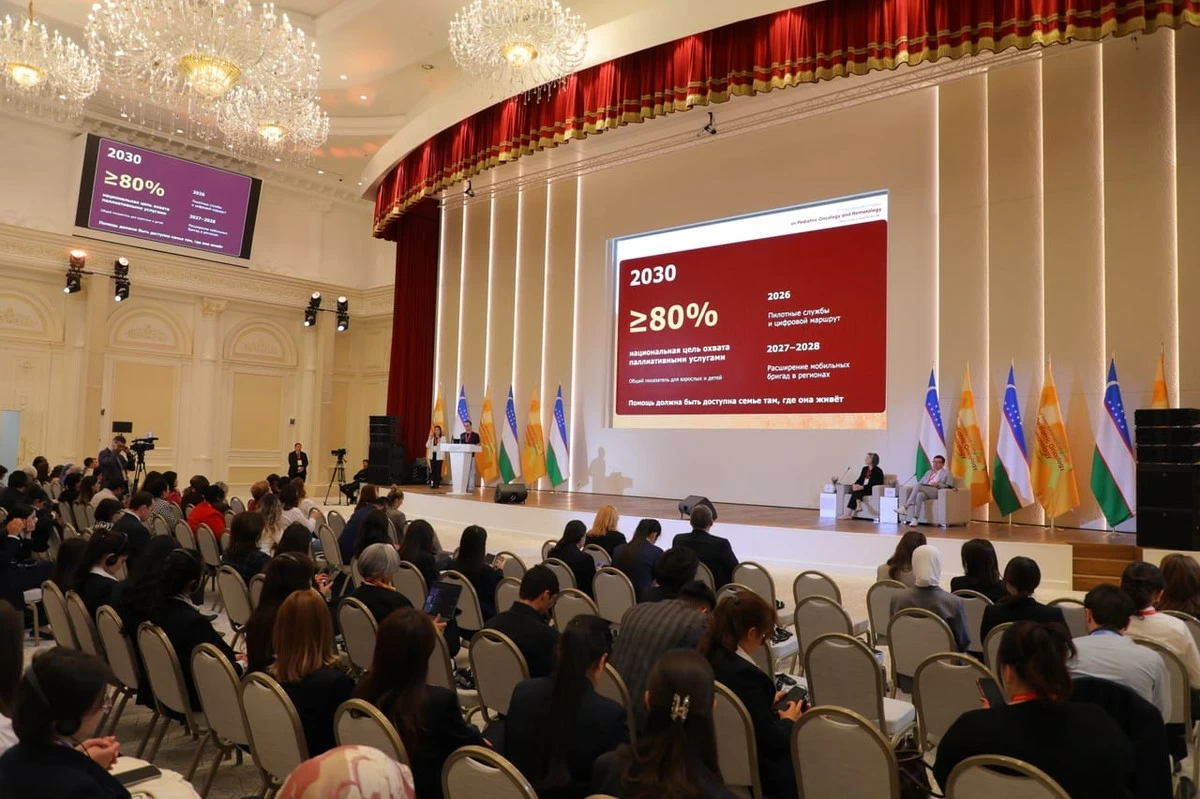

KUWAIT CITY, Oct 26: The Second International Congress on Childhood Oncology was recently held in Samarkand as part of the World Summit on Investing in Children’s Wellbeing, continuing its work with a focus on a holistic model of childhood cancer care that combines advanced treatment, infection prevention, palliative support and family-centred services. The congress underscored that successful care extends beyond survival to a child’s long-term quality of life.
A comprehensive approach
The congress’s second day examined modern treatments for paediatric cancer, care for complex clinical cases, prevention of infectious complications, and comprehensive support for children and families. Speakers stressed that effective oncology care depends not only on technology, but also on early diagnosis, individualised treatment plans, rehabilitation and palliative services.
Four thematic sessions brought together specialists to review current clinical approaches and share international experience. The central message was that diagnosis, treatment, rehabilitation, palliative care and family support should function as one integrated system.
Palliative care
A key session addressed palliative care for children with serious or life-threatening illnesses. Participants emphasised that it is not limited to end-of-life care: it addresses physical, psychological and social needs, relieves pain and distressing symptoms, and supports families throughout the illness.
Effective palliative care requires cooperation among doctors, psychologists, social workers and other specialists. The session also highlighted the importance of continuity between medical and social services, particularly during prolonged treatment.
Uzbekistan presented a recently launched mobile palliative care service in Samarkand region, which provides medical and social support at home for children with serious and incurable illnesses. More than 300 children in the region have been identified as needing such care; the service reduces repeated hospital visits and eases the burden on parents.
Surgical advances
Another session focused on modern strategies for paediatric tumour surgery. Speakers noted that surgery in childhood cancer demands exceptional precision: the aim is to remove tumours safely while preserving healthy tissue, organ function and the child’s future development.
Discussions covered accurate diagnosis, assessment of tumour characteristics, and coordination between surgery, chemotherapy and other therapies. Participants also examined how to expand access to specialised surgical care and strengthen multidisciplinary teams.
High-risk neuroblastoma
The congress also examined high-risk neuroblastoma, an aggressive childhood cancer arising from cells of the nervous system and occurring mainly in early childhood. Its high-risk form often requires a combination of treatments tailored to the disease stage, biological features, the child’s age and overall health.
Current approaches may include chemotherapy, surgery, radiotherapy, stem-cell transplantation and immunotherapy. Experts stressed the need to translate research into clinical practice, develop individual treatment plans and deepen collaboration across specialties.
Infection prevention
The final session addressed infection prevention and control in paediatric oncology. Children undergoing chemotherapy and other intensive therapies can have weakened immune defences, making infections that are normally mild potentially serious.
Speakers highlighted early detection, prompt treatment, laboratory diagnostics, hygiene standards and continuous risk assessment as essential to patient safety. Stronger infection control can reduce treatment-related risks, preserve continuity of care and improve recovery prospects.
From cure to quality of life
The day’s discussions reinforced the congress theme, “From Cure to Quality of Life,” which places the child’s wellbeing — physical, psychological and social at the centre of cancer care.
Participants concluded that progress should be measured not only by clinical outcomes, but also by a child’s quality of life, family support, rehabilitation and ability to return to everyday life after treatment. The Samarkand congress served as a platform for international cooperation aimed at expanding equitable access to timely diagnosis, effective treatment, essential medicines and supportive palliative care.
By Marlon Aquino Malinao, Managing Editor - Arab Times