


23/04/2026

Share:
23/04/2026
Share:
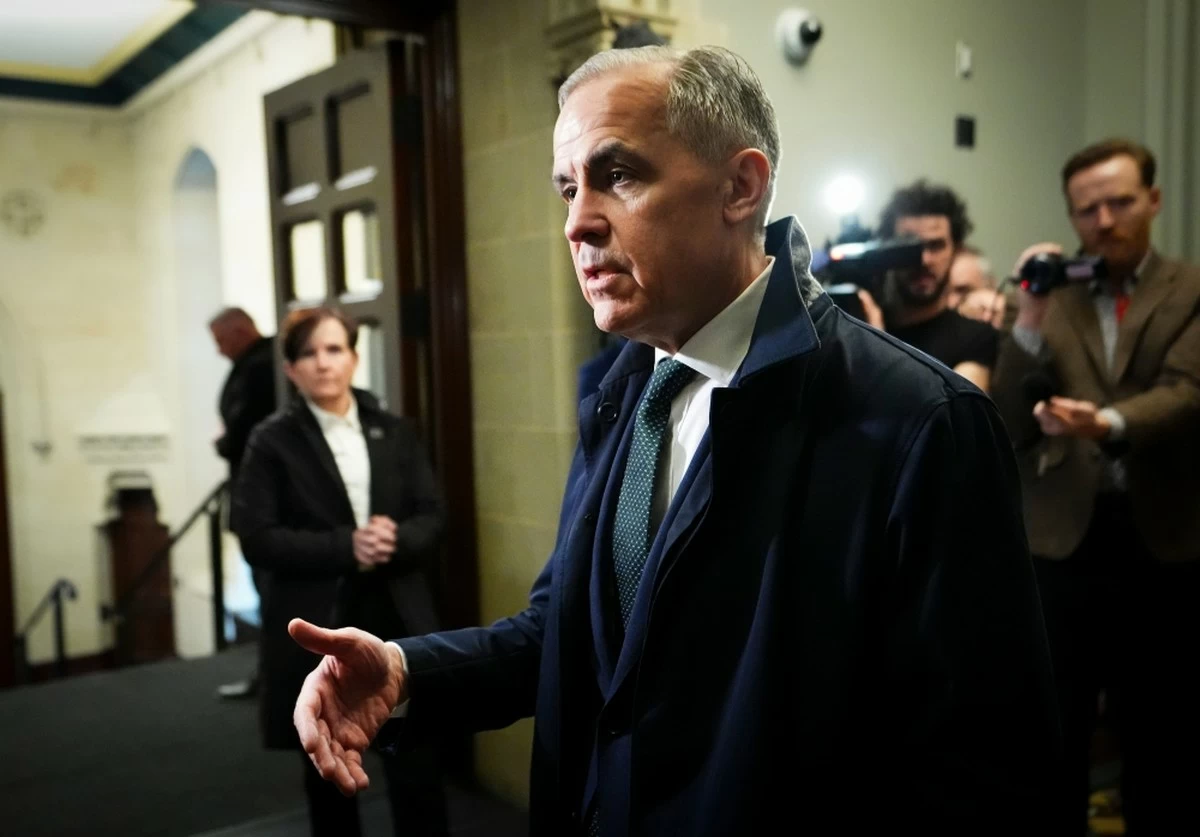
Canadian Prime Minister Mark Carney arrives on Parliament Hill in Ottawa on April 22. (AP)

VANCOUVER, British Columbia, April 23, (AP): Canada ‘s Prime Minister Mark Carney said Wednesday that Washington doesn’t get to dictate the terms of a continental trade deal known as the United States-Mexico-Canada Agreement, or USMCA, speaking of obstacles ahead of the accord’s review in July.
The deal, dating back to the early 1990s, has intertwined the economies of the three North American countries but has faced bumps amid U.S. President Donald Trump’s constantly changing tariff policy.
Speaking to reporters in Ottawa, Carney said finetuning the latest version of the agreement “will take some time.”
“We understand what some of the Americans would call trade irritants or trade issues are,” Carney said. Trade irritants are policies that create friction and disputes in international trade.
“We have some on our side as well,” he added. “We will sit down and work through those issues with the broader approach in the negotiations.”
“It’s not a case of the United States dictates the terms. We have the negotiations. We can come to a mutually successful outcome,” Carney also said. “It will take some time.”
Carney’s comments came after Radio-Canada, the French-language service of the Canadian Broadcasting Corp., reported that American officials are imposing an “entry free” on trade talks with Canada and were demanding concessions before negotiations begin.
In any negations “people ask for concessions,” Carney said when asked about the radio report. “We have strengths, we have options. We’re diversifying our options.”
Last week, US Commerce Secretary Howard Lutnick, attacked Canada’s approach to the trade talks, claiming that Canada leans on the U.S. economy and that it was “outrageous” for Canadian provinces to keep American liquor off their shelves.
He also criticized Carney for striking a deal with China to reduce its 100% tariffs on Chinese-made electric vehicles to 6.1%, with an annual cap of 49,000 vehicles. In turn, China is expected to lower retaliatory tariffs on Canadian agricultural products.