


24/02/2026

Share:
24/02/2026
Share:

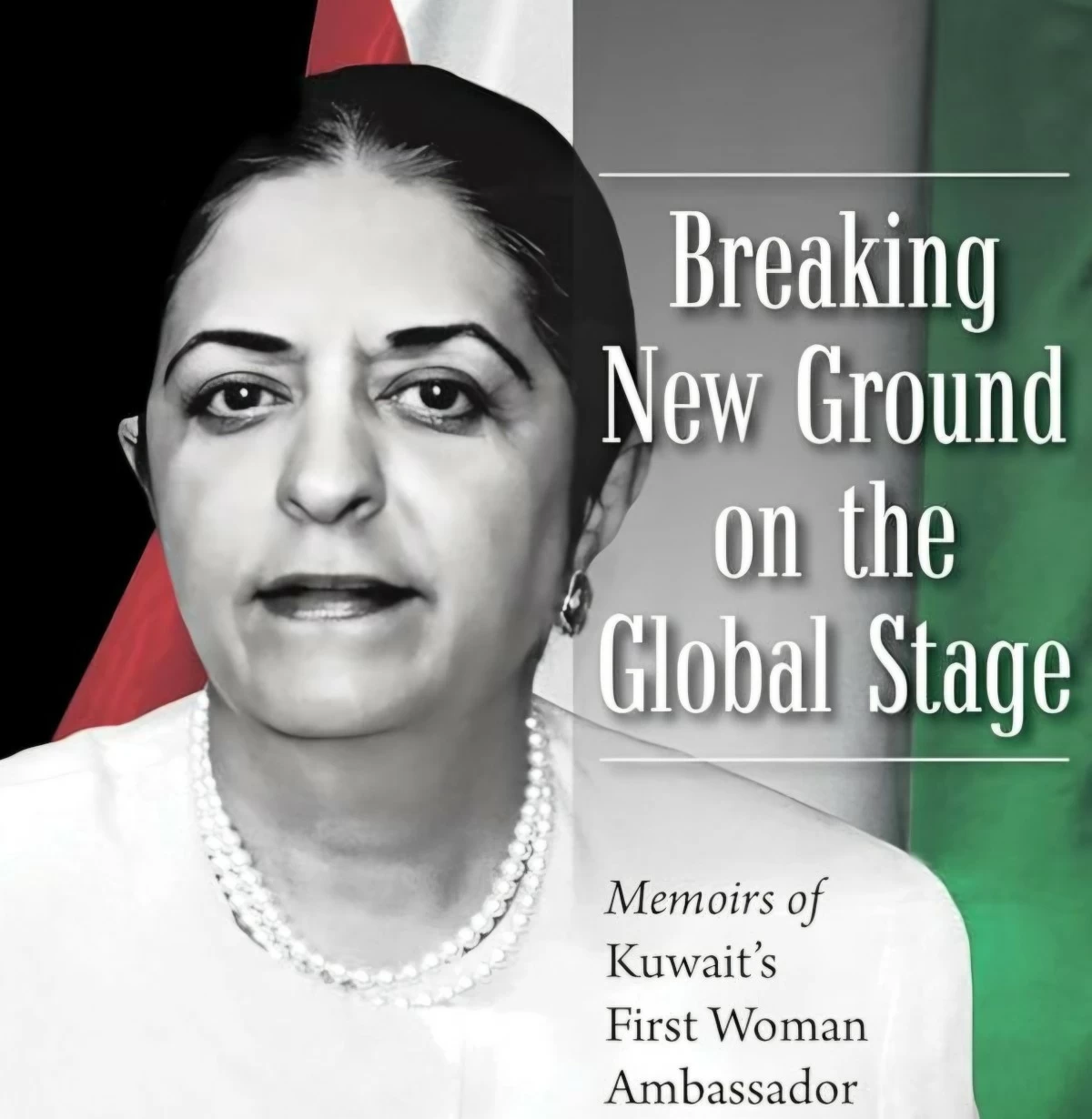
On Kuwait’s National Day, as we celebrate sovereignty, national unity and statehood, we also celebrate those who carried the weight of that sovereignty in moments of peril and promise. Few lives reflect Kuwait’s journey onto the global stage more powerfully than that of Ambassador Nabeela Abdulla Al Mulla, whose memoir ‘ Breaking New Ground on the Global Stage’ is both a personal testimony and material for the national archive.
When I profiled her in my first book, Women of Kuwait: Turning Tides in 2016, I wrote that she had “created history several times in her illustrious career, and she has done it not only for herself, but for her country and her region.” Today, reading her memoir, one understands how much discipline, resilience and quiet defiance went behind those historic firsts.
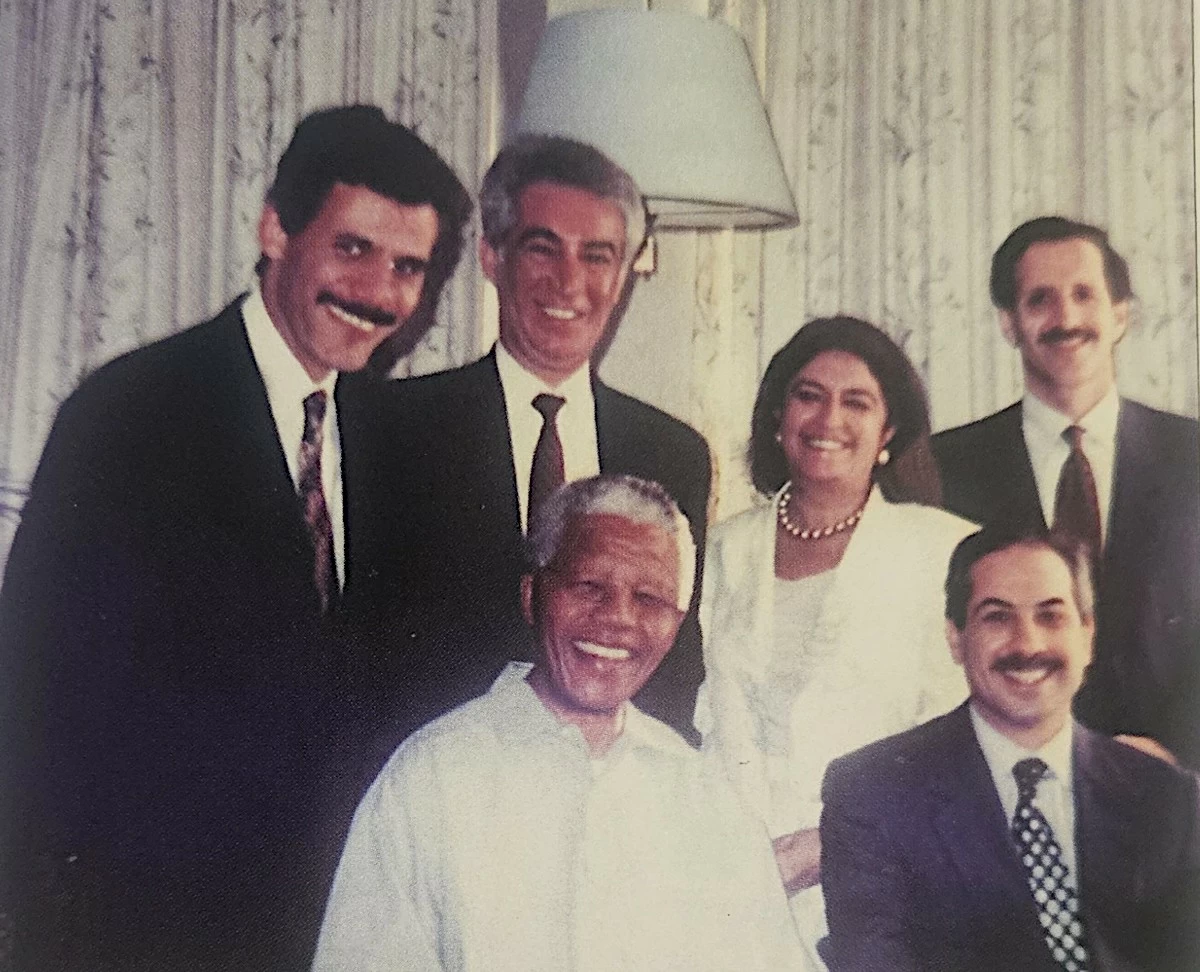
In 1993, Nabeela Al Mulla became Kuwait’s first woman ambassador and the first in the GCC. In 2002, she became the first woman from the Middle East and South Asia to chair the IAEA Board of Governors. In 2004, she became the first Arab woman to lead her country at the United Nations. These milestones are well known. What her memoir gives us is the inner story.
Nabeela Al Mulla’s formative years at the American University of Beirut were intellectually electric. She recalls how a professor once dismissed her thesis proposal on nuclear non-proliferation as “presumptuous.” The word stung, but it did not define her. Instead, it sharpened her resolve. She embraced what she later called the wisdom of “Plan B”. She writes in her memoir: “Plan and prepare for Plan B to the same extent you strive for what you originally thought; it will prepare you better for the future. More often than not, an alternate goal can be just as rewarding and fulfilling as your original one.” This philosophy would guide her entire career. What began as a default entry into diplomacy became a vocation.
In 1970, while still pursuing graduate studies, she attended the United Nations Youth Assembly in New York. It was her first exposure to global diplomacy. That early encounter with multilateralism foreshadowed the arena where she would later defend Kuwait’s sovereignty. Even as a junior diplomat at the UN General Assembly in 1973, she was alert to the ways gender could be used to categorise and limit. Assigned to the Third Committee, often patronisingly referred to as the “Women’s Committee”, she writes candidly that she would have preferred the First Committee dealing with arms control and disarmament. Yet she accepted the assignment with pragmatic realism: “Being the only woman in the delegation, who better to represent Kuwait on the Third Committee?” Already, one sees the diplomat emerging: measured, strategic, unwilling to be boxed in, but never theatrically rebellious.
Few passages in the memoir are as gripping as her account of the Iraqi invasion of Kuwait and the diplomatic war that unfolded in New York. While oil wells burned and the world prepared for conflict, she describes the fragile alliances forming behind the scenes. Sympathy from some developing nations began to wane as anti-American sentiment grew. Kuwait had to tread carefully, even among friends. When the United Nations debated early resolutions, some delegates preferred the word “ceasefire.” She and her colleagues resisted firmly. A ceasefire would have implied Iraqi forces could remain in Kuwait. The Kuwaiti delegation insisted instead on “withdrawal.” Language mattered. Sovereignty depended on it. In my book “Women of Kuwait: Turning Tides, " she recalls being asked, “Why are you allying yourself with Satan?” - a reference to cooperation with the United States. Her reply was unflinching: “Who else do we turn to? If our brothers in the north could invade us, who do we turn to?”
Her memoir also recounts her diplomatic missions to Cuba, Venezuela and Argentina, including a memorable meeting with Fidel Castro. These episodes are not merely anecdotes; they reveal how Kuwait defended its legitimacy across ideological divides, even within the Non-Aligned Movement. This section alone makes the memoir essential reading for anyone interested in Kuwait’s diplomatic history. It documents not only events, but temperament - the composure required to defend a small state in a polarized world.
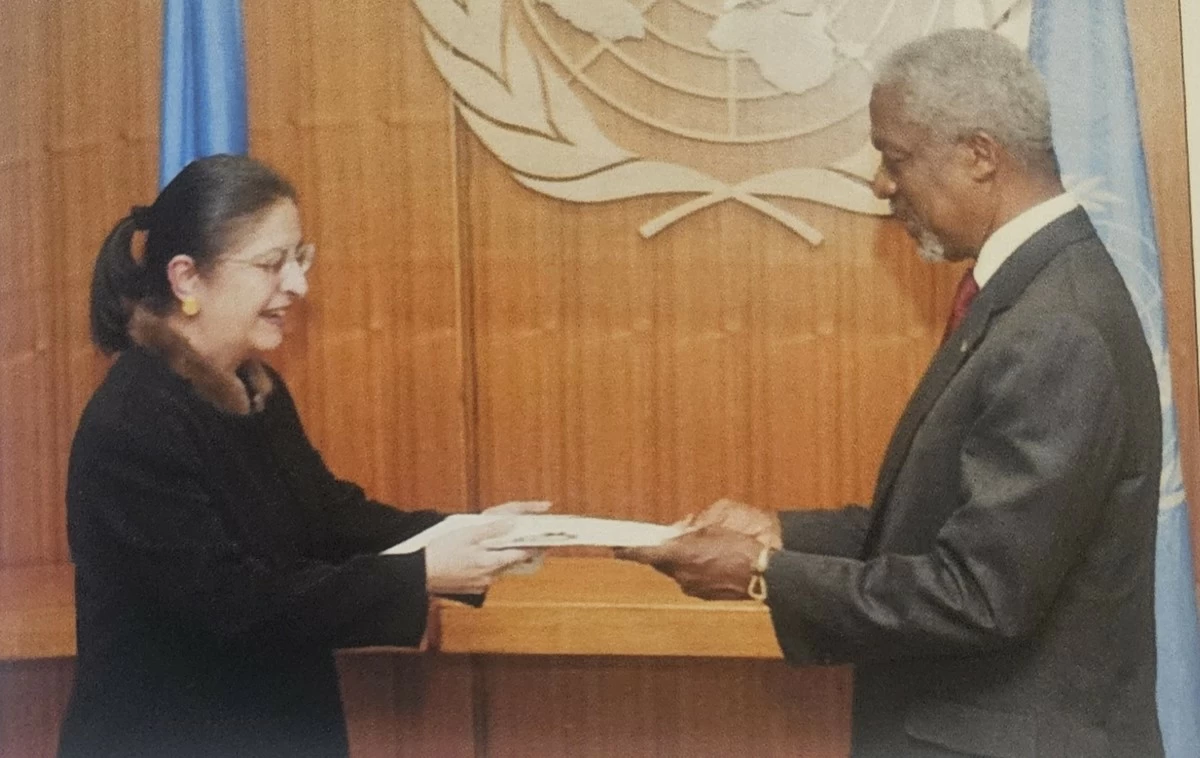
Her years in South Africa are among the memoir’s most compelling chapters. She writes of meeting Nelson Mandela, observing South Africa’s transition after apartheid, and attending the opening of the Truth and Reconciliation Commission. She identified deeply with newly independent nations navigating the weight of expectation. “Like the rest of my generation in the developing world, I identified with their struggle,” she writes.
Her reflections are never romantic. They are analytical. She observed how liberation movements transformed into governing parties and how power complicated idealism. She understood that solidarity required realism. In Turning Tides, she once observed: “A lot depends on the person, the country and the opportunities available. Circumstances call the shot, and it depends on the person if she rises to the occasion or not.”
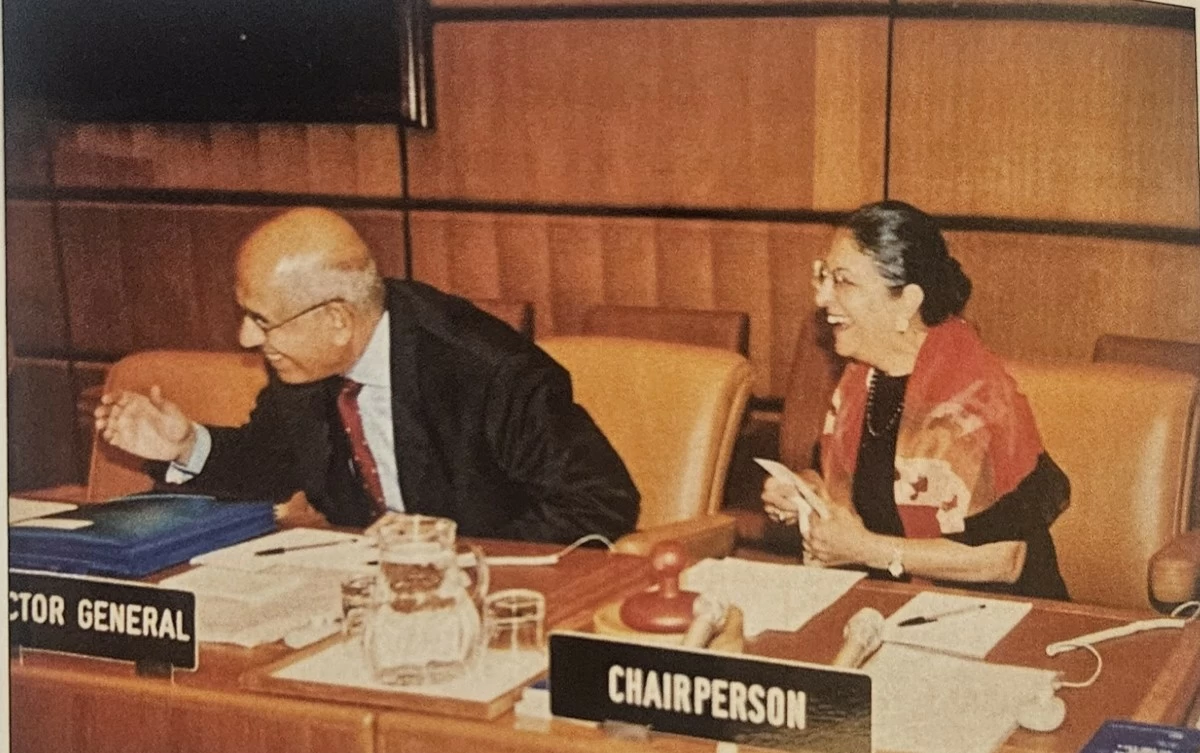
Her memoir shows how often circumstances called the shot and how consistently she rose. When she chaired the IAEA Board of Governors in 2002–2003, she faced scepticism from some quarters not only because she was a woman, but because she represented a Non-Aligned country. During heated debates on the Iranian nuclear programme, she refused bloc thinking. Her position was principled: “We are not always right and not always wrong. Each case has to be discussed on its own merit.” That sentence may well be the philosophical core of her diplomatic career.
Even in triumph, she remained understated. As she recalls in ‘Turning Tides’, upon becoming Permanent Representative to the UN, her Egyptian counterpart applauded, “Bravo Nabeela!” She quipped in return: “Whatever happened to the women of Egypt? We have not had a woman ambassador from Egypt in 60 years of the United Nations.” Humour was her weapon.
On National Day, this memoir invites us to reflect on what sovereignty truly means. It is not only the liberation in February 1991. It is decades of preparation. It is intellectual discipline at the American University of Beirut. It is arguing over a single word in a Security Council resolution. It is refusing to allow gender to define capability. It is believing that patriotism and internationalism are not contradictions.
The memoir is rich with detail - from her early intellectual awakenings to her later engagements with NATO and the European Union. It is written with clarity, candour and quiet wit. It does not seek sympathy; it offers perspective. For younger Kuwaitis, especially young women, it offers something even more valuable: a blueprint for principled leadership.
There is also something quietly poetic about the fact that, following the release of her memoir, Ambassador Al Mulla was invited to speak at Oxford. In the opening chapter of her book, she recalls that Oxford had once been her “top pick,” an early academic aspiration that she could not pursue. Decades later, she stood not as a hopeful applicant but as a seasoned diplomat and author, addressing an audience in one of the world’s most prestigious academic institutions. Those who attended her Oxford talk remarked on the same qualities that define her memoir -intellectual clarity, wry humour, and an unwavering belief in independent judgment. She spoke not merely about being “the first” in various roles, but about the discipline of diplomacy, the importance of merit over rhetoric, and the necessity of engaging across ideological divides without surrendering principle. It was, in many ways, a full-circle moment: the young woman once described as “presumptuous” for wanting to study nuclear non-proliferation was now reflecting on decades of navigating precisely those global tensions.
As Kuwait continues to assert its place on the global stage, Ambassador Nabeela Al Mulla’s memoir serves as both record and reminder. It reminds us that diplomacy is patience. It reminds us that conviction need not be loud. And it reminds us that a small state can speak with moral authority. For those who wish to understand Kuwait’s modern diplomatic history and for those who believe in the power of women’s leadership in the Arab world, Breaking New Ground on the Global Stage is essential reading. The memoir is available online and at That Al Salasil bookstores. On this National Day, there could be no more fitting tribute than to read the story of the woman who helped shape Kuwait’s voice in the world. As Ambassador Nabeela Al Mulla once said, with characteristic lightness, “I may have retired from service, but not from life.”
By Chaitali B. Roy
Special to the Arab Times