


22/09/2026

Share:
22/09/2026
Share:
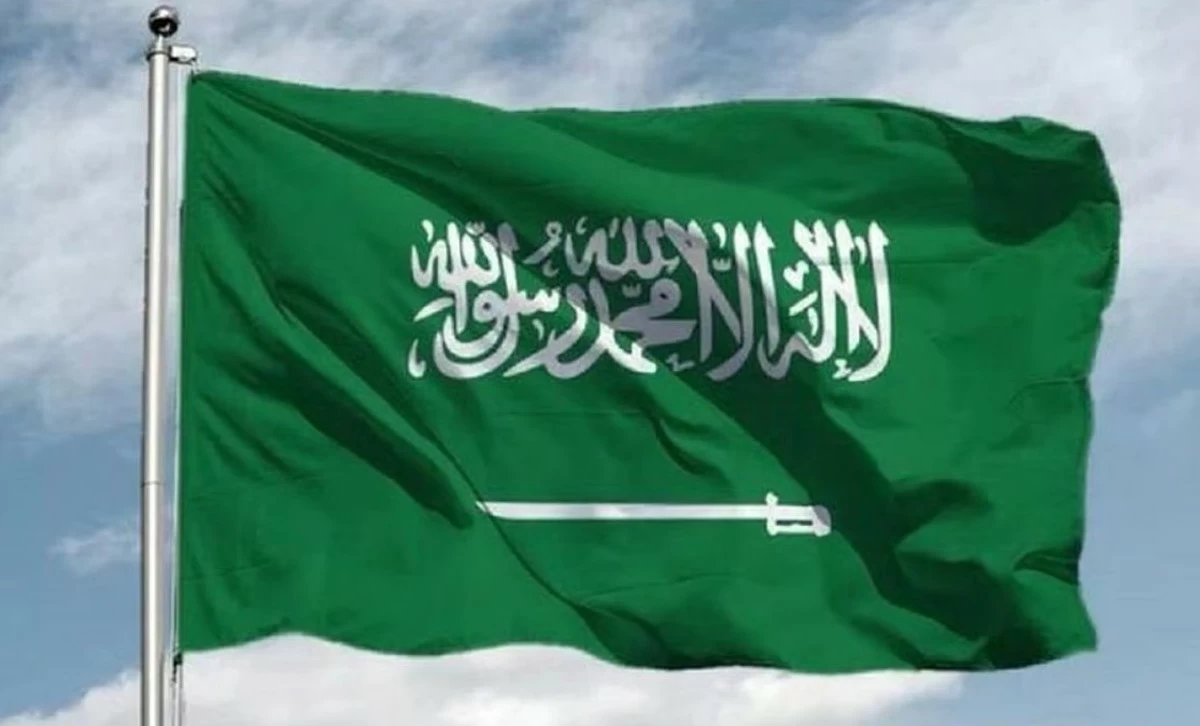

The economy is expanding beyond its traditional reliance on oil. Giga-projects are reshaping the urban landscape. Tourism is opening Saudi Arabia’s doors to the world. Sports are securing a prominent place on the international events agenda. Culture is reclaiming its presence. Saudi women are transitioning from empowerment to active participation in the labor market. Digital services have become central to government operations. Saudi investments are crossing borders, creating new opportunities both within Saudi Arabia and abroad. Behind this landscape stands a leadership that recognizes that a nation’s strength is measured not merely by what it possesses, but by what it can achieve with those assets. King Salman bin Abdulaziz, the Custodian of the Two Holy Mosques, symbolizes the stability of the state and the continuity of its journey.
Meanwhile, His Royal Highness Crown Prince and Prime Minister Mohammed bin Salman spearheads the most significant transformation initiative in Saudi Arabia’s modern history, an effort focused not only on economic reform but also on redefining Saudi Arabia’s role in the region and on the global stage. In this context, Prince Mohammed bin Salman has earned the title of the “Architect of the Saudi Transformation.” This designation is rooted in a comprehensive strategy that integrates politics, economics, investment, tourism, culture, sports, technology, and quality of life. When Saudi Arabia unveiled “Vision 2030,” it set forth ambitious objectives: to create a more diversified economy, foster a vibrant society, provide greater opportunities for youth, attract global investment, and develop sectors such as industry, tourism, culture, and entertainment. This vision also includes the establishment of new cities aimed at positioning Saudi Arabia at the forefront of the global economy.
Today, “Vision 2030” has evolved beyond a mere document, and has transformed into a substantial, nationwide initiative. The progress is evident in the figures. In 2025, Saudi Arabia’s real economy grew by 4.5 percent, with the non-oil sector expanding by 4.9 percent. Gross Domestic Product (GDP) at current prices reached approximately SAR 4.789 trillion. The importance of this progress extends beyond the statistics, as it reflects a clear trajectory of advancement. Saudi Arabia views economic diversification as more than just a catchphrase and does not regard oil as a liability to be shed. Instead, it recognizes oil as a vital asset that finances the country’s transition towards a more diversified economy with multiple drivers of growth.
Saudi Arabia is a major oil power, and energy will continue to be a cornerstone of its economic and strategic strength. What has changed, however, is how this power is managed. Rather than oil revenues simply marking the end of the economic cycle, they have become part of the capital reinvested into new sectors, national corporate giants, strategic projects, and investments capable of generating added value for decades to come.
Foremost among these instruments is the Public Investment Fund (PIF), whose assets under management exceeded SAR 3.4 trillion in 2025, while its cumulative domestic investments since 2021 reached approximately SAR 750 billion. These figures encapsulate a vital aspect of the Saudi transformation philosophy - converting wealth into investment, investment into industry, industry into jobs, and jobs into a sustainable economy. Thus, Saudi Arabia is not building a “post-oil” economy so much as an economy capable of benefiting from oil while avoiding dependence on it.
Industry, mining, tourism, logistics, technology, energy, entertainment, sports, culture, and artificial intelligence - these sectors are no longer peripheral to the Saudi economy; rather, they have become integral to the transformation project. In the fourth quarter of 2025, non-oil exports, including re-exports, rose by 18.6 percent year-on-year, while the share of oil exports in total merchandise exports declined to 67.5 percent. Crucially, Saudi Arabia is not content with merely exporting its natural resources. It is working to maximize their value through manufacturing, petrochemicals, mining, and energy-related industries. The new Saudi equation is that possessing resources is not enough. What matters is what we create from them.
Across Saudi Arabia, giga-projects appear as successive chapters of a single story. NEOM, Qiddiya, Diriyah, the Red Sea, and others are not merely isolated projects, but they are components of a comprehensive vision to redistribute economic activity and establish new hubs for tourism, investment, culture, entertainment, and technology. The goal is not simply to build beautiful cities, but to build cities that generate a new economy. This underscores the significance of these projects - they open markets, attract companies and investment, create jobs, and redefine the relationship between place and economy. Saudi Arabia is doing more than developing its cities; it is building cities that will drive its future economy.
The tourism sector perhaps best illustrates the rapid pace of Saudi Arabia’s transformation. Saudi Arabia, which for decades relied primarily on religious tourism, has opened its doors to global tourism, presenting a new face to the world - one defined by heritage, nature, culture, entertainment, sports, and adventure. From Al-Ula to the Red Sea, and from Diriyah to Riyadh, a new tourism map is taking shape. Al-Ula offers a unique model for transforming history and heritage into a global tourism industry, while Riyadh has become a bustling metropolis hosting conferences, exhibitions, summits, and major events. In 2025, Saudi Arabia welcomed approximately 122.6 million domestic and international tourists, with total tourism spending reaching around SAR 304 billion. The number of international tourists approached 30 million, according to official data. This is where the significance of these figures lies.
Tourism is no longer merely a seasonal activity but has evolved into a standalone economic sector. In just a few years, Riyadh Season has transformed from a mass-attendance event into a global Saudi brand. The sixth season attracted more than 17 million visitors and hosted world-class sports, artistic, entertainment, and cultural events. Yet, the story goes beyond visitor numbers. Behind every season lies a vast economic network - hotels, restaurants, transportation, marketing, media, event management companies, jobs, and investments.
Thus, Saudi Arabia has shifted from a market where citizens once sought entertainment abroad to a nation that draws the world in for leisure. While tourism and entertainment have reshaped Saudi Arabia’s image, sports have stepped in to project that image to the world with even greater prominence. Hosting global championships, developing facilities, investing in clubs, and attracting international stars and champions are all components of a new Saudi sports industry. Hosting the 2034 World Cup stands at the forefront of this initiative, as Saudi Arabia becomes the first nation to host the expanded tournament featuring 48 teams. Saudi Arabia has also established a strong presence in Formula 1, boxing, golf, tennis, and other sports. Notably, attendance at the 2025 Saudi Arabian Grand Prix exceeded 788,000 fans. Here, sport transcends mere on-field competition; it encompasses tourism, investment, media, and soft power, driving an entire economic ecosystem.
One of the most visible aspects of Saudi Arabia’s transformation is the expanding role of women in the economy and the labor market. By 2025, female participation in the workforce had reached 34.2 percent, while overall economic participation stood at 36.3 percent, with approximately 774,000 women-owned enterprises. These figures reflect a shift extending far beyond the labor market. Saudi women are now active in management, business, investment, tourism, culture, sports, and technology, evolving from beneficiaries of development into key partners in driving it.
While mega-projects often capture the spotlight, the true measure of any development initiative remains its impact on the citizen. Consequently, Vision 2030 has prioritized housing, healthcare, quality of life, and public services. Saudi homeownership rates surpassed 60 percent in 2025, up from 47 percent in 2016. In the health sector, life expectancy rose to approximately 79.7 years in 2025, while primary healthcare coverage reached 97.5 percent of population centers. Development here is measured not merely by what is built, but by the changes in people’s lives. Regarding digital transformation, Saudi Arabia has made a remarkable leap, ranking second globally in the World Bank’s 2025 Digital Government Maturity Index, with a score of 99.64 percent.
The significance extends beyond an international ranking. Technology has become integral to the state’s structure, with government services moving toward greater integration, speed, and intelligence, while Saudi Arabia opens up vast opportunities in artificial intelligence, data, and advanced computing. Saudi Arabia seeks not merely an e-government, but a state that operates with a digital mindset. Amid this openness, Saudi Arabia has not abandoned its identity; rather, heritage and history have become integral to shaping the future. Sites such as Diriyah, Al-Ula, and other historic Saudi locations are transforming into bridges connecting the past with the present, serving as catalysts for tourism, culture, and soft power. This is a defining characteristic of the new Saudi experience: openness without assimilation and renewal without severing ties to one’s roots.
Here, the story of Prince Mohammed bin Salman extends beyond Saudi Arabia’s borders. The project he leads is no longer confined to the Saudi economy and society; the outcomes of Saudi Arabia’s transformation have themselves become influential factors across the Gulf landscape. With the size of its economy, its geographic location, and its political, religious, and strategic weight, Saudi Arabia has always been a pivotal state in the Gulf. What is new, however, is that this traditional influence is now bolstered by a sweeping transformation project, massive investments, growing soft power, and an increasingly active presence in regional and international affairs. In April 2026, Prince Mohammed bin Salman chaired the 19th Consultative Meeting of Gulf Cooperation Council (GCC) leaders in Jeddah, where they discussed regional developments and ways to enhance the region’s security and stability.
When Riyadh hosts Gulf leaders to discuss issues affecting the region’s security and future, it underscores Saudi Arabia’s position at the heart of the Gulf cooperation framework. In May 2025, Riyadh also hosted the Gulf-US Summit, attended by GCC leaders, an event that affirmed the Saudi capital’s status as a key platform for dialogue between the Gulf and major international powers. Yet, this impact extends beyond politics. Saudi Arabia’s economic rise inevitably leaves its mark on the entire Gulf region. As Saudi Arabia transforms into a hub for investment, tourism, technology, sports, and services, attracting global companies and capital, it opens up new opportunities for integration and partnerships across the region. Saudi investments and major national corporations have become significant players in the regional economy, while the country’s growing presence drives the development of trade, investment, tourism, infrastructure, the digital economy, and artificial intelligence across the Gulf.
Politically, Saudi Arabia’s role has expanded to encompass Arab and regional issues extending beyond the boundaries of the Gulf Cooperation Council (GCC), ranging from Sudan, Syria, Yemen, and Lebanon to the Palestinian cause, alongside an increasing presence in mediation, de-escalation, and stability-building efforts. It is precisely here that the nature of the influence created by Crown Prince Mohammed bin Salman becomes evident. He is not merely leading a transformation within Saudi Arabia; he is steering a nation whose transformative impact is reshaping the Gulf and regional landscape. From economics to politics, and from investment to soft power, Saudi Arabia has become a pivotal player that cannot be overlooked when assessing the future of the Gulf. Saudi Arabia’s weight requires no introduction. Its G20 membership, status in energy markets, religious significance, geographic location, and the sheer scale of its economy and investments all grant Riyadh influence that extends far beyond its borders.
Yet, current Saudi policy operates through a multifaceted toolkit - diplomacy, economics, investment, energy, soft power, and international engagement, meaning Saudi power is no longer anchored to a single element. It is an integrated system of power components advancing in unison. In examining this transformation, one cannot overlook the historic role of the Custodian of the Two Holy Mosques, King Salman bin Abdulaziz. King Salman represents the continuity of the modern Saudi state. He possesses a wealth of experience in statecraft and embodies the enduring nature and historical depth of the Saudi political establishment. Under his reign, Saudi Arabia has entered a new phase of development, while Crown Prince Mohammed bin Salman has driven the transformation project forward with unprecedented speed, ambition, and execution. It is an equation that balances state stability with future ambition.
His Royal Highness Crown Prince and Prime Minister Mohammed bin Salman is the figure most closely associated with Vision 2030. He chairs the Council of Ministers, the Council of Economic and Development Affairs, and the Board of Directors of the Public Investment Fund, placing him at the heart of the economic and operational transformation Saudi Arabia is undergoing. Yet, the significance of this experience lies not in the multiplicity of his roles, but like the project itself. The question Saudi Arabia asks today is no longer, “How do we preserve what we have?” but rather, “What can we create with what we have?” From this question emerged the process of redefining the economy, launching new sectors, empowering youth and women, attracting investment, developing cities, opening the doors to tourism, transforming sports, entertainment, and culture into industries, and rapidly transitioning to a digital economy. Thus, the title “Architect of the Saudi Transformation” best captures the essence of this era. The project he leads is neither limited to a single sector nor a standalone economic plan. Rather, it is a comprehensive process of reshaping Saudi Arabia’s global standing, economic functions, and international image.
On the 96th Saudi National Day, Saudi Arabia does not simply stand before the mirror of the past, but it looks toward the future. An economy that is diversifying, cities that are changing, tourism that is growing, sports that are becoming an industry, women participating strongly, young people with greater opportunities to dream and work, a government that speaks the language of technology, Saudi investments that transcend borders, and political and economic influence that is expanding across the Gulf, regionally, and internationally. All of this is taking place under leadership that combines the stability of King Salman with the ambition of Prince Mohammed bin Salman. If the history of Saudi Arabia has shaped its status, the current stage is working to build on that status and write a new chapter in its story.
It is the new Saudi Arabia - a country that does not abandon its roots as it opens up to the world, does not abandon its oil strength as it diversifies its economy, and is not satisfied with its regional weight as it expands its international presence. At the heart of this transformation stands Sheikh Mohammed bin Salman, the architect of the Saudi transformation. He leads a project that turns ambition into an action plan, plans into projects, and projects into a reality that is reshaping the country on the ground. Most importantly, this transformation is no longer only an internal Saudi matter. When Saudi Arabia grows economically, its investments expand, its soft power increases, and its political and diplomatic presence grows, the entire Gulf feels the impact of this rise. Thus, Saudi National Day comes this year with Saudi Arabia not only reflecting on what it achieved in the past, but also celebrating what it is creating for the future. Saudi Arabia celebrates its history, but at the same time, it is writing a new history. This is perhaps the most prominent message in Saudi Arabia’s experience today - a nation that knows its roots, a leadership that sees the future, and a people with the will to turn ambition into reality.