


27/07/2026

Share:
27/07/2026
Share:

NEW DELHI, July 27: What began as anger over alleged irregularities in university entrance examinations has evolved into one of India’s most significant youth-led protest movements in recent years, creating a political challenge for Prime Minister Narendra Modi’s government and triggering questions over the state’s response to demonstrations.
The unrest, driven largely by Gen Z protesters using digital platforms to organize nationwide campaigns, has expanded beyond education grievances into a broader movement focused on unemployment, economic opportunities, government accountability and civil rights.
The growing protests have already produced political consequences, with Union Education Minister Dharmendra Pradhan reportedly stepping down following mounting criticism over the handling of examination-related controversies, marking a major setback for the ruling Bharatiya Janata Party (BJP).
Modi’s Carefully Built Image Faces Public Backlash
For more than a decade, Prime Minister Narendra Modi’s image has been central to the government’s public communication strategy. His face has appeared widely on government campaigns, public advertisements, welfare scheme materials and official documents, projecting an image of strong leadership and administrative success.
However, the same symbolic presence that once represented stability has now become a focus of public anger among sections of protesters. Demonstrators have reportedly torn down, damaged and burned images associated with the prime minister during protests, turning a powerful political symbol into a representation of their frustration with the government.
Political analysts say the shift reflects growing dissatisfaction among younger Indians who feel disconnected from the economic promises associated with years of high-growth messaging.
Economic Growth Without Enough Jobs Fuels Youth Anger
Behind the immediate protests over examination irregularities lies a deeper economic concern: the difficulty faced by educated young Indians in finding stable employment.
Although India has recorded strong GDP growth figures, critics argue that economic expansion has not translated into enough quality jobs for millions of young graduates entering the workforce.
Recent employment data has highlighted high unemployment levels among young graduates, particularly those aged between 15 and 25. Many educated workers have reportedly been pushed into temporary employment, gig work or unpaid internships despite holding university qualifications.
For many young protesters, the contrast between official economic success narratives and their personal experiences has become a major source of frustration.
Digital Generation Creates New Political Movement
The protests have demonstrated the growing influence of India’s digitally connected youth population, with activists using social media platforms to coordinate demonstrations, share information and mobilize supporters.
Unlike traditional political movements led by established organizations, the current wave has been driven largely by young citizens organizing through online networks and campus groups.
The movement’s ability to sustain protests across different locations has raised concerns within the government over a new form of political mobilization that operates outside conventional party structures.
RAF Pellet Gun Incident Adds to Government Scrutiny
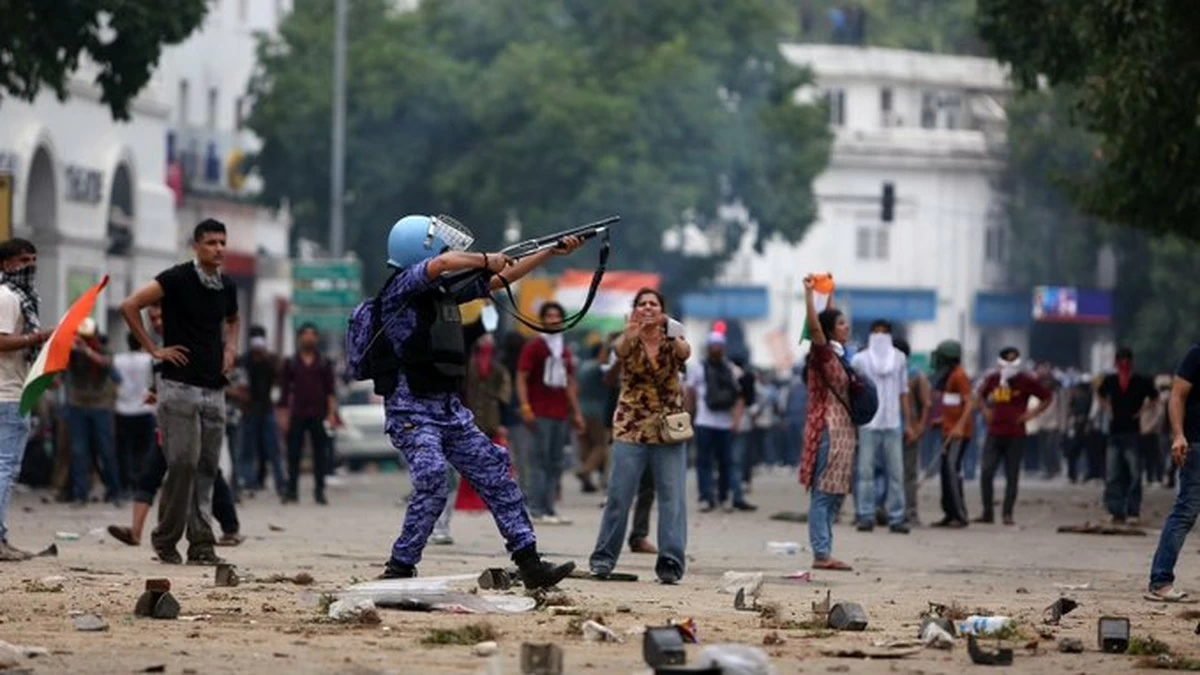
Amid the wider unrest, questions have also emerged over the handling of the July 20 CJP “Sansad Chalo” march to Parliament after an internal review reportedly found that a Rapid Action Force (RAF) personnel fired seven rounds from a pellet gun during the protest.
According to officials familiar with the investigation, the RAF personnel deployed in the Connaught Place area fired the rounds during clashes with protesters. Five pellets reportedly struck demonstrators, while two hit the ground.
The findings have intensified criticism over police tactics, particularly after earlier questions were raised about whether such weapons were used during the protest response.
Injuries Trigger Debate Over Use of Force
The pellet firing reportedly injured several protesters, including a 19-year-old student, a worker and an Outlook magazine journalist covering the demonstration.
One protester reportedly suffered serious eye injuries, resulting in the loss of vision in one eye, according to reports.
Opposition leaders have used the incident to accuse authorities of excessive force, demanding accountability from the government over the handling of demonstrations.
Political Challenge for BJP Government
The combination of youth unemployment concerns, examination controversies and allegations of excessive force has created a difficult political environment for the BJP government.
The protests represent one of the most serious challenges to Modi’s public image since he came to power in 2014, particularly because they involve a generation that has grown up during his decade-long leadership.
While the government has defended its record and maintained that security forces acted to control law-and-order situations, protesters argue that the movement represents wider dissatisfaction with governance, employment opportunities and accountability.
A New Test for Modi’s Leadership
The ongoing protests suggest that the political landscape among India’s young voters may be changing. A generation that once represented the promise of India’s demographic advantage is increasingly demanding economic security, transparency and greater accountability from those in power.
For a government that has relied heavily on strong leadership branding, the growing backlash presents a difficult question: when a leader’s image becomes the most visible symbol of the state, does public frustration eventually become directed at that very symbol?
The answer could shape India’s political debate in the years ahead.