

21/11/2026

Share:
21/11/2026
Share:


On Friday, those feelings found a voice. At the Grand Finale of Himig ng Bayani – The OFW Songwriting Competition at the Crowne Plaza Hotel, the stories of overseas Filipino workers unfolded not through speeches or statistics, but through songs written from the heart.
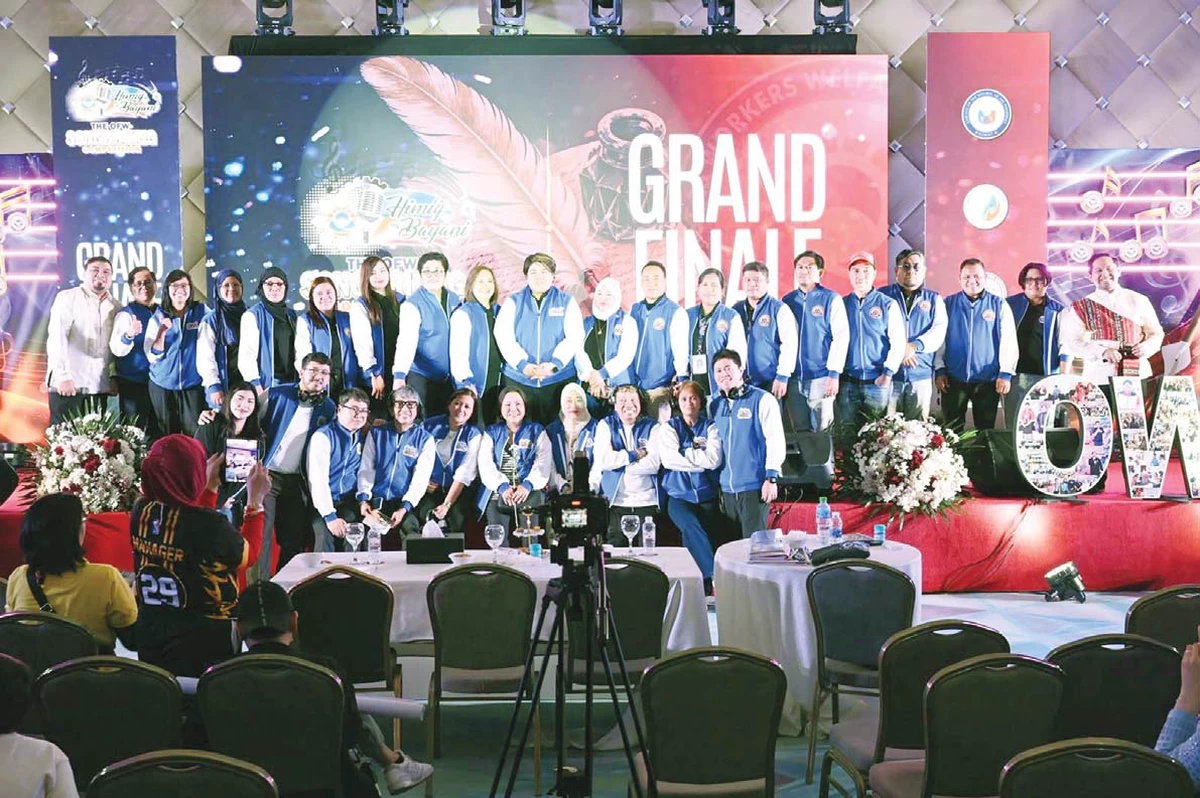
Melodies carried memories of home, lyrics spoke of separation and perseverance, and performances revealed emotions that many OFWs rarely have the opportunity to express. There were tears in the audience. Members of the judging panel were moved. Even Overseas Workers Welfare Administration (OWWA) Administrator Patricia Yvonne “PY” Caunan was touched by the deeply personal compositions. Some songs were so close to the realities of overseas life that listening became an emotional experience in itself. For those gathered in the hall, the stories were familiar. They were about parents who had to leave their children, spouses who learned to love across distances, workers who carried their families’ hopes on their shoulders and Filipinos who continued to dream despite the hardships of life abroad. For one afternoon, the distance between Kuwait and home seemed a little shorter.
The struggles of OFWs were transformed into music, and the emotions they often kept to themselves were shared with an audience that understood. Organized by the Overseas Workers Welfare Administration (OWWA) and OWWA-OWO Kuwait, the competition brought together 16 finalists whose original compositions celebrated the lives, sacrifices and enduring spirit of overseas Filipino workers.
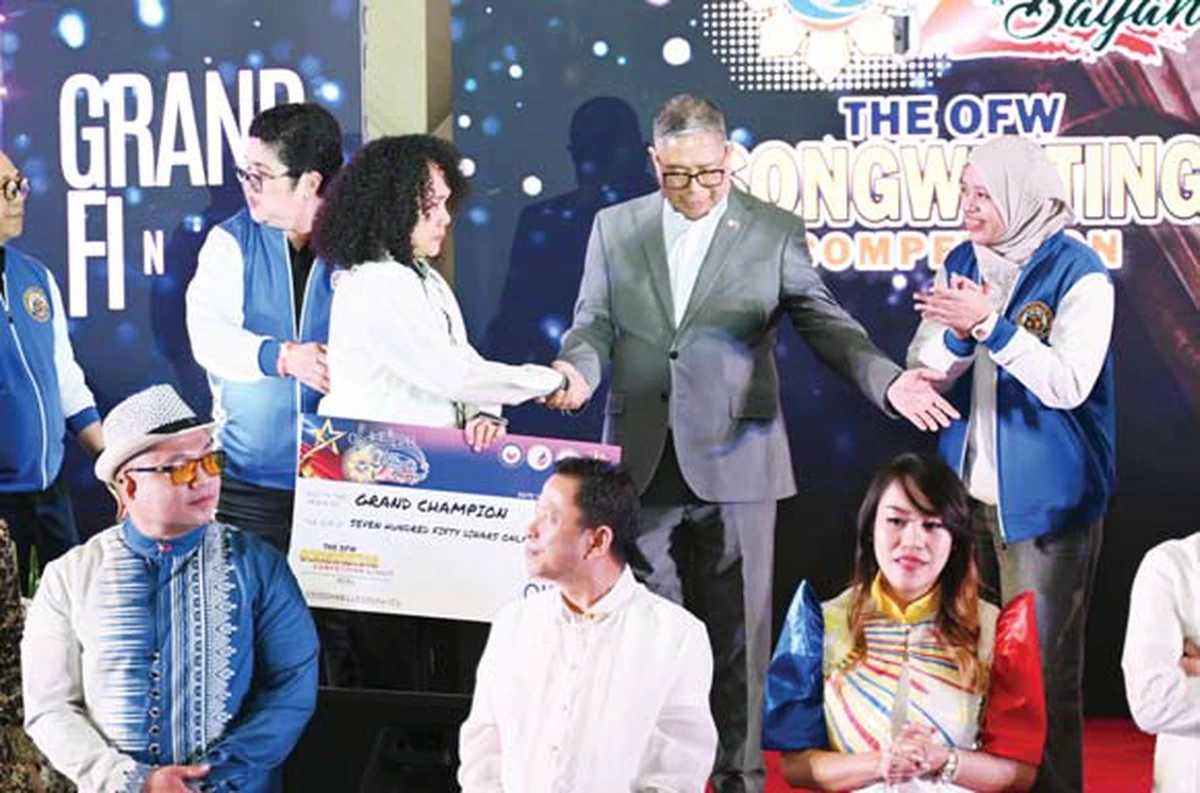
Hosted by popular and dynamic Filipino DJs Raymund and Xiano, who served as masters of ceremony, the event featured a series of performances and presentations leading to the much-anticipated announcement of the winners. At the end of the competition, Charisse Bautista emerged as champion with her original composition, “Buhay Mo, Buhay OFW,” topping the 16 entries. There was one champion, but the night belonged to every songwriter who dared to turn a personal experience into a song and every OFW who found a part of their own life in the music.



The finalists brought different stories to the stage, but their compositions shared a common heartbeat. Some spoke of refusing to surrender when life becomes difficult. Others recalled the pain of being separated from loved ones, the smiles worn to conceal sadness, the promises made before leaving home and the hope of one day returning to the people who matter most. For the audience, these were not simply lyrics to appreciate. They were memories brought back to life. That connection made the performances so powerful. The tears were not merely reactions to a beautiful melody or an impressive vocal performance. They came from recognizing the emotions behind the words.
The Grand Finale was attended by Philippine Ambassador to Kuwait His Excellency Jose A. Cabrera III and OWWA Administrator Caunan. In her keynote message, the OWWA administrator underscored the importance of recognizing and supporting overseas Filipino workers, whose contributions extend beyond their work and economic sacrifices. The competition offered another way to honor them: by allowing OFWs to tell their stories in their own words, through their own music.
Bautista’s “Buhay Mo, Buhay OFW” secured the championship with 93.18 points. Jadewyn M. dela Rosa placed first runner-up with “Padayon Lang Bai,” earning 87.70 points, while Roberto Martinez Garcia finished second runner-up with “Sa Isang Bahagi Ng Mundo,” which received 87.55 points. Rondi Nelli Quito Cabiton received the People’s Choice Award for “Inang Kadama,” earning recognition for the composition’s connection with the audience.
For the finalists, reaching the Grand Finale was already a meaningful achievement. Their songs had been heard, their experiences acknowledged and their voices given a platform. Whether they went home with a trophy or not, each had shared something personal with a community that understood its meaning.
Behind the emotional performances was a selection process designed to give every songwriter an equal opportunity. The preliminary screening was conducted through blind evaluation, with entries identified only by assigned numbers. Originality, creativity, musicality and message formed the basis of the assessment. For the Grand Finale, the contestants performed their original compositions live, without musical instruments, in accordance with the competition rules.
The judging panel comprised Nadia D. Benito, Cultural Officer of the Philippine Embassy in Kuwait; Director Ana Dominique M. Consulta, Director IV of OWWA’s Policy and Program Development Office; and Francisco “Kiko” Salazar, the multi-awarded Filipino songwriter, composer, singer and music producer known professionally as Kiko “KIKX” Salazar. The first and second judges each accounted for 30 percent of the final score, while the third judge contributed 40 percent. As competition director, Marlon Aquino Malinao presented the judging criteria and explained the rules to the finalists.
The evening’s musical program added another dimension to the celebration of Filipino talent with the launch of the official Himig ng Bayani original theme song, composed and arranged by Salazar. Ivan Ortiz, Charvin Molaco, Mansour Melad Amin and Ana Mae Fausto performed the original soundtrack before delighting the audience with some of Salazar’s popular hit songs.
The musical celebration reached another highlight when Salazar himself took the stage for a special number, performing his well-loved hit “Akin Ka Na Lang.” The audience responded enthusiastically as the songwriter joined the performers in bringing his music to life. The performances brought a lively dimension to an evening largely defined by the deeply personal stories of the contestants. They also showcased the Filipino musical talent behind the event and paid tribute to the man who composed and arranged its official soundtrack.
The awarding ceremony brought Ambassador Cabrera, OWWA Admin Caunan, Deputy Administrator for Operations Rosalia Susana S. Bahia-Catapang, OWWA Welfare Officers Lorna R. Obedoza and Emmanuel Santiago Diaz along with the panel of judges to present the awards and recognize the achievements of the finalists. Welfare Officer Diaz delivered the closing remarks, bringing the program to a close. Yet the most memorable moments that afternoon could not be measured by scores or trophies. They were found in the songs that made listeners think of home, in the emotions shared across the audience and in the realization that the person sitting beside them might be carrying the same longing expressed onstage.
For the contestants, writing and performing their songs meant giving shape to experiences that are not always easy to put into words. For those listening, the music offered recognition, comfort and, perhaps, the feeling that they were not alone in their struggles. That was the deeper achievement of Himig ng Bayani. It gave OFWs something beyond a competition: a stage on which their lives, sacrifices and hopes could be heard in their own voices. When the lights dimmed and the last notes faded, the songs remained. So did the emotions they stirred and the reminder that behind every OFW is a story of someone loved, someone missed, a dream pursued and a home waiting.