



14/12/2025

Share:
14/12/2025
Share:
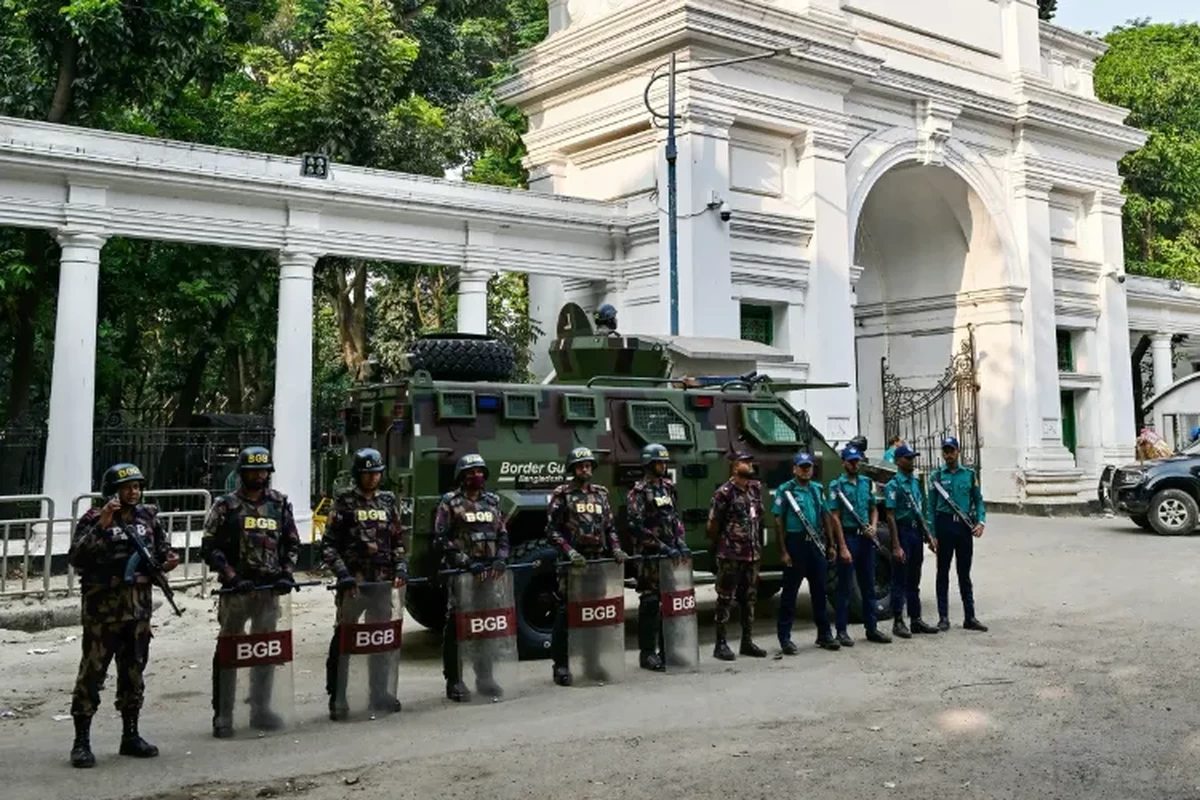

DHAKA, Dec 14: The Bangladesh government has decided to provide personal security to individuals who played key roles in the July uprising following a series of shooting incidents, including Friday’s attack on Sharif Osman Hadi, an independent aspirant for the Dhaka-8 constituency.
Intelligence agencies have been instructed to prepare a list of high-risk individuals after detailed assessments. In a major policy shift, the government will also allow candidates in the upcoming election to apply for firearm licences, a privilege previously restricted to government employees.
To counter the growing threat posed by illegal weapons and criminal activity, the government will launch Operation Devil Hunt – Phase Two, Home Adviser Jahangir Alam Chowdhury announced at a press briefing after a core committee meeting on law and order at the Ministry of Home Affairs, where the decisions were taken. Phase One of the operation was launched on February 8 to curb terrorism, improve law and order and bring criminals to justice.
“Operation Devil Hunt Phase Two will significantly strengthen law enforcement efforts to recover illegal arms and crack down on criminal activity. The operation will be intensified to ensure public safety and address the rising threat of illicit weapons,” Jahangir said.
The decisions, however, have drawn criticism from experts. Tawohidul Haque, an associate professor at the Institute of Social Welfare and Research at Dhaka University, said the state must take full responsibility for ensuring security instead of adopting temporary measures such as issuing firearm licences. “How many people will be given licences, and will that be enough to secure the candidates? The government must take comprehensive steps to address security concerns,” he told The Daily Star. He also warned that expanded licensing could lead to misuse, as many might seek firearms unnecessarily.
Former inspector general of police Ashraful Huda said incidents of violence are often viewed through political lenses, diminishing their seriousness and allowing criminal activity to persist. “Downplaying violence as isolated incidents undermines the electoral process,” he said, adding that a fair election requires a conducive environment, which is currently lacking. He stressed that swift and coordinated action by law enforcement is essential to restoring public confidence and ensuring a peaceful, participatory election.
The core committee also decided that armed guards may be assigned to candidates deemed to be at high risk, officials present at the meeting said. Authorities have further directed that high-profile candidates be formally notified to enhance security at their residences. Measures include installing surveillance cameras, hiring watchmen and using detective equipment. Law enforcers have also been instructed to intensify efforts to recover looted and illegal firearms.
On election security, Jahangir said candidates would be permitted to apply for weapon licences if necessary, marking a departure from earlier policies. Firearms previously deposited with authorities will be returned to their rightful owners who are participating in the election. “Any attempt to disrupt or obstruct the election will be met with a strong response from the interim government. We will not tolerate efforts to destabilise the democratic process,” he said.
The heightened security measures follow a spate of violent incidents. On November 5, one person was killed and two others injured in an attack on an election rally of Ershad Ullah, BNP’s Chattogram-8 candidate, in Purbo Bayezid. In the same month, a BNP leader was found dead under a bridge in Teknaf, while an expatriate was shot dead in Khulna. On November 10, listed criminal Tariq Saif Mamun was killed in a film-style shooting in Old Dhaka, and later that day BNP activist Arif Mir was shot dead in Munshiganj. Additional killings involving firearms were reported in Dhaka, Chandpur and surrounding areas over the following days.
According to official data, 5,753 firearms and 651,609 rounds of ammunition were looted from police stations and outposts, of which 4,426 firearms have so far been recovered.
Meanwhile, Police Headquarters has ordered enhanced security nationwide, including the establishment of additional checkpoints. Mobarak Hossain, officer-in-charge of Banani Police Station, told The Daily Star that checkpoints have already been set up and surveillance increased. Dhaka Metropolitan Police Commissioner Sheikh Md Sazzat Ali said authorities are taking all necessary measures to ensure the safety of election candidates across the capital.