


19/11/2026

Share:
19/11/2026
Share:
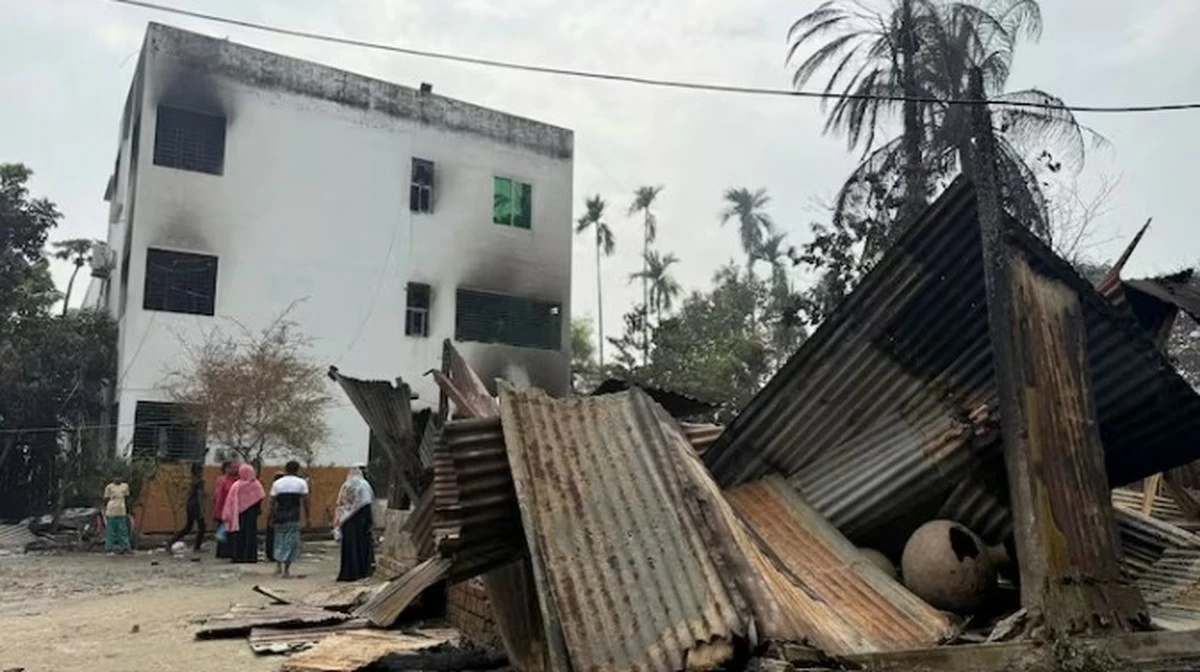

DHAKA, Nov 19 : Bangladesh witnessed fresh political violence on Thursday as the ancestral home of Nobel laureate and former interim government chief Muhammad Yunus was set on fire in Chattogram, while several branches of Grameen Bank were targeted in arson attacks amid a nationwide lockdown called by the banned Awami League.
At least four people have been killed in separate incidents of political violence and arson over the past two days, while crude bomb explosions, vehicle fires and vandalism were reported in several parts of the country.
The fire at Yunus' paternal home broke out late Wednesday in an unused ground-floor room in the Panchlaish area of Chattogram. Police patrol personnel noticed the blaze and rushed to the scene, bringing it under control.
Police said nobody lived on the ground floor, while the families of Yunus' two brothers occupied the second and third floors. No injuries were reported at the residence. Authorities have launched an investigation to identify those responsible.
The incident followed a series of arson attacks targeting Grameen Bank branches and offices, founded by Yunus. Reports say at least 37 of the bank's branches or offices have been targeted by arson or attempted fires since November 10.
Hundreds arrested ahead of nationwide shutdown
Security was tightened across Bangladesh ahead of Thursday's nationwide lockdown announced by the Awami League, the party of former prime minister Sheikh Hasina.
Dhaka police reportedly arrested 565 people during a 24-hour crackdown ahead of the protest, including former education minister Nurul Islam Nahid, who was detained from his residence around midnight on Wednesday, according to local media reports.
Authorities also deployed additional security personnel, including 97 platoons of the Border Guard Bangladesh across seven districts, to prevent further violence.
Home Minister Salahuddin Ahmed vowed strict legal action against those responsible for the unrest, saying investigators would use audio and video evidence to identify the perpetrators.
Despite the security deployment, explosions involving crude bombs, arson attacks and vandalism were reported in Dhaka and other areas. At least four people were reported injured in the blasts.
Political tensions escalate
The violence has spread across at least 28 of Bangladesh's 64 administrative districts over recent days, with reports of crude bomb explosions, vehicles being torched and attacks on public and private property.
Two local leaders affiliated with the ruling Bangladesh Nationalist Party (BNP) were killed in Narail district in an attack allegedly carried out by Awami League activists during a street march, police said. Other fatalities were reported in separate incidents in Faridpur and Pirojpur.
Addressing Parliament on Tuesday, Prime Minister Rahman described the Awami League as a "terrorist outfit" and a "fallen, defeated, and ousted fascist force", calling for its political defeat.
"Let us once again unite in the spirit of 2024, when we drove the autocratic forces out of this country, and ensure that those forces are decisively defeated," he said.
On Wednesday night, Rahman again appealed to what he described as democratic forces to prevent the party's return to political prominence.
He also instructed BNP lawmakers to return to their constituencies and mobilise grassroots supporters rather than relying exclusively on government administration, according to local media reports.
Hasina's return adds to tensions
The Awami League's Thursday shutdown coincides with the first anniversary of a special tribunal verdict that sentenced Hasina to death in absentia over crimes against humanity linked to the crackdown on the July 2024 student uprising.
Hasina fled to India in August 2024 after mass protests forced her from power.
Relations between Dhaka and New Delhi have remained strained over Bangladesh's demand for her extradition under a bilateral treaty.
Tensions have increased further after Hasina indicated that she intended to return to Bangladesh in December to face legal proceedings.
Her party's latest protest campaign follows the government's rejection of her request for new passport and identity documents that would facilitate her return from India, according to Reuters