


14/04/2026

Share:
14/04/2026
Share:
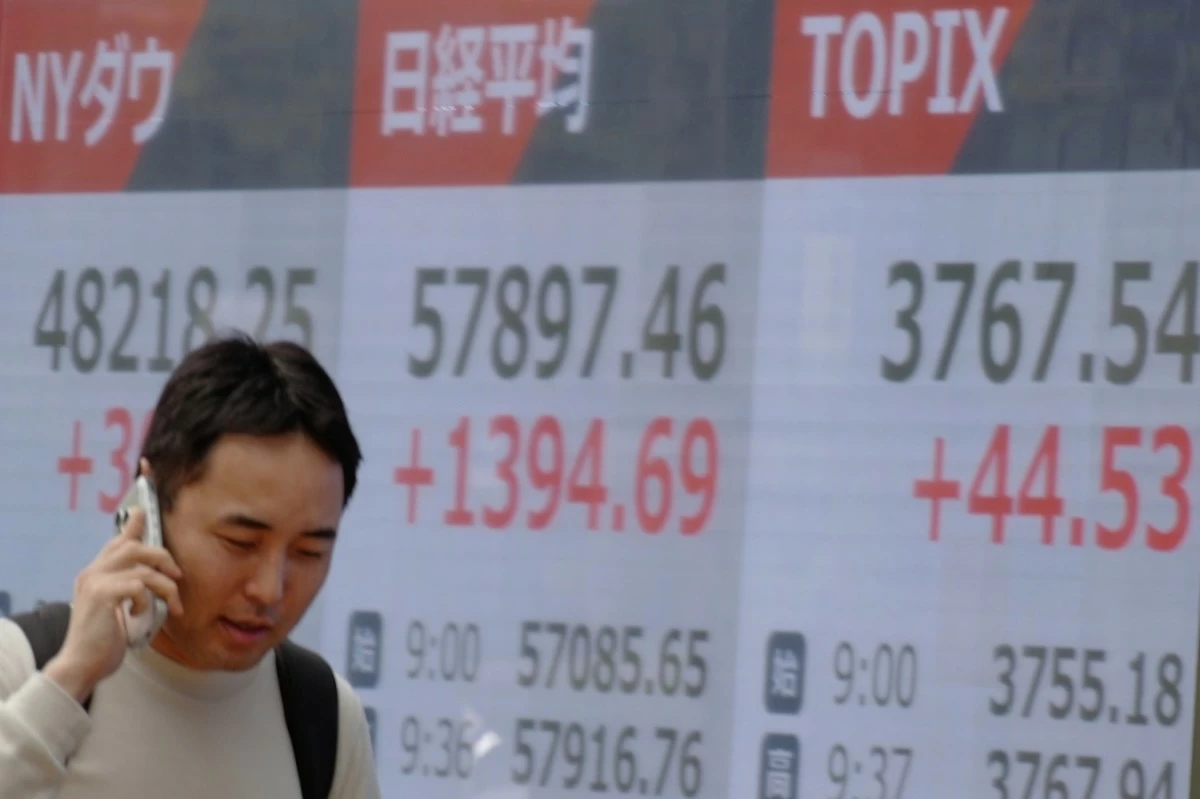

HONG KONG, April 14, (AP): Asian stocks were trading higher, tracking Wall Street gains, and oil fell on Tuesday as expectations rose over a possible second round of talks between the US and Iran on an end to the Iran war.
Tokyo’s Nikkei 225 was up 2.4% to 57,877.39. South Korea’s Kospi jumped 2.7% to 5,967.75 after briefly topping 6,000 intraday. Hong Kong’s Hang Seng rose 0.7% to 25,832.85, while the Shanghai Composite index climbed 1% to 4,026.63.
China on Tuesday reported worse-than-expected export growth of 2.5% in March for the first month since the Iran war began, although some analysts believe Chinese exports of goods related to AI and renewable energy will continue to support overall export momentum for the year.
Australia’s S&P/ASX 200 gained 0.5%, and Taiwan’s Taiex rose 2.4%. Investors are still hopeful for a lasting de-escalation of the Iran war, which is in its seventh week, as the US and Iran are said to be weighing a second round of talks before a temporary ceasefire agreement expires next week.
The US military on Monday began a blockade of Iranian ports as Washington steps up its pressure on Tehran, following ceasefire talks between the two sides over the weekend that ended without an agreement.
But US President Donald Trump also suggested on Monday that the United States is still willing to engage with Tehran. "I can tell you that we’ve been called by the other side,” he said, without further elaborating details.
Oil prices continued to pull back on Tuesday from earlier gains. Brent crude, the international standard, was down 0.9% to $98.45 per barrel. It reached nearly $104 early Monday morning over Iran war worries on limited progress from the weekend ceasefire talks.
Benchmark US crude fell 2.6% early Tuesday to $96.51 a barrel. The global energy shock stemming from maritime traffic disruptions in the Strait of Hormuz, where roughly a fifth of the world’s oil is typically transported, has led to surging fuel prices and is threatening to push up inflation in many countries and impact economic growth.