



06/10/2026

Share:
06/10/2026
Share:

HONG KONG, Oct 6, (AP): Asian shares were mostly higher on Tuesday and US futures advanced after shares rose to near a record close on Wall Street. Oil prices fell as the situation in the Middle East remained uncertain. Japan’s Nikkei 225 rose 1.1% to 70,683.98. The benchmark has returned to above the 70,000 mark this week for the first time since early July.
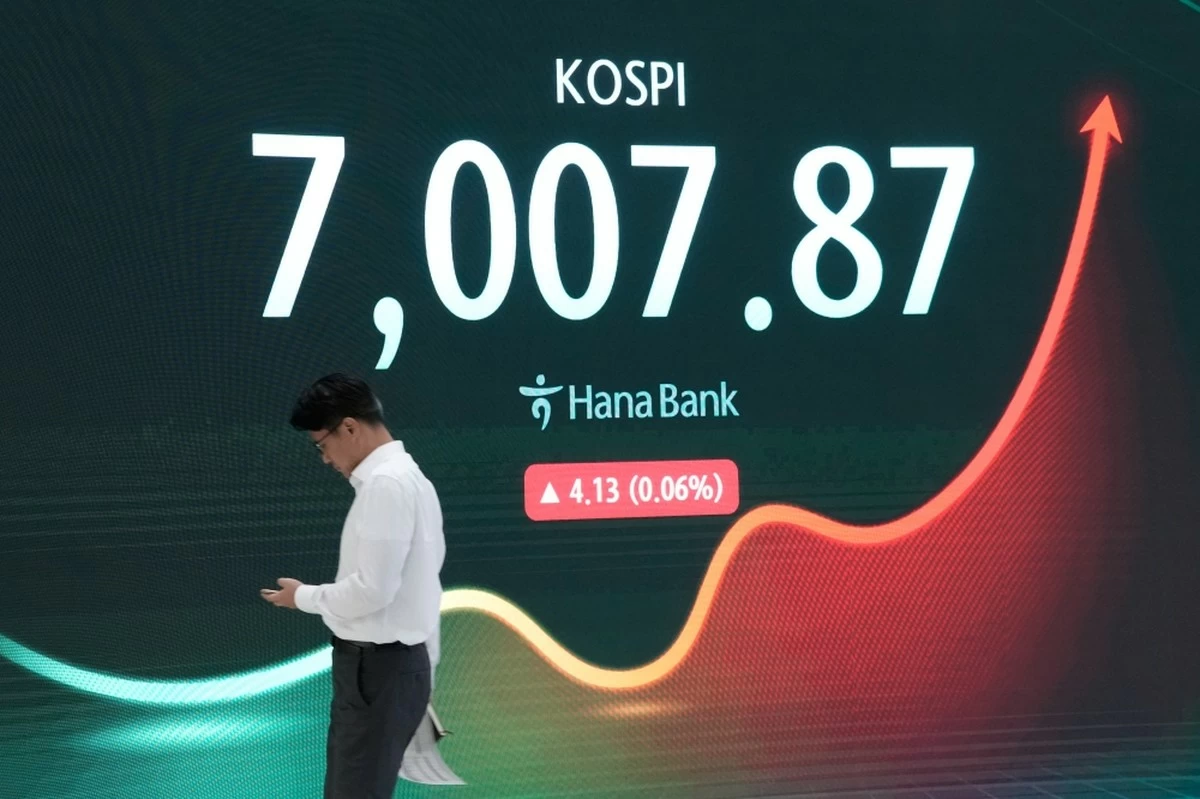
South Korea’s Kospi lost 0.9% to 6,941.39. Technology-related stocks in Japan and South Korea were volatile. Japanese chip testing equipment manufacturer Advantest gained 3.9%, while OpenAI investor SoftBank Group fell 3.1% after its CEO Masayoshi Son warned of potential dangers related to the technology. South Korea’s Samsung Electronics dropped 1.5%, and memory chipmaker SK Hynix slipped 3.7%.
Hong Kong’s Hang Seng climbed 0.8% to 24,234.19. Australia’s S&P/ASX 200 rose 0.6% to 8,735.70. Taiwan’s Taiex edged up 0.2%, while India’s Sensex added 0.6%. Markets in mainland China were closed because of a holiday. On Monday, Wall Street’s benchmark S&P 500 added 0.7% to near its previous record high. The Dow Jones Industrial Average climbed 0.2%, while the Nasdaq composite rose 1.1% to an all-time closing high.
Technology giants supported the gains, with Nvidia gaining 2.1% and Broadcom also advancing 2.1%. Surging oil prices and bond yields have added to challenges for the broader stock market and to companies, but expectations for strong company earnings have helped support stocks’ recent rallies ahead of the latest earnings season.
Oil prices declined early Tuesday. Brent crude, the international standard, was down 0.8% to $99.48 per barrel, back to below the $100 mark, but way higher than the roughly $72 a barrel level of late February.
Benchmark US crude lost 1.1% to $88.46 per barrel. Analysts say upward pressures on oil prices have eased as larger volumes of oil have been crossing the Strait of Hormuz and oil flows through Saudi Arabia’s key East-West pipeline have been recovering, although tensions between the US and Iran are still high.
"While there are growing signs of a recovery in oil flows from the Persian Gulf, the market remains nervous about potential supply disruptions from the region. This is keeping prices well-supported for now,” ING commodities strategists Warren Patterson and Ewa Manthey wrote in a commentary on Tuesday.