


24/02/2026

Share:
24/02/2026
Share:
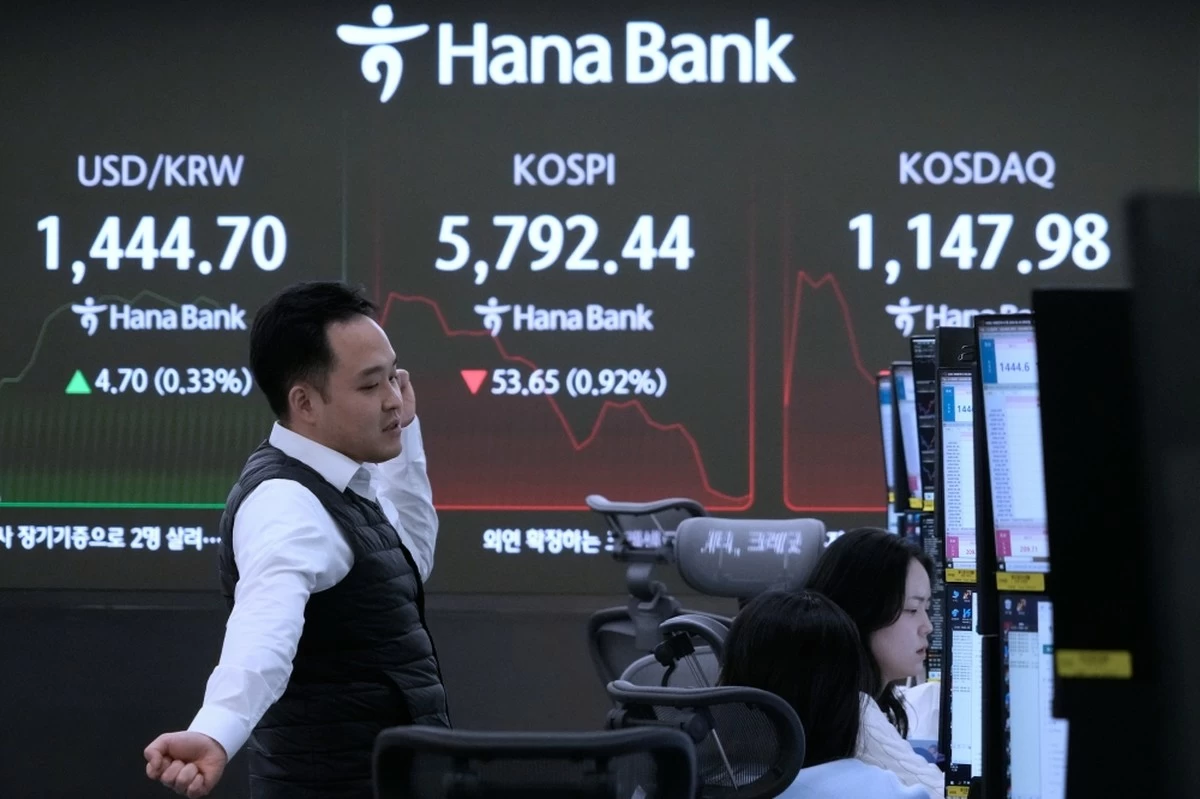

BANGKOK, Feb 24, (AP): Asian shares were mixed Tuesday after US stocks slumped on heavy selling of shares in companies that could be losers in the artificial-intelligence boom.
US futures climbed and oil prices also gained. A report by Citrini Research, a New York-based financial services company, that outlined a future scenario in which AI's dominance caused the "human-centric consumer economy,” to wither away with dire consequences for employment, was the latest hit to confidence for companies that might be displaced by fast expanding use of the technology.
"Policy response has always lagged economic reality, but lack of a comprehensive plan is now threatening to accelerate a deflationary spiral,” it says. Tuesday brought gains for computer-chip makers and other companies that profit from development of AI.
Tokyo’s Nikkei 225 index surged 0.9% to 57,321.09. Chip testing equipment maker Advantest rose 4.5%, while machinery maker Disco Corp added 2.1%. Markets in mainland China advanced as they reopened following a weeklong holiday, but Hong Kong's Hang Seng fell as traders locked in profits from recent gains, slipping 1.8% to 26,596.95.
The Shanghai Composite index rose 0.9% to 4,117.41. In South Korea, the Kospi picked up 2.1% to 5,969.64, setting fresh records on gains for memory chipmaker Samsung Electronics, which jumped 3.6%. SK Hynix, another chipmaker, closed 5.7% higher.
In Australia, the S&P/ASX 200 edged less than 0.1% lower, ending at 9,022.30, while Taiwan's Taiex gained 2.8%. India's Sensex fell 1.3%. Tuesday will bring President Donald Trump's State of the Union address.
On Monday, US stocks slumped after Trump ramped up his newest tariffs. The S&P 500 fell 1% to 6,837.75 after the president said he would place temporary 15% tariffs on other countries following a Supreme Court ruling that struck down his sweeping "reciprocal” taxes on imports from around the world.
The Dow Jones Industrial Average dropped 1.7% to 48,804.06. The Nasdaq composite sank 1.1% to 22,627.27. Trump’s quick shift toward more aggressive tariffs shows how much uncertainty still hangs over the global economy, even after the Supreme Court said the president lacked the legal authority to institute his sweeping "reciprocal” tariffs.