


31/05/2026

Share:
31/05/2026
Share:

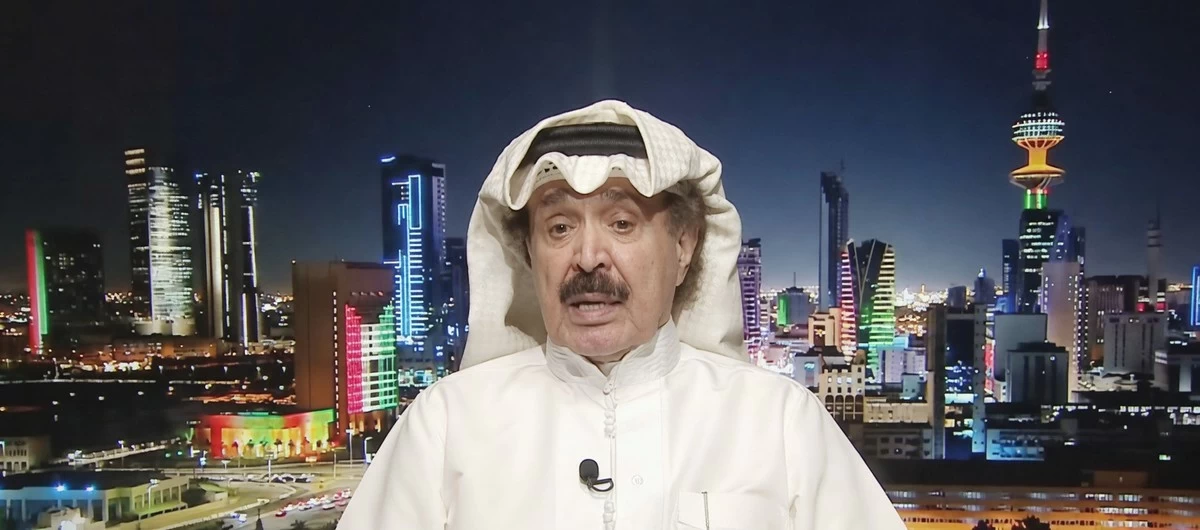
Ahmed Al-Jarallah speaking in a televised interview on Middle East developments and regional stability.
KUWAIT CITY, May 31: In his most scathing attack yet on Iran and its regional proxies, Dean of Kuwaiti journalism and Editor-in-Chief of Al-Seyassah and Arab Times newspapers Ahmed Al-Jarallah stated in an interview in the “Qabil lil Jadal” (Controversial) program on Al-Arabiya that “the Gulf states extremely suffered from the reckless practices of the Iranian regime and this eroded the trust between us and them.” Al-Jarallah pointed out that “a strong Iran will infl ict serious damage on the countries in the region. Therefore, we want it to be a weak state, without nuclear weapons, and without exporting religious ideologies to us. Let us take as an example what the Iranian regime has done in Lebanon, Syria and Iraq and how it transformed the mosques in these countries to spread its religious and sectarian ideas, something unacceptable to Sunni Muslim countries.”
He said “the armies of the Gulf states have had remarkable performance in countering Iranian attacks, particularly the ballistic missiles and drones which, in total, exceeded those targeting Israel.” He emphasized that “Iranians always link victories to defeats. The Strait of Hormuz issue is a card they have misused. The whole world stands against them. Even the allies of Iran like China rejected their actions regarding the Strait. This card they are playing is not working for them.”
He added “we wished the regime would fall, but it still exists. Why can’t Iran become like Gaza, so its people rise up against it? What is preventing such action? For 47 years, Iran has been knocking on our doors. The incidents in Makkah and the riots they instigated in Saudi Arabia, Kuwait and other Gulf Cooperation Council (GCC) countries are documented and well-known.
More than that, how many terrorist bombings have occurred in Saudi Arabia?” He also stated that “Iran attempted to assassinate HH the late Amir Sheikh Jaber Al-Ahmad, may Allah have mercy on him, when they bombed his car. Even I was not spared their treachery when I was targeted for assassination in 1985, after criticizing the practices of the Iranian regime and what was happening in Syria and Libya, which are under its influence.”
He disclosed that he rejected calls to refrain from criticizing the Iranian regime, “because I was fully aware of the terrorist plots of the Iranian regime against the Gulf states. This has been my path. I have not deviated from it -- against a regime that came to wreak havoc and harm the region. Consequently, it has become a heavy burden and must be eliminated through any means.” In response to the Iraqi criticism against him, he reiterated that “Iran rules Iraq. There is no clearer proof of this than my statement that Iraqis drink the water used to wash the feet of Iranians when they visit Iraq. Their response to my statement was that it is holy water. Is that conceivable? That is why one week later, the Iraqi government issued a decree banning the washing of Iranians’ feet, as it became a disgraceful act. I still maintain my opinion that Iraq is not governing itself. Around 150,000 popular mobilization forces receive their salaries from the Iraqi government.
“In addition, there are about 60 Iraqi Shiite factions, along with the Coordination Committee, all of which are affiliated with Iran. Moreover, the Iraqis were unable to elect a prime minister until an envoy from Iran came and gave them his blessing.” He accused the Iraqi factions affiliated with Iran of targeting Kuwait, Saudi Arabia and other Gulf states. He said “despite this, the generosity of the Gulf states and Saudi Arabia was evident in their mediation with the Americans to prevent an attack on Iran, in the hope that it will come to its senses. The appeasement of some Gulf states towards Iran somewhat hindered the Gulf media from expressing its stance on Iran’s actions against these countries.
“Gulf newspapers should have taken a stronger and more forceful stance in the campaign against the Iranian regime, given its actions in the region. Gulf governments sometimes appeased the Iranian regime. This was evident in the mediation efforts of Saudi Arabia, Qatar and the United Arab Emirates (UAE) with the United States of America to give Iran a chance.” He revealed that “Iran pays part of the salaries of these Iraqi Shiite factions, but from the Iraqi treasury. The same applies to Iranian proxies in Yemen, Syria and Lebanon. God willing, they will soon eliminate all those who orbit around them.” He added “it is strange that while the countries in the region are negotiating with Iran, they are being attacked by it. This is astonishing from such people who do not hesitate to attack you, even if you mediate to prevent them from being attacked. Each Iraqi faction has a share of the oil they divide amongst themselves, a blatant example of corruption in Iraq.”
He stressed the need for “Gulf states to demand that Iran pay compensation for its attacks. The GCC countries and other Middle Eastern countries that have been targeted by Iranian attacks, such as Jordan, must emphasize this. Iran is a rogue state that must be held accountable. This accountability must be international.” He concluded that “the Iranian regime has weakened politically and militarily despite its attempts to deny it. The Iranian people will rise against their regime in the future. Although some say this is difficult, I believe that the living conditions will motivate Iranians to do so. The Iranian people cannot remain silent about the living conditions they are enduring.”
By Omar Al-Bardan Al-Seyassah/Arab Times Staff