


28/04/2026

Share:
28/04/2026
Share:

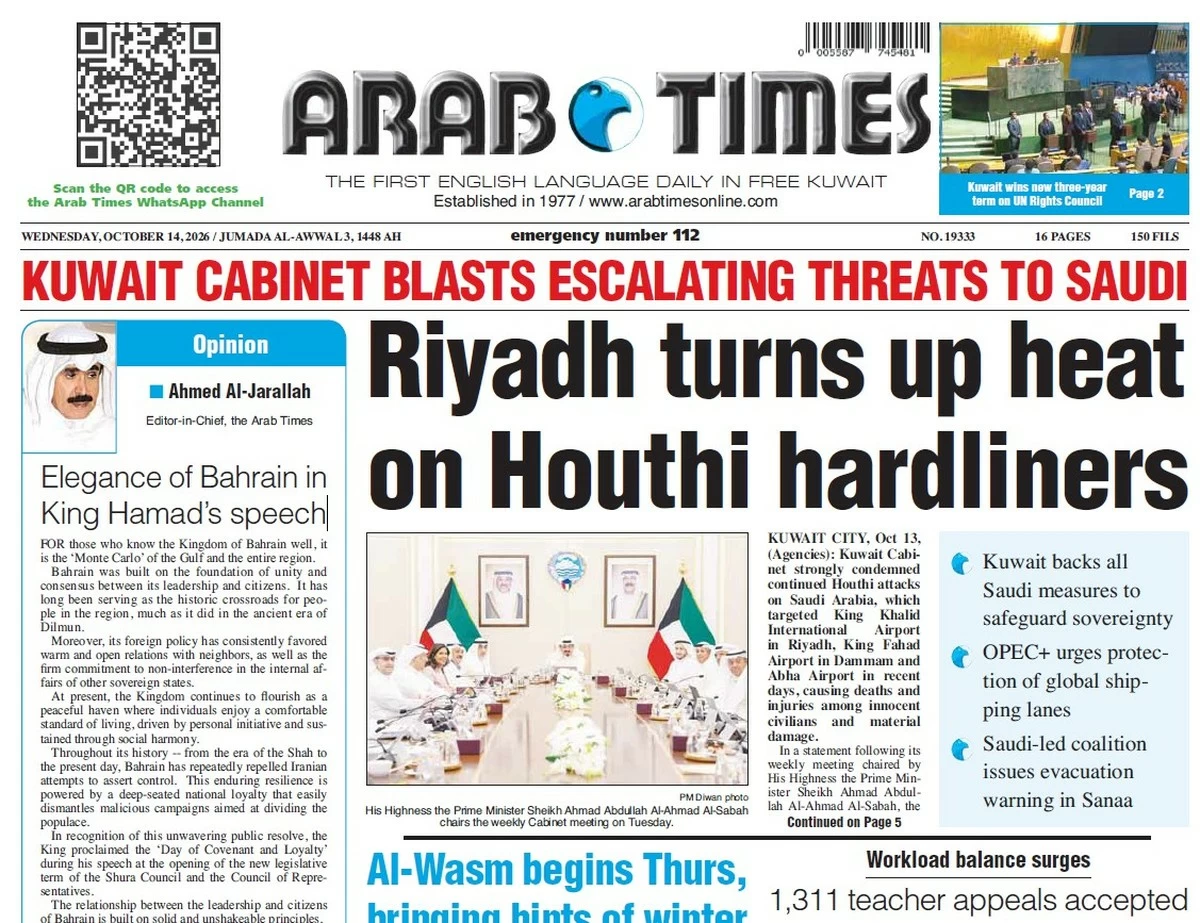
KUWAIT CITY, April 28: The official report issued by the Arab Energy Organization (formerly the Organization of Arab Petroleum Exporting Countries - OAPEC) highlighted the effects of the war on the petrochemical sector during the first quarter of 2026. According to the report, the war’s impact on Kuwait’s petrochemical sector was mainly logistical disruptions, including the temporary closure of Shuaiba Port and limited operational disruptions at some industrial facilities linked to energy and service infrastructure.
This temporarily affected export flows and operational continuity in some units, without leading to widespread production disruptions. Direct production disruptions in Saudi Arabia were evident, with the temporary suspension of operations at the Sadara Chemical Company complex on March 31, due to disruptions in market supply chains.
The impact in Qatar was indirect, reflected in the declaration of force majeure on liquefied natural gas exports at Ras Laffan Industrial City. This led to reduced production in some related industries, particularly ammonia and urea. In Bahrain, the war affected the oil refining and energy sector. Bapco’s declaration of force majeure following the attack on its refinery complex disrupted the supply of intermediate materials and feedstock. This indirectly impacted related chemical industries, highlighting the close link between refining and petrochemical activities. Minor operational incidents also occurred in some industrial units and were contained without structural impact. However, these incidents led to an increased level of operational risk during this period. In the UAE, the impact was twofold, combining logistical and operational dimensions. Disruptions to shipping traffic at Jebel Ali Port delayed trade fl ows, particularly polymer exports.
The Borouge complex in Ruwais experienced minor operational incidents involving localized fires caused by external factors. These incidents led to the temporary shutdown of some production units pending technical inspection and assessment, without any permanent structural impact on production capacity.
Regarding the impact of geopolitical instability in the Middle East on energy and petrochemical markets, the report noted the emergence of a sudden supply shock that reshaped market priorities in the short term. At the beginning of the year, markets were primarily driven by oversupply conditions. The situation has since shifted sharply toward concerns over supply continuity amid rising risks to energy infrastructure and vital shipping routes. Rising oil prices have led to increased energy and feedstock costs for petrochemical industries, particularly in energy-importing regions. Naphtha prices recorded a significant increase of approximately 18–20 percent during the first week of March, driven by supply disruptions and a repricing of risks in the spot market.
The March 2026 shock extended to operational assets and value chains within member countries. The impact varied, ranging from direct production disruptions and feedstock supply bottlenecks to the emergence of indirect operational risks within industrial complexes. Some countries continued to implement industrial expansion programs. This variability reflects the multiple channels through which shocks are transmitted within the sector, from production to transportation and export, further complicating the operational landscape during this period.
By Najeh Bilal Al-Seyassah/Arab Times Staff