



01/04/2026

Share:
01/04/2026
Share:
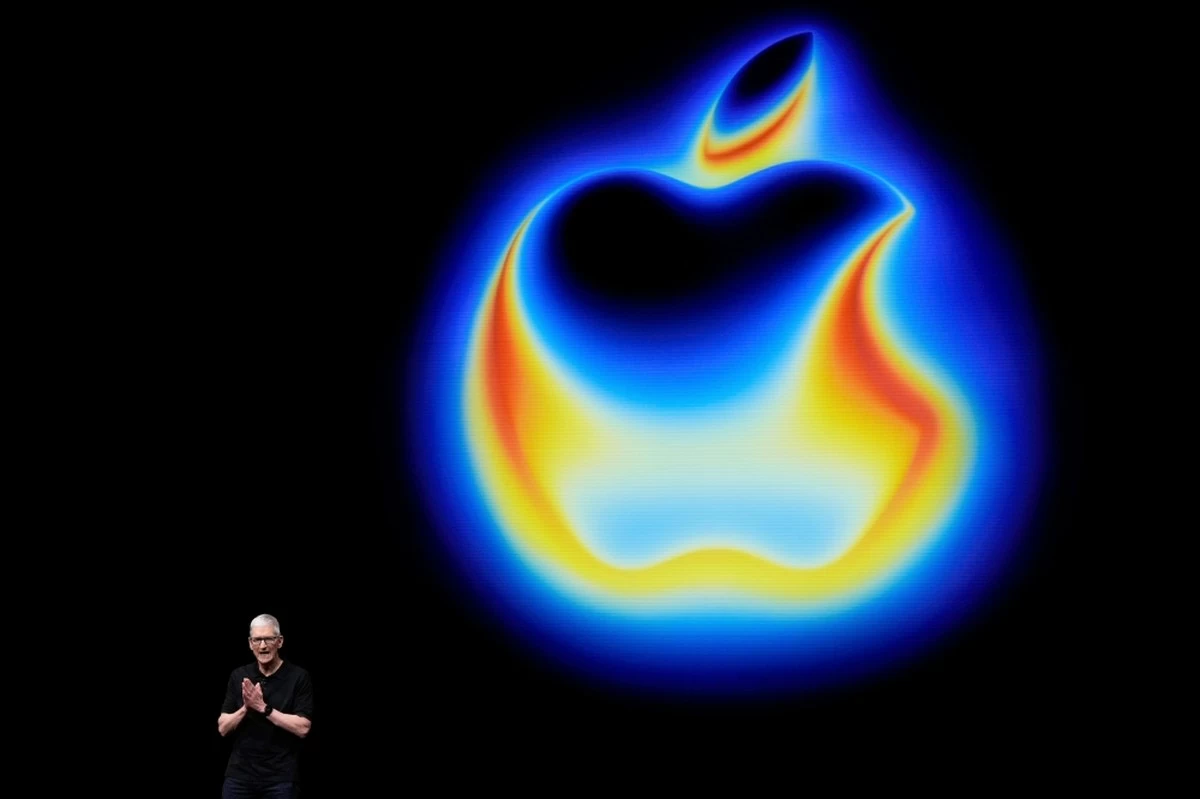
Apple CEO Tim Cook speaks on stage during an announcement of new products at Apple Park on Sept 9, 2025, in Cupertino, Calif. (AP)

CUPERTINO, Calif, April 1, (AP): A scrawny hippie and a nerdy engineer who became prank-playing friends vowed to change the world when they founded a Silicon Valley startup on April Fools’ Day 50 years ago and then — no joke — pulled it off. The improbable odyssey began April 1, 1976, when a then-shaggy Steve Jobs and his gadget-tinkering friend Steve Wozniak signed a two-page partnership document that created Apple Computer Co.
Jobs, a 21-year-old college dropout, and Wozniak, a 25-year-old Hewlett-Packard employee, each received a 45% stake in Apple, with the remaining 10% going to their 41-year-old adviser, Ron Wayne.
The company got off to such a shaky start while trying to build a personal computer in the Los Altos, California, home of Jobs’ parents that Wayne relinquished his stake for $2,300. It proved to be a $370 billion mistake, based on how much his holdings would have grown now that Apple boasts a $3.7 trillion market value.
But Apple nearly toppled before building its current empire. After casting aside Jobs in a bitter 1985 breakup, the tech firm engineered a surprise deal that brought back its exiled cofounder in 1997. After reluctantly agreeing to be a temporary adviser, Jobs took over as CEO and masterminded an innovation factory that churned out the iPod, the iPhone and the iPad in a decade-long burst of feverish creativity.
Although it was founded in 1976, Apple didn’t enjoy its first smash success until June 1977, with the release of the Apple II computer priced at $1,298 (about $7,000 now, adjusted for inflation). With its sales booming, Apple went public in late 1980 at $22 per share, which translates into 10 cents per share after adjusting for stock splits. That means $2,200 spent to purchase 100 shares at the IPO price would be worth more than $5.5 million today.
Apple’s next big thing came at Apple’s annual shareholders meeting on Jan. 24, 1984, when Jobs read the opening lines of the Bob Dylan song, “The Times They Are A-Changin’” and unveiled the first Macintosh — a machine that introduced the computer mouse and a graphical interface to the public.
That coming out party came two days after Apple teased the Macintosh computer with a 60-second commercial directed by Ridley Scott that evoked George Orwell’s “1984” novel during that year’s Super Bowl. The ad created such a huge buzz that it’s widely credited for turning Super Bowl commercials into an art form and part of the cultural zeitgeist.
Despite its breakthrough features, the Macintosh (named after an engineer’s favorite kind of apple) cost $2,500 (equal to nearly $7,900 today) — one of the reasons that it didn’t sell as well as anticipated.
The letdown resulted in layoffs and other cost-cutting by Apple CEO John Sculley, a former PepsiCo executive whom Jobs had personally helped recruit to the company in 1983. A year after the Macintosh’s release, the once-close relationship between Sculley and Jobs had disintegrated into a power struggle. Apple’s board sided with Sculley, prompting Jobs to resign in September 1985 with a feeling of betrayal that cut so deep that he sold all but one share of his Apple stock.