


10/11/2026

Share:
10/11/2026
Share:

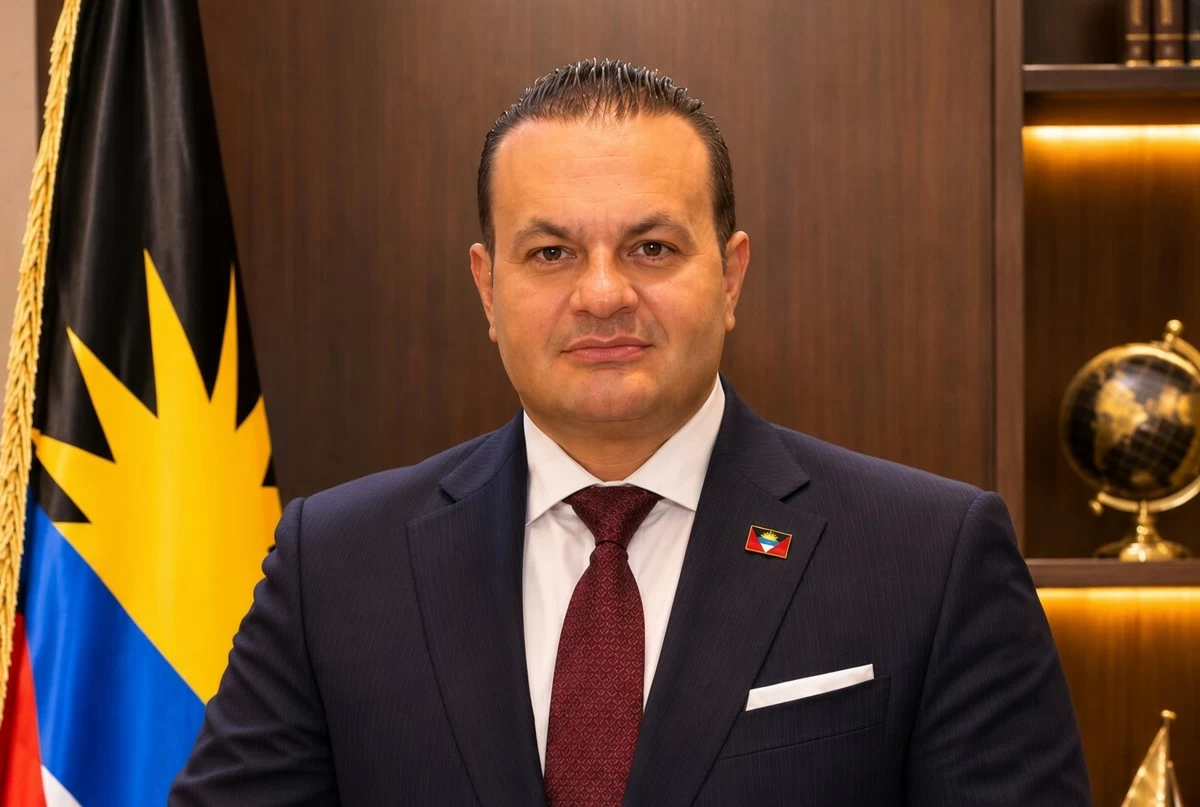
by John C Fernandes
Online Media Manager
Arab Times
KUWAIT CITY, Nov 10: Antigua and Barbuda is seeking to strengthen its strategic partnership with Kuwait, with opportunities for cooperation in investment, trade, tourism, renewable energy, food security and diplomatic coordination, the Caribbean nation's Ambassador to Kuwait, Mohammed Al-Zoubi, has said.
In an exclusive interview with Al-Qabas newspaper, Al-Zoubi said his country viewed Kuwait as an important partner in its long-term development and economic plans, adding that the relationship should extend beyond traditional development assistance to include investment, commercial partnerships and wider cooperation.
"We view our relations as a long-term partnership that is not limited to assistance, but extends to investment, tourism, renewable energy and trade," he said.
He noted that Kuwait had played an important development and humanitarian role, particularly through the Kuwait Fund for Arab Economic Development. Antigua and Barbuda, he added, could offer Kuwaiti investors opportunities through its location in the Caribbean and its regional connections.
Resident embassy begins operationsAl-Zoubi confirmed that Antigua and Barbuda's embassy began operating in Kuwait in 2026, marking a significant step in strengthening bilateral relations.
He said he had the honour of presenting his credentials to His Highness the Amir Sheikh Meshal Al-Ahmad Al-Jaber Al-Sabah on Sept 8, 2026.
"We are working to complete the administrative and organisational arrangements for the diplomatic premises so that the mission can perform its duties fully," he said.
He described the establishment of a resident embassy as a practical commitment to building a lasting partnership between the two friendly countries.
Five agreements targeted for implementationThe ambassador said the five bilateral agreements signed between Kuwait and Antigua and Barbuda provided an important foundation for cooperation, particularly in trade, investment, economic relations and air services.
However, he stressed that the real value of such agreements lay in turning them into practical projects.
"The success of bilateral agreements is measured by their translation into tangible cooperation," he said.
He said his country was working with relevant Kuwaiti authorities to identify priority sectors and encourage direct engagement between business and investment institutions.
Tourism, infrastructure and clean energy were among the areas offering potential, while both sides were examining ways to improve air connectivity between the Gulf and the Caribbean, either through direct services or commercial and operational arrangements.
Three-million-gallon water projectAl-Zoubi identified water infrastructure as one of the priority areas for potential investment cooperation with Kuwait.
He said a proposed project involved developing the country's water sector through a facility with a production capacity of three million gallons per day, alongside improvements to distribution networks.
The project remains subject to the completion of technical studies and institutional requirements, he said.
"We look with interest at Kuwait's investment expertise and the possibilities of cooperation with its development institutions and private sector," he said.
He added that opportunities also existed in tourism, hospitality, renewable energy and services, but said his country preferred to announce investment projects only after they had reached an advanced stage.
Regarding the existing volume of Kuwaiti investment in Antigua and Barbuda, Al-Zoubi said an accurate figure would require updated official data that distinguished between development financing, direct investment and joint projects.
Citizenship-by-investment programmeAddressing the European Union's call for Antigua and Barbuda to end its citizenship-by-investment programme by 2028, Al-Zoubi said the scheme remained one of the tools used by the country to support development and diversify government revenue.
He said his government took international partners' concerns about transparency, due diligence and security seriously.
"The European demands concerning the termination of the programme by June 2028 have raised an important discussion, but this does not mean that the programme has been closed or that all details concerning its future have been settled," he said.
He stressed that the country's appeal to investors did not depend solely on the citizenship programme, pointing instead to political stability and investment opportunities in tourism, infrastructure, real estate and renewable energy.
He also welcomed Gulf investors interested in establishing long-term partnerships.
Kuwaiti citizens enjoy entry facilitiesOn travel arrangements for Kuwaitis, Al-Zoubi said his country attached considerable importance to facilitating movement and contact between the two populations.
"Kuwaiti citizens enjoy entry facilities to Antigua and Barbuda under the applicable regulations," he said, adding that his country was looking to further develop related services and procedures in coordination with the relevant authorities.
He encouraged reciprocal visits by businesspeople, students and economic delegations, describing direct contact as essential to building successful partnerships.
Scope for cooperation in food securityAl-Zoubi said food security had become a strategic global challenge amid disruptions to international supply chains.
Although Antigua and Barbuda had limited geographical space, he said there were opportunities for cooperation with Kuwait in modern agriculture, aquaculture, agricultural technologies, water management and food processing.
"We do not claim that we can meet the needs of the Kuwaiti market on our own, but we can contribute to building specialised partnerships and expanding cooperation networks with the Caribbean region," he said.
Such cooperation could also facilitate the exchange of expertise in sustainability and climate adaptation, he added.
CARICOM offers scope for diplomatic coordinationThe ambassador also highlighted Antigua and Barbuda's membership in the Caribbean Community (CARICOM), which comprises 15 countries, saying it offered opportunities for consultation and coordination on international issues.
He said the country welcomed broader dialogue between Gulf and Caribbean states on sustainable development, climate change, international security and respect for national sovereignty.
"We believe that the influence of countries is not measured only by their geographical size, but also by their effectiveness in building understanding and defending principles," he said.
However, he emphasised that each CARICOM member retained its sovereign decision-making authority and national positions.
Congratulates Kuwait on Human Rights Council electionAl-Zoubi congratulated Kuwait on its election to the United Nations Human Rights Council for the 2027–2029 term, saying the result reflected the country's diplomatic standing and international confidence in its role.
"We congratulate the State of Kuwait, its leadership, government and people on this election," he said.
He identified several areas for possible coordination, including the right to development, protection of vulnerable groups, the human rights impact of climate change and capacity-building.
He said countries might have different priorities depending on their circumstances, but this did not prevent constructive cooperation on initiatives consistent with their international commitments.
Supports Kuwait's security and sovereigntyOn regional tensions and threats to Gulf security and maritime routes, Al-Zoubi said his country's position was based on respect for the sovereignty, independence and territorial integrity of all states.
"We reject the threat or use of force in violation of the United Nations Charter," he said.
He described Kuwait's security and stability as essential to the security of the Gulf, the global economy and the safety of maritime navigation.
Al-Zoubi said Antigua and Barbuda supported peaceful initiatives to reduce tensions, diplomatic solutions and adherence to international law.
He also referred to the right of states to defend themselves under international law.
"The United Nations Charter recognises the right to self-defence in the event of an armed attack, in accordance with the conditions of international law," he said.
He stressed the importance of protecting civilians, vital infrastructure and maritime routes, adding that smaller countries could play an influential role by defending international rules, participating in multilateral institutions and helping build consensus.
Supports Palestinian right to statehoodOn the Palestinian issue, Al-Zoubi reaffirmed his country's support for the right of peoples to self-determination and the legitimate rights of the Palestinian people.
He said Antigua and Barbuda supported a just and lasting peace based on a two-state solution, allowing for an independent and viable Palestinian state to exist alongside Israel in peace and security, in accordance with international legitimacy resolutions.
He also stressed the need to protect civilians, ensure humanitarian aid reaches those in need and reject steps that undermine prospects for peace.
"We value Kuwait's position in support of Palestinian rights and see considerable scope for consultation and coordination at international forums," he said.
Sees Gulf as complementary strategic partnerAl-Zoubi said Antigua and Barbuda maintained cooperation with the United States in areas including regional security, combating organised crime and illicit trafficking, border security and maritime affairs.
However, he stressed that his country's foreign policy was based on diversifying partnerships rather than limiting cooperation to one geographical area.
He said there was potential to exchange expertise with Gulf countries in maritime security, cybersecurity, crisis management and capacity-building through arrangements agreed upon by the relevant authorities.
Asked whether Gulf countries, particularly Kuwait, could serve as an alternative to traditional reliance on the United States and Europe, he said his government did not view international relations as competing choices.
"We do not view our international relations as conflicting options or competing alternatives, but as complementary partnerships that serve our national interests," he said.
He added that the United States and Europe remained important partners, while the Gulf offered significant opportunities for economic, development and investment cooperation.
"Our ambition is not to replace one partner with another, but to expand the circle of partnerships. We see the State of Kuwait as an important partner in the future of Antigua and Barbuda," he said.