

24/11/2026

Share:
24/11/2026
Share:

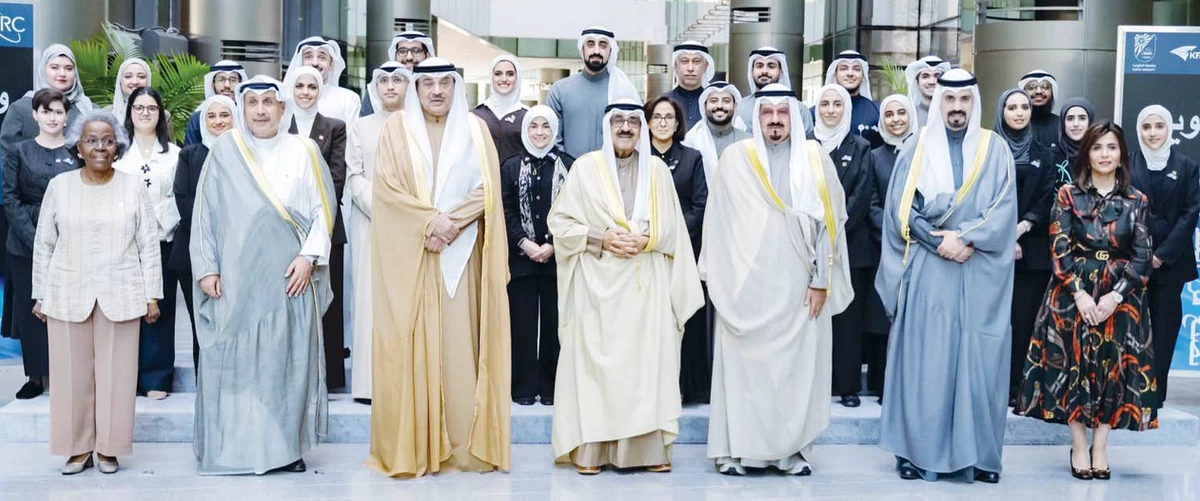
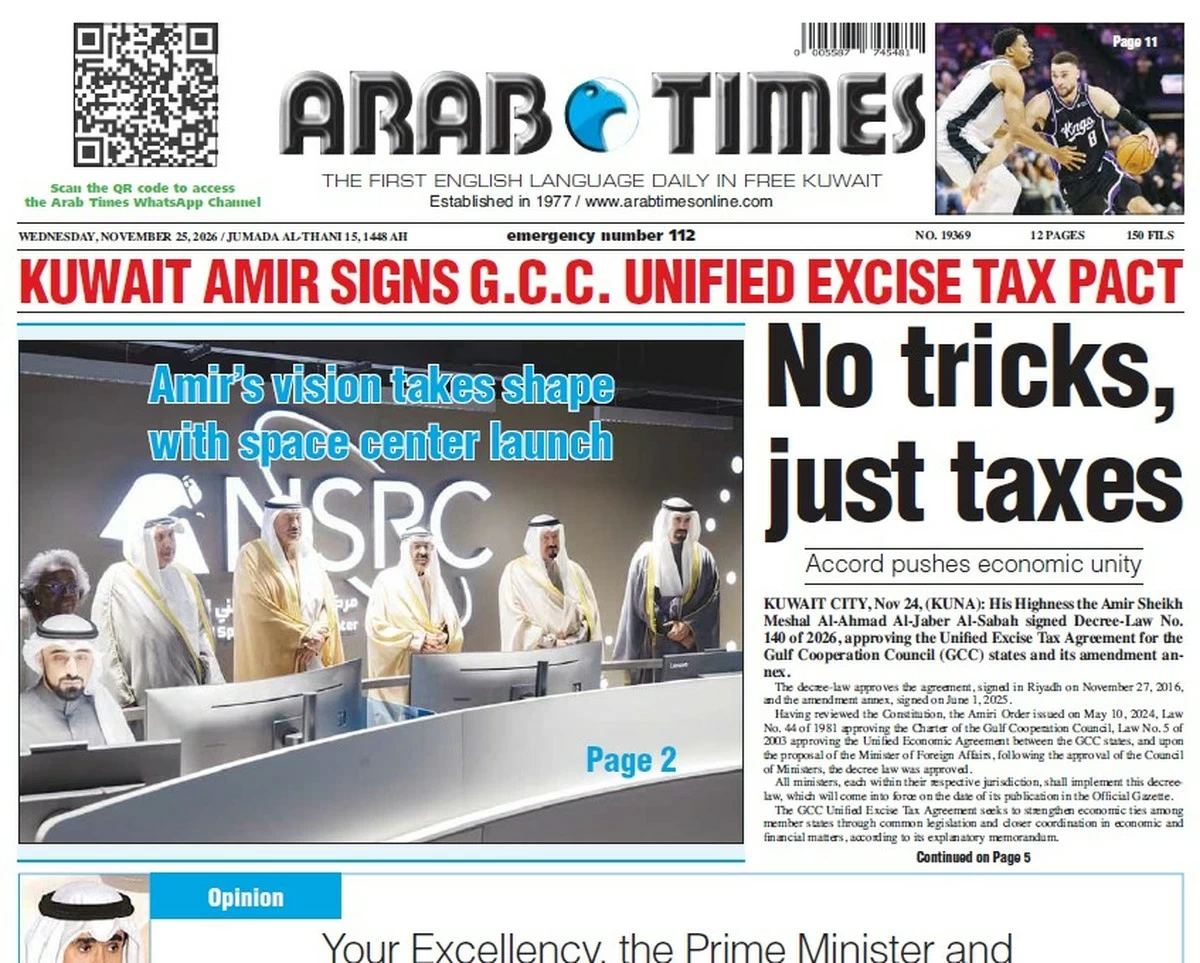
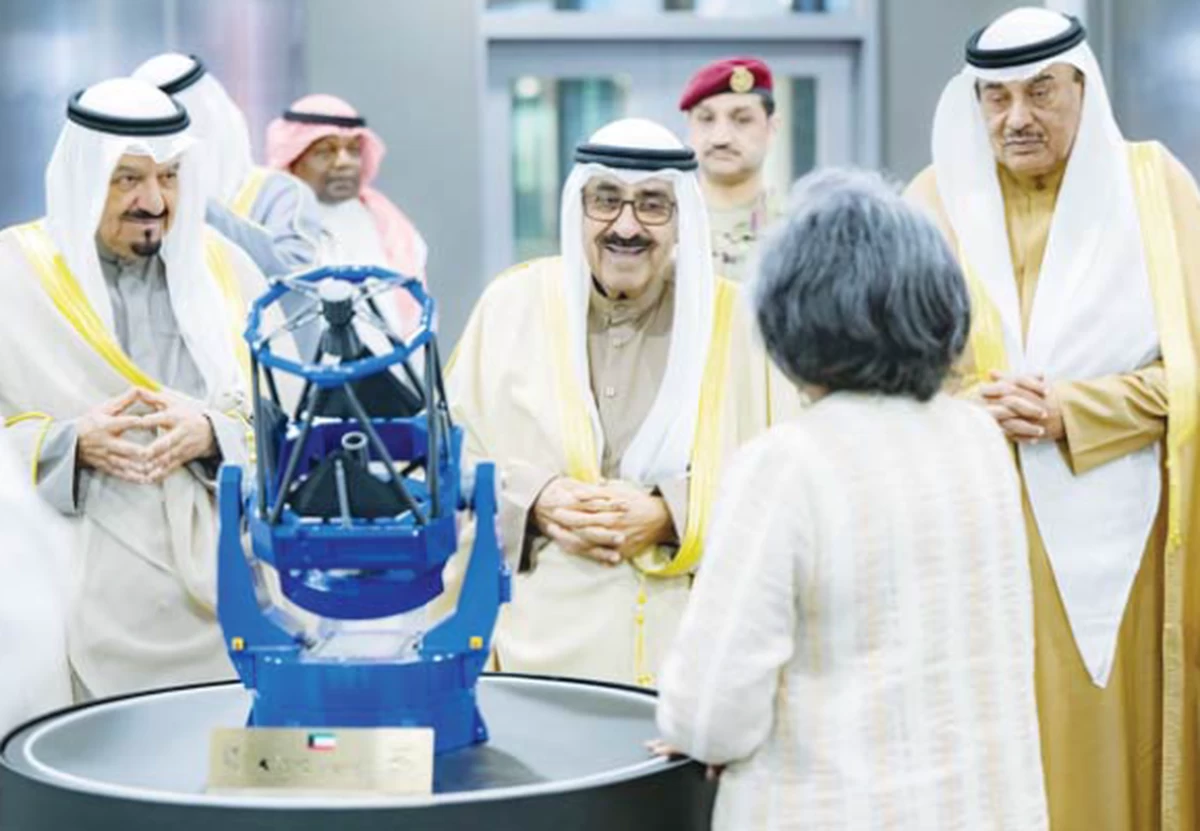
KUWAIT CITY, Nov 24: His Highness the Amir Sheikh Meshal Al-Ahmad Al-Jaber Al-Sabah inaugurated on Tuesday the Kuwait National Space Research Center at Sabah Al-Salem University City. Established in response to His Highness’s vision outlined in his September 2024 speech, the center marks a step toward establishing a Kuwaiti space agency to oversee space research and activities and coordinate the country’s participation in international space programs and initiatives. His Highness was received upon arrival by His Highness the Crown Prince Sheikh Sabah Khaled Al-Hamad Al-Sabah, His Highness the Prime Minister Sheikh Ahmad Abdullah Al-Ahmad Al-Sabah, and senior officials. His Highness the Amir officially opened the center by pressing a button on a commemorative mural before touring its facilities, where he was briefed on space-related models, research activities and operations.
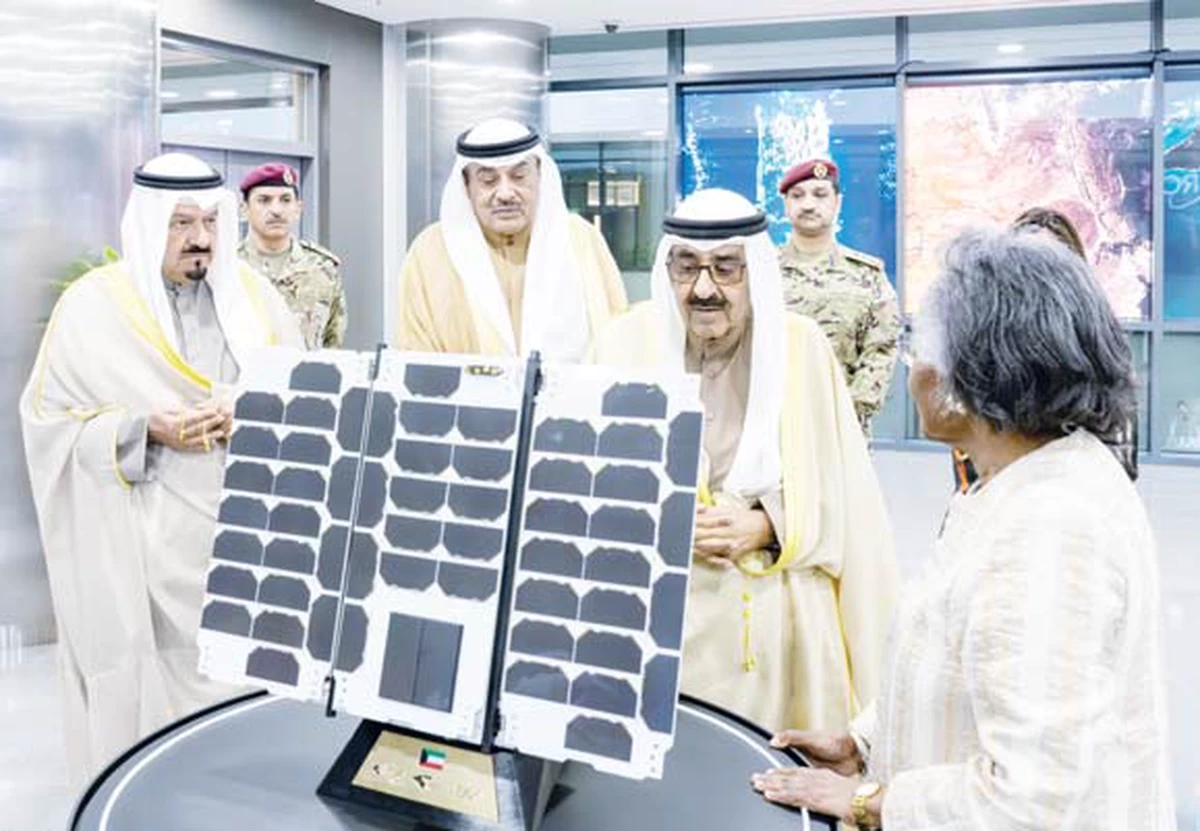
During the visit, National First Kuwaiti Satellite Project Director Dr. Hala Khaled Al-Jassar delivered a welcoming address and presented a visual overview of the center’s vision and objectives. His Highness was also presented with a book entitled “In Orbit, an Eye; on Earth, a Story,” documenting the Kuwait- Sat-1 mission. His Highness praised the dedication and competence of the Kuwaiti team behind the satellite project, noting the expertise and cooperation demonstrated throughout its various stages. He said he had followed the project from its early phases through the launch of KuwaitSat-1 and the establishment of the center, expressing firm support for its staff and encouraging them to continue their scientific efforts. His Highness the Amir expressed hope that the center would help develop national research capabilities and expand space studies in Kuwait, while providing students and researchers with practical training and opportunities to participate in research projects. He also underlined the importance of spreading knowledge of space sciences and technology and encouraging younger generations to take an interest in the field, wishing the center’s staff continued success in serving the country. Kuwait is advancing its journey into space through the establishment of the Kuwait National Space Research Center, a national initiative backed by His Highness the Amir Sheikh Meshal Al-Ahmad Al-Jaber Al-Sabah.
The center, affiliated with the Kuwait Foundation for the Advancement of Sciences (KFAS) and hosted by Kuwait University, seeks to establish an integrated institutional framework bringing together scientific research, education and technological innovation. It aims to achieve regional leadership in space research and harness scientific knowledge to support economic growth, education and innovation, while developing basic and applied research, advancing space-related education and addressing societal challenges. Its objectives include promoting scientific research, developing technology, building national skills and encouraging private-sector and community participation, thereby creating specialized career opportunities for Kuwaitis and supporting their involvement in the space economy.
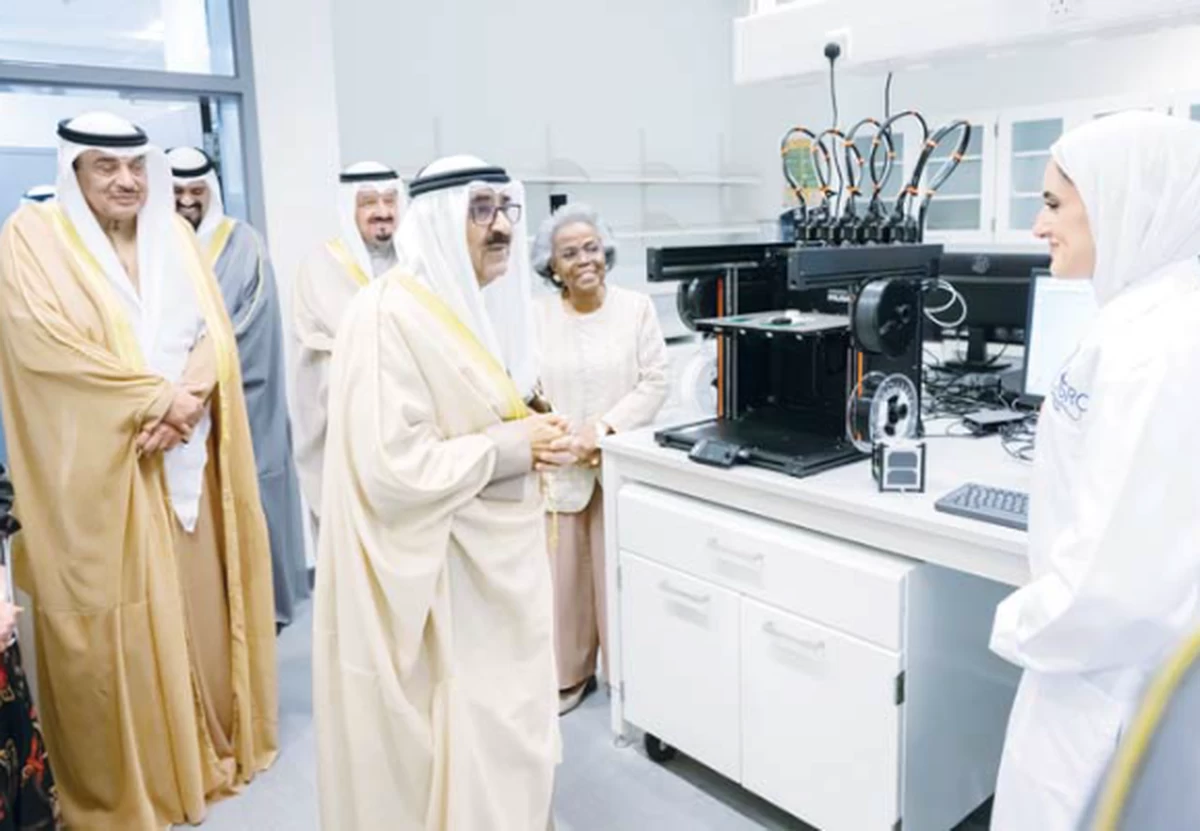
The center’s research priorities cover space physics, Earth and planetary observation from space, satellite development, sensors and scientific instruments. These fields combine the study of natural phenomena with the development of technologies to monitor and analyze them for applications serving national needs. Building national capabilities is a key pillar of the center’s work. Training and practical learning initiatives, including the Space Technology Laboratory program, are designed to equip participants with skills spanning the different stages of space projects, from developing concepts and setting requirements to design, testing and operation.
Kuwait’s journey into space has deep roots in its development of scientific knowledge and communications infrastructure. The country joined the International Telecommunication Union in 1959 and took part in international discussions on space radio communications in 1963. The establishment of the Umm Al-Aish ground station in 1969 marked another milestone in satellite communications and connecting Kuwait to the world. Kuwait also joined international treaties governing outer space activities, including the Outer Space Treaty in 1973, the Rescue Agreement in 1972, the Liability Convention in 1975, and the Registration Convention and Moon Agreement in 2014. It became a member of the United Nations Committee on the Peaceful Uses of Outer Space (COPUOS) in 2021. Kuwait University has also contributed to developing national expertise through more than two decades of research in cosmic rays, space weather, atmospheric observation and satellite data. Its Physics Department introduced a bachelor’s program in remote sensing in 2003, helping build a foundation for advanced space research and projects. A major milestone came on January 3, 2023, with the successful launch of Kuwait’s first satellite, KuwaitSat-1.
Developed through a project led by Kuwait University’s Physics Department in cooperation with departments at its College of Engineering and supported by KFAS, the project gave young Kuwaitis practical experience in satellite design, assembly, testing and operation. Future projects include KuwaitSat-2, hyperspectral imaging, a geomagnetic observation station, and the use of big data and artificial intelligence in research and analysis. These initiatives are expected to expand local expertise and strengthen cooperation across space science, engineering and data analysis. Through the new center and its expanding research programs, Kuwait is seeking to turn its space ambitions into scientific knowledge, advanced technologies and national capabilities that contribute to development and prepare future generations for further exploration and achievement. (KUNA)