


18/10/2026

Share:
18/10/2026
Share:

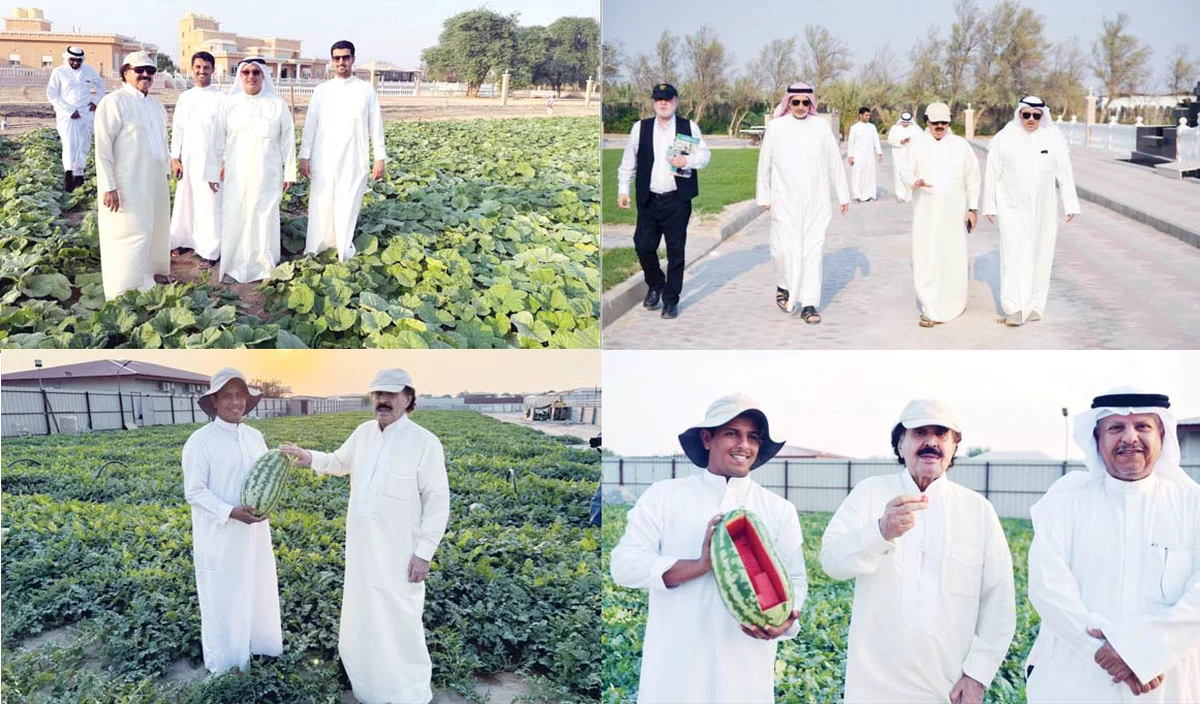
KUWAIT CITY, Oct 18: Dean of Kuwaiti Journalism and Editor-in-Chief of Al-Seyassah and Arab Times newspapers Ahmed Al-Jarallah embarked on a field inspection tour in North Kuwait, exploring the Abdaly Agricultural Area, which is known for its green produce and dew-dusted fruits, where he visited the estates of the Al-Rattam and Al-Haifif families. During the visit, Al-Jarallah keenly observed a wide range of crops like tomato, cucumber, pepper, pumpkin, zucchini, okra, eggplant and corn, as well as the open-field and greenhouse cultivation of watermelon and cantaloupe.
At the Al-Rattam diwaniya, Al-Jarallah was welcomed by Eng. Rashid Al- Rattam, Saad Al-Rattam, former minister Dr. Amer Al-Rattam, their sons, their nephew Mohammad, and some Abdaly farmers. The group conducted a walk through of the surrounding fields, fruit greenhouses, and ornamental plant nurseries, engaging in conversations regarding the operational hurdles of border-area farming, particularly the continuous supply of irrigation water. During the tour of the fruit greenhouse, which houses a variety of fruitbearing shrubs and ornamental plants, and the expansive green fields, farmer Saad Mohammad Al-Rattam and his son, Dr. Ali, pointed out the importance of using treated water for agriculture in border ares like Abdaly and Wafra.
They said these areas lack natural irrigation sources, such as rainfall, river or groundwater. They explained that relying on freshwater tankers purchased from distribution stations in agricultural areas is not economically viable, as it fails to yield the expected profit for Kuwaiti farmers despite their arduous labor along the northern and southern borders. Al-Jarallah suggested that providing irrigation water for farms should begin with quaternary treatment of wastewater, followed by the delivery of the necessary volumes to productive agricultural plots. He stated that the use of treated water is a common practice in many countries—even those with abundant rainfall and rivers—as a means to conserve water resources and protect rivers from wastewater pollution.
Citing his experience at his family’s farm in Block Six, Saad Mohammad Al-Rattam revealed that the insufficient supply of treated water, particularly during summer, is a difficult challenge for farmers in Abdaly and Wafra. He disclosed that water usually reaches their farm in small and intermittent quantities, sometimes stopping for days at a time, which prevented them from cultivating bigger plots. With the return of the water supply, albeit in limited quantities, at the start of the current agricultural season, the family planted different crops like corn, pumpkin, zucchini and eggplant, in addition to various leafy greens. They also expanded the cultivation of ornamental plants and fruit trees within a climatecontrolled (cooled) greenhouse.
Al-Rattam pointed out that the absence of natural irrigation sources in border agricultural areas makes treated water the most cost-effective option for most field and greenhouse crops, especially when compared to the alternative of purchasing fresh water and transporting it through tankers. He emphasized that the provision of treated water, specifically water that underwent quaternary treatment, will increase the agricultural output of the country and allow the supply of fresh produce at a lower cost. During the tour, Al-Jarallah and Al-Rattam agreed that a model farm in Kuwait should measure at least 50,000 square meters and incorporate a variety of agricultural activities, including the raising of sheep and camels. He indicated that keeping sheep on a spacious farm is a valuable asset, while camels provide both meat and milk. He said purebred Arabian horses offer an opportunity for children to learn horsemanship. He added that the benefits of such a farm extend beyond production and economic returns, as it encourages family members to engage in agricultural work and brings them together in a single location to spend their leisure time. He then visited the farm of Khalid Rashid Al-Haifiin Plot Six, where he and agricultural journalist Adnan Makawi inspected watermelon and cantaloupe crops. The farm owners disclosed that they are cultivating these crops on a commercial scale for the first time.
The high quality of the produce encouraged other farmers and interested individuals, who visited the farm to purchase the harvest—including farmer Ali Fadel, along with several of his relatives and acquaintances, who were visiting for the third time in a single week. Khalid Al-Haifiand his son, Musaed, stated that access to treated water will allow them to expand their cultivated area. However, despite the farm’s proximity to the main treated-water reservoir on Nazzal Al-Musab Street, the water does not reach their property. Consequently, they are forced to rely on fresh-water tankers arriving from the Qashaniyah station, which significantly increases production costs. Al-Haifiindicated that watermelons and cantaloupes require daily irrigation with fresh water to grow large and sweet, their water requirements exceed those of other crops, such as tomato, cucumber, zucchini and eggplant. He said the watermelon patch at the farm measures around 300 square meters and requires five water tankers daily—at a cost of about KD5 per tanker— an expense that is difficult to recoup from the sale of the harvest. Al-Haifiand his son confirmed their success in producing delicious red watermelons and cantaloupes on their farm in Abdaly, exclaiming, “Long live Kuwait!”
By Adnan Makkawi Al-Seyassah/Arab Times Staff